
Black History Knowledge
Black History Knowledge — October 19
Oct
What happened on this day. These are the October 19 moments in Black history worth knowing, remembering, and passing on.
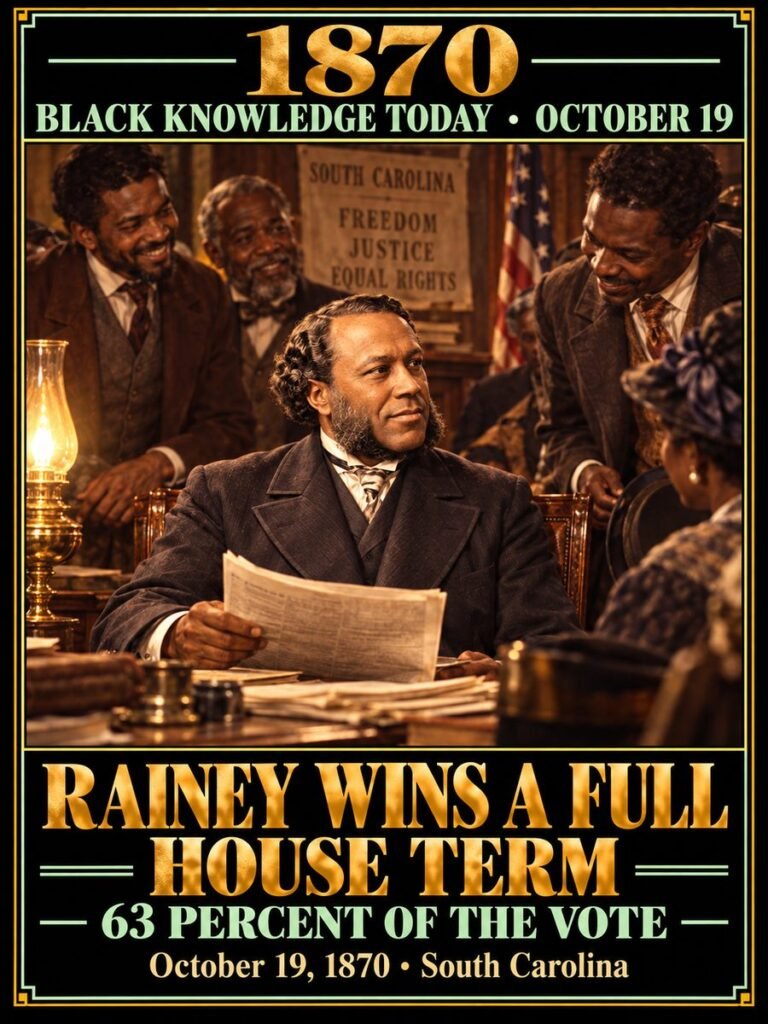
1870 — Joseph Rainey won election to the U.S. House
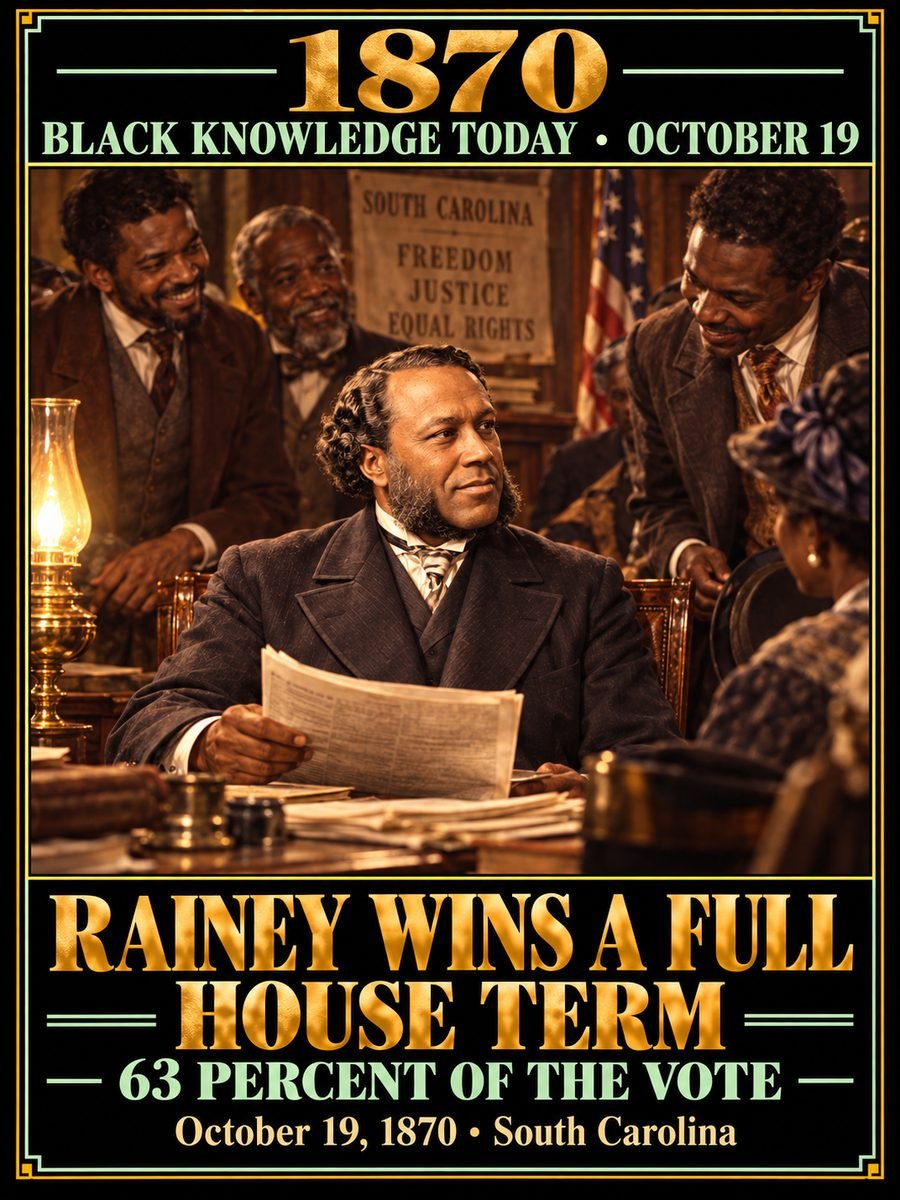
On October 19, 1870, Joseph Rainey won election to a full term in the U.S. House for the Forty-second Congress, defeating Democrat C. W. Dudley with 63 percent of the vote. On November 8 he also won a special election for the rest of the Forty-first Congress, and on December 12, 1870, he was sworn in as the first African American to serve in the House of Representatives. Rainey’s election reflected the brief but transformative expansion of Black political power during Reconstruction.
1944 — The Navy opened the WAVES to African American women
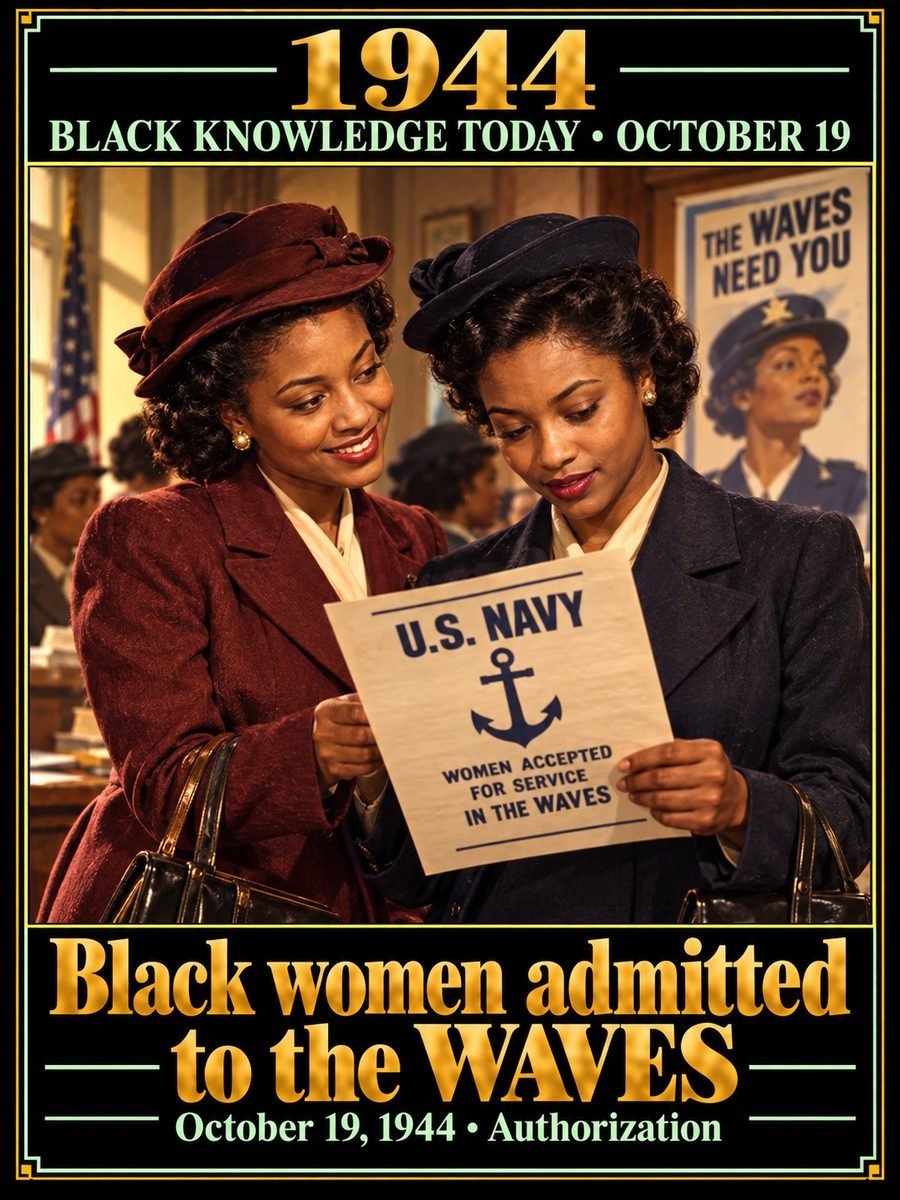
On October 19, 1944, after pressure from activists and the NAACP, President Franklin D. Roosevelt authorized the admission of African American women into the WAVES, the Navy’s women’s reserve. Black women would serve in integrated units. Harriet Pickens and Frances Wills were later chosen as the first two Black women to train as WAVES officers. The decision ended the exclusion of Black women from the Navy’s women’s reserve during World War II.
1960 — Atlanta sit-in demonstrators and Martin Luther King Jr. were arrested at Rich’s
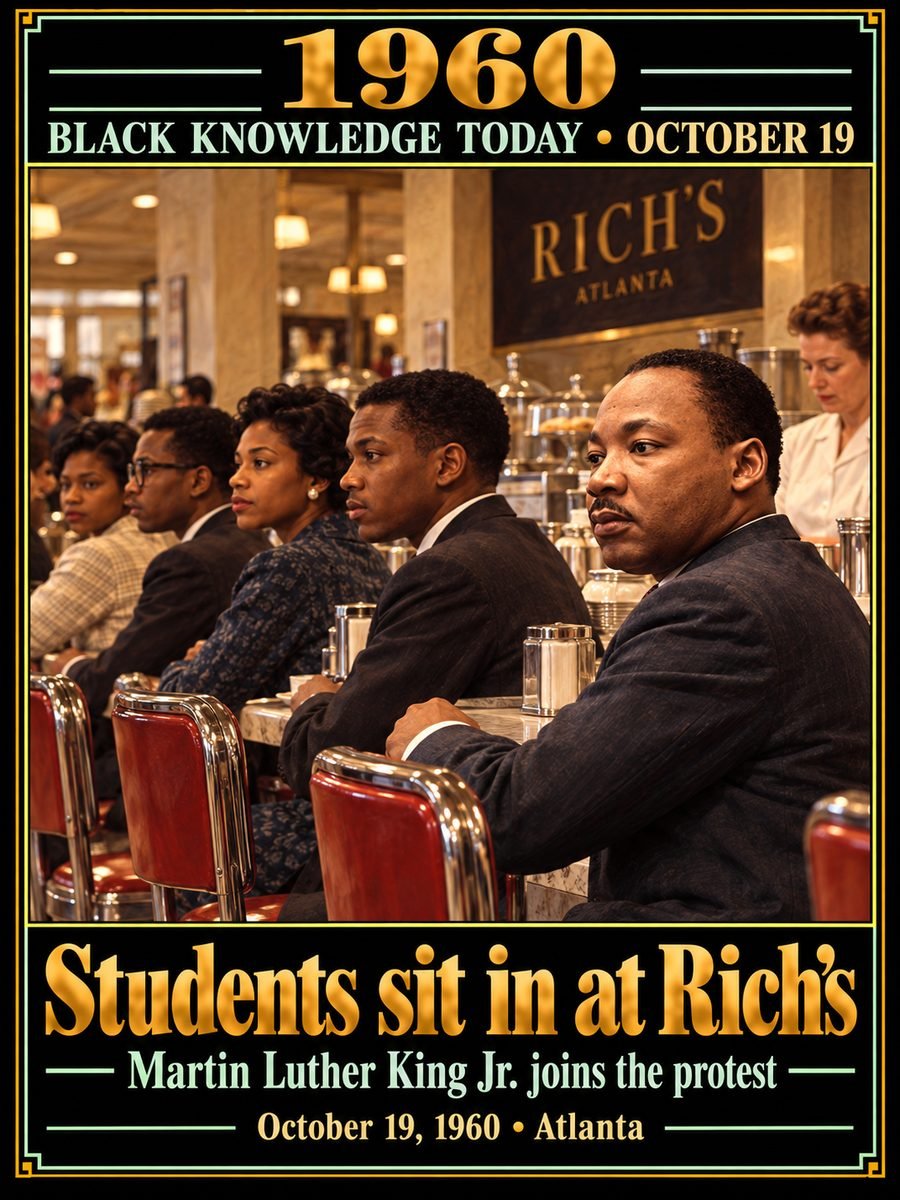
On October 19, 1960, coordinated sit-ins challenged segregated lunch counters across downtown Atlanta. Rich’s had demonstrators arrested, including student leaders and Martin Luther King Jr., after they refused to leave. The action centered the leadership of Atlanta University Center students and placed King beside a youth-led local campaign. His continued imprisonment soon became an issue in the 1960 presidential election.
1983 — The U.S. Senate passed the Martin Luther King Jr. federal holiday bill
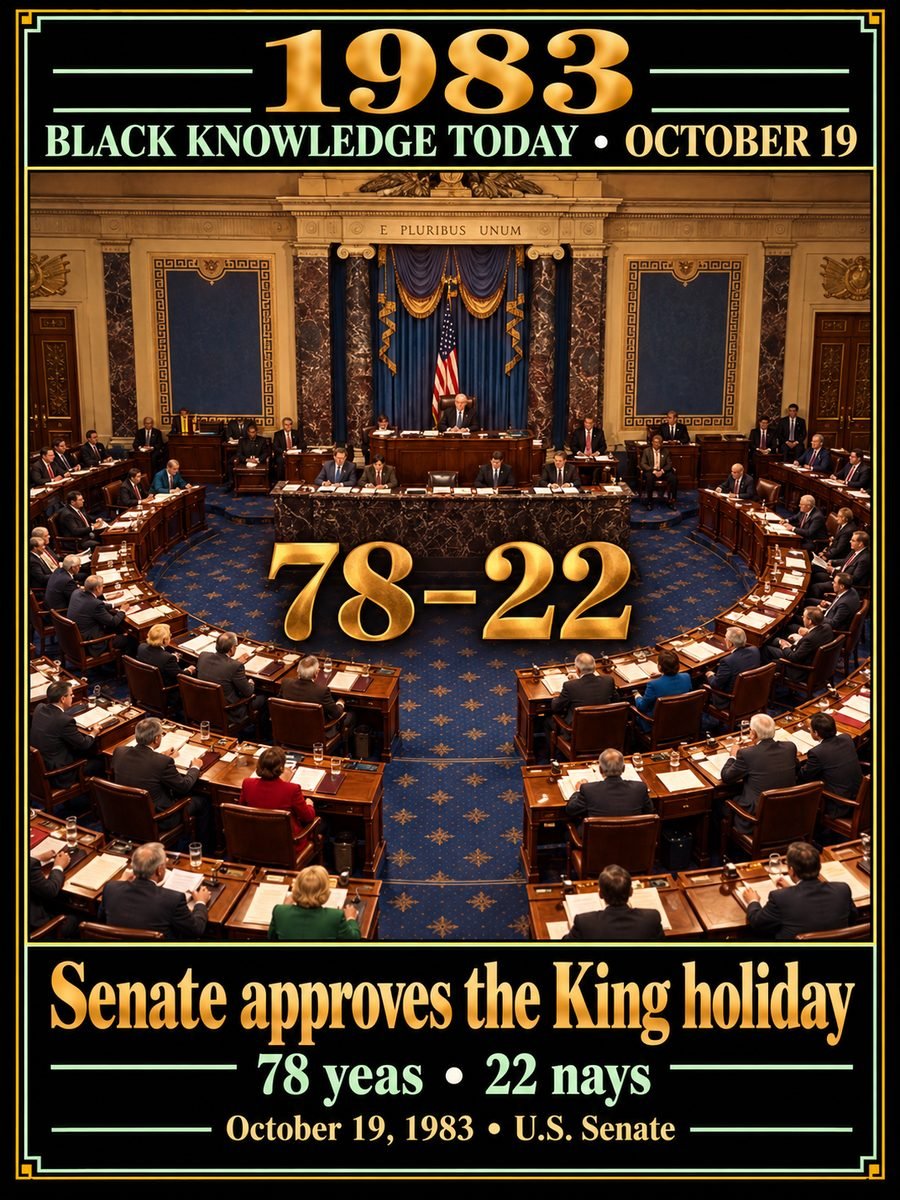
On October 19, 1983, the U.S. Senate passed H.R. 3706, making the birthday of Martin Luther King Jr. a legal public holiday, by a vote of 78 to 22, after rejecting a series of amendments. The House had passed the bill on August 2, 1983, by 338 to 90. The bill was signed on November 2, 1983, becoming Public Law 98-144. The vote completed congressional approval of the first federal holiday honoring an African American.
Wear the history: Martin Luther King Jr. — from the Black Knowledge Wear collection.
