
Black History Knowledge
Black History Knowledge — October 23
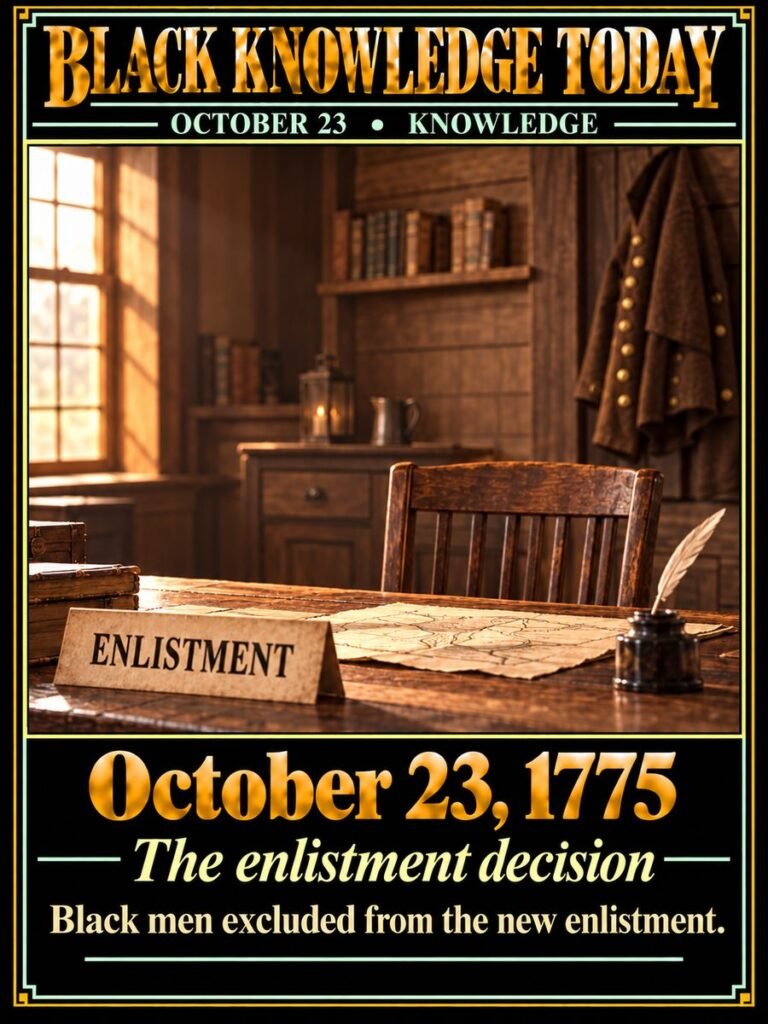
Oct
What happened on this day. These are the October 23 moments in Black history worth knowing, remembering, and passing on.
1775 — A conference with Washington agreed to reject Black men from the new Continental Army enlistment
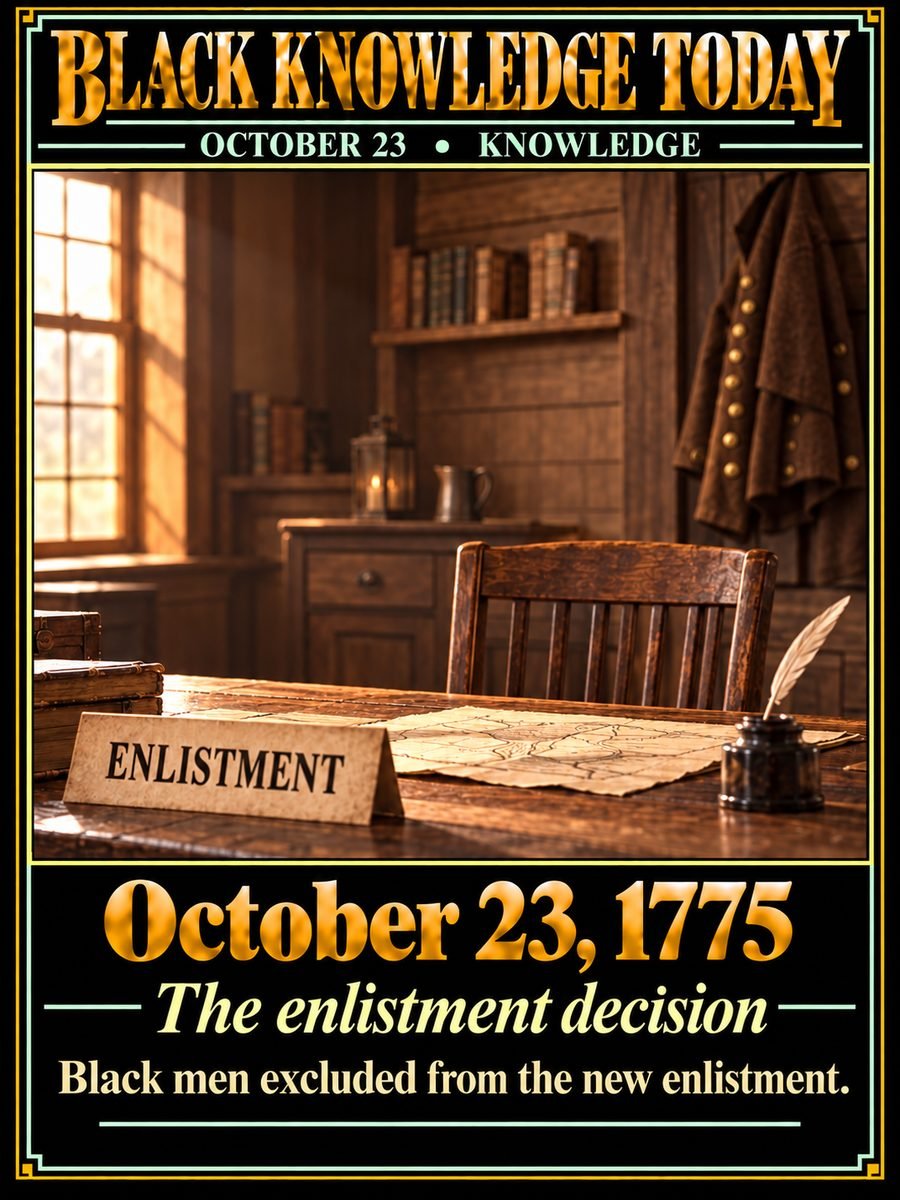
On October 23, 1775, delegates of the Continental Congress conferring with George Washington at Cambridge considered whether ‘Negroes’ should be excluded from the new enlistment, ‘especially such as are Slaves.’ They agreed ‘that they be rejected altogether.’ The decision shows early efforts to exclude Black men, free and enslaved, from the Continental Army, even though Black soldiers were already serving in the war.
1909 — A white mob tried to lynch Walter Ford blocks from the U.S. Capitol
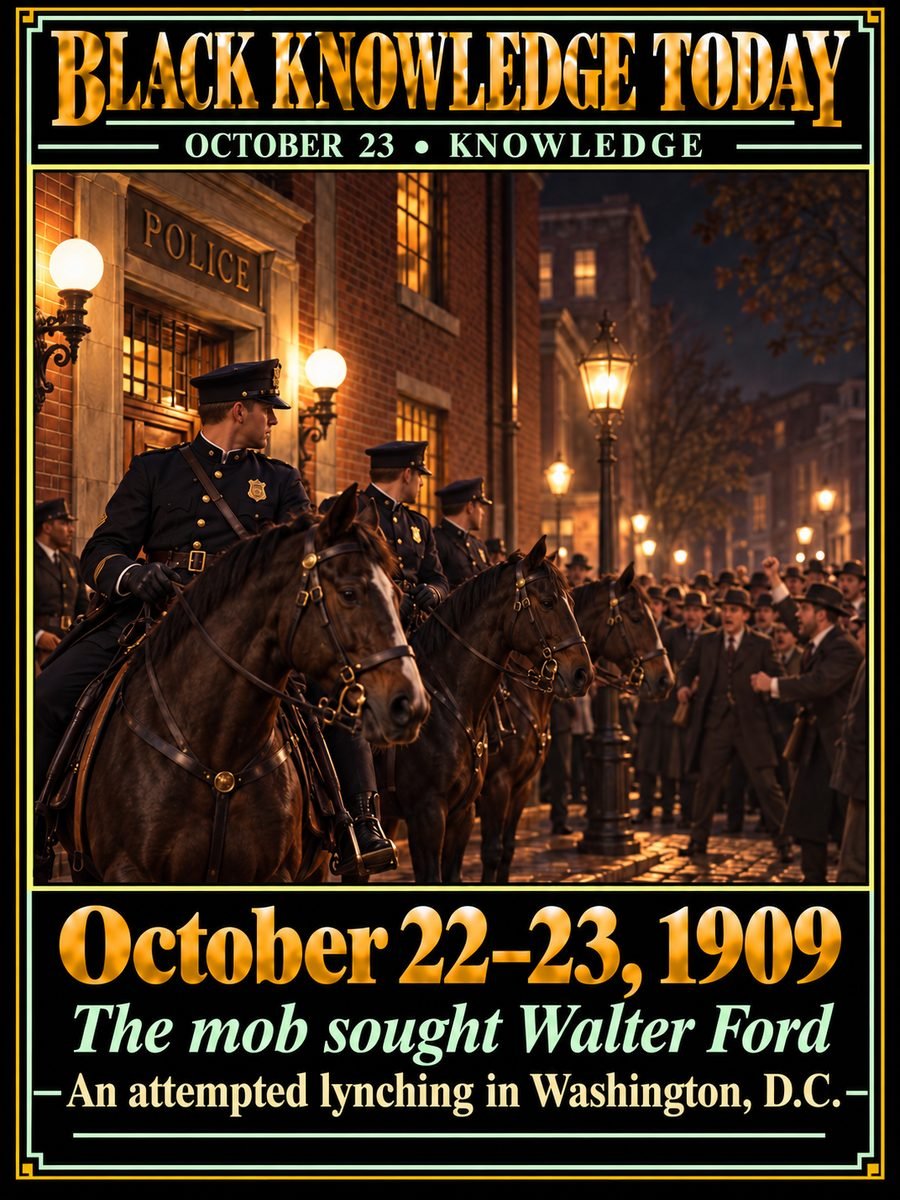
On the night of October 22 and into the early hours of October 23, 1909, a white mob of more than 100 people from Prince George’s County, Maryland, armed with shotguns, pitchforks, and revolvers, tried for hours to seize Walter Ford from a Washington, D.C., jail blocks from the Capitol. Ford, a 26-year-old Black man, had been targeted as a suspect in an attack near Landover, Maryland. In the early hours of October 23, the mob dispersed after police promised to hand Ford over the next morning, which they did not do. The episode shows that lynch mobs operated even in the nation’s capital and that law enforcement often accommodated them.
1945 — The Montreal Royals announced the signing of Jackie Robinson
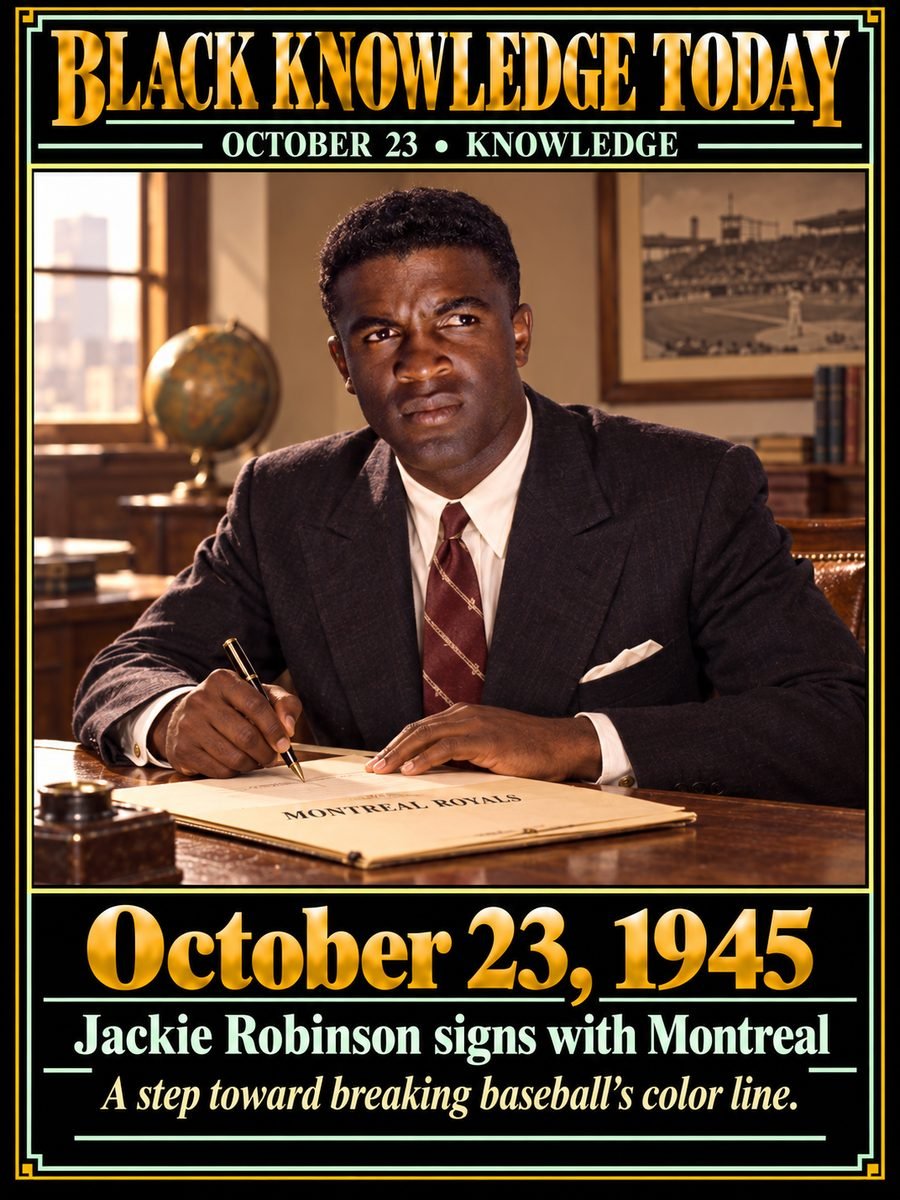
On October 23, 1945, Branch Rickey Jr., son of Dodgers president Branch Rickey, traveled to Canada and announced Jackie Robinson’s contract with the Montreal Royals, Brooklyn’s top minor-league affiliate. The signing began the organized baseball process that brought Robinson to the Brooklyn Dodgers in 1947 and broke the modern major leagues’ color line.
1947 — The NAACP presented An Appeal to the World to the United Nations
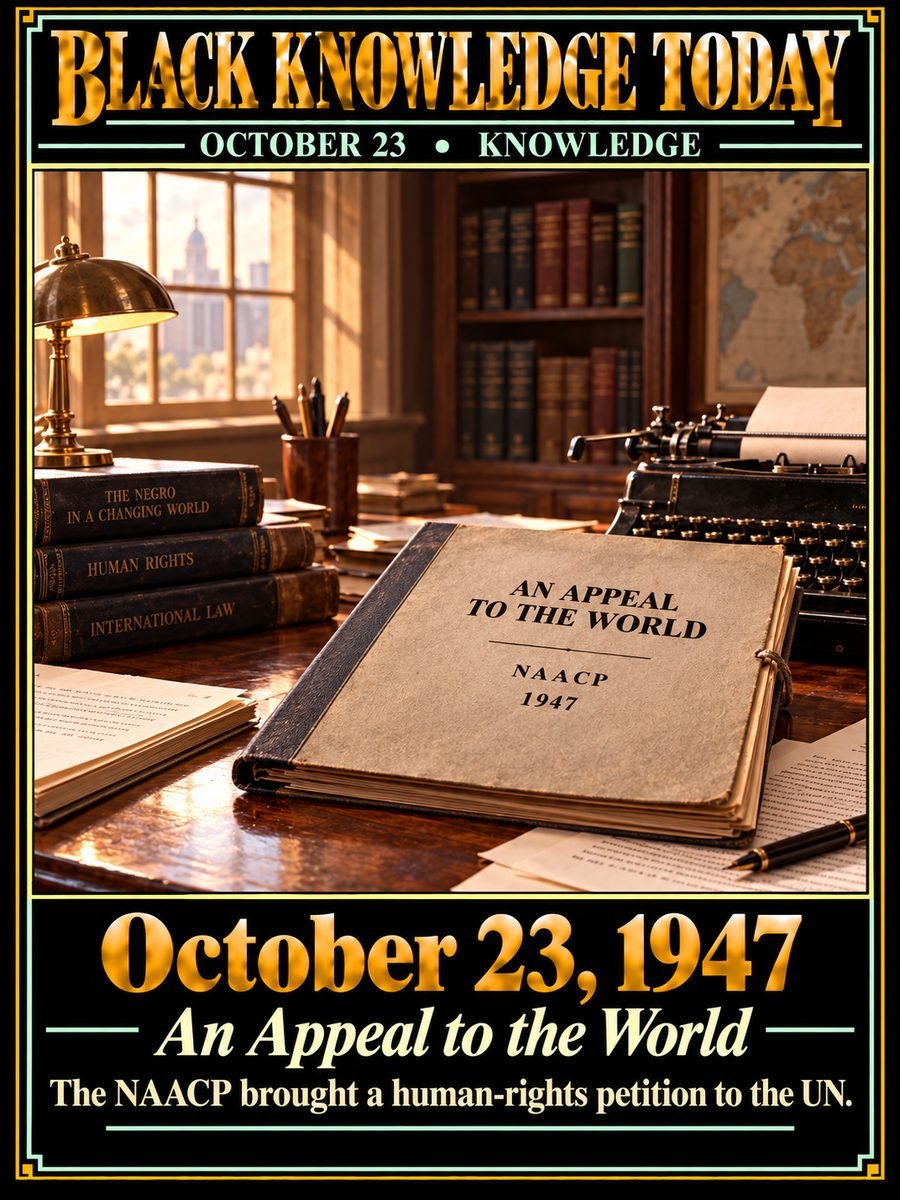
On October 23, 1947, an NAACP delegation presented An Appeal to the World, a petition documenting the denial of Black Americans’ human rights, to the United Nations. The petition internationalized the struggle against U.S. racism by framing segregation, disfranchisement, and racial violence as human-rights violations rather than only domestic policy questions.
Wear the history: Jackie Robinson — from the Black Knowledge Wear collection.
