
Those We Lost
Those We Lost — October 23
Oct
Honoring those we lost on October 23 — remembered for what they gave, and for what they left behind.
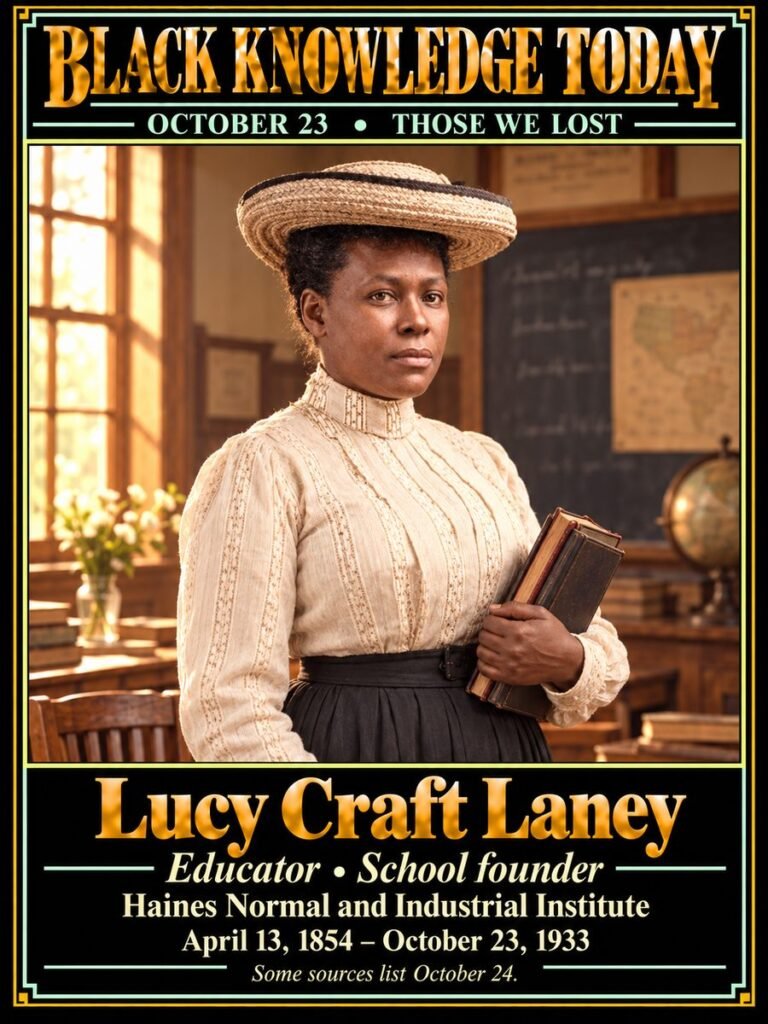
Lucy Craft Laney
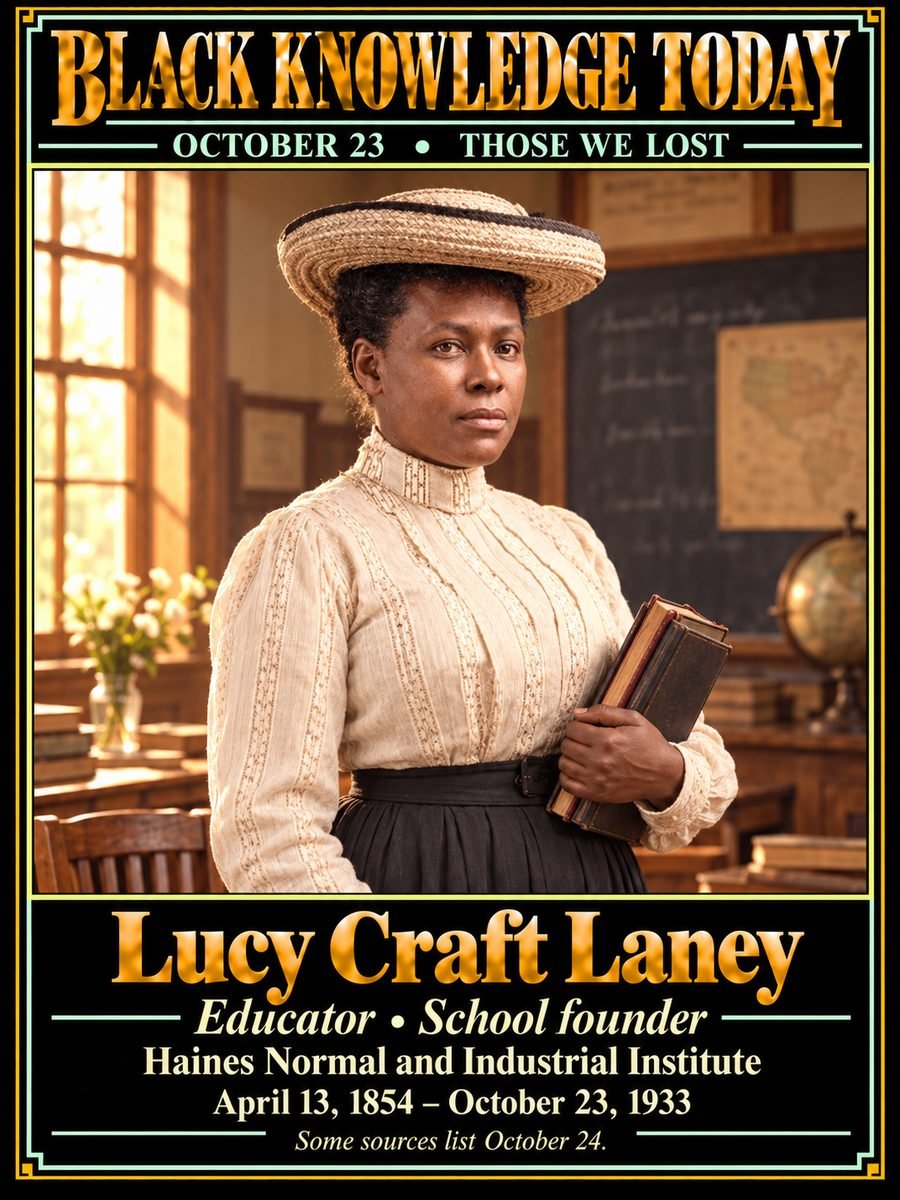
Born April 13, 1854 — died October 23, 1933
Educator, school founder, and community leader
Laney founded the Haines Normal and Industrial Institute in Augusta, Georgia, building an academically ambitious school for Black children that trained teachers and community leaders. Her insistence on classical learning, teacher preparation, health services, and civic leadership made Haines a cornerstone of Black education in Georgia.
Fredericka Douglass Sprague Perry
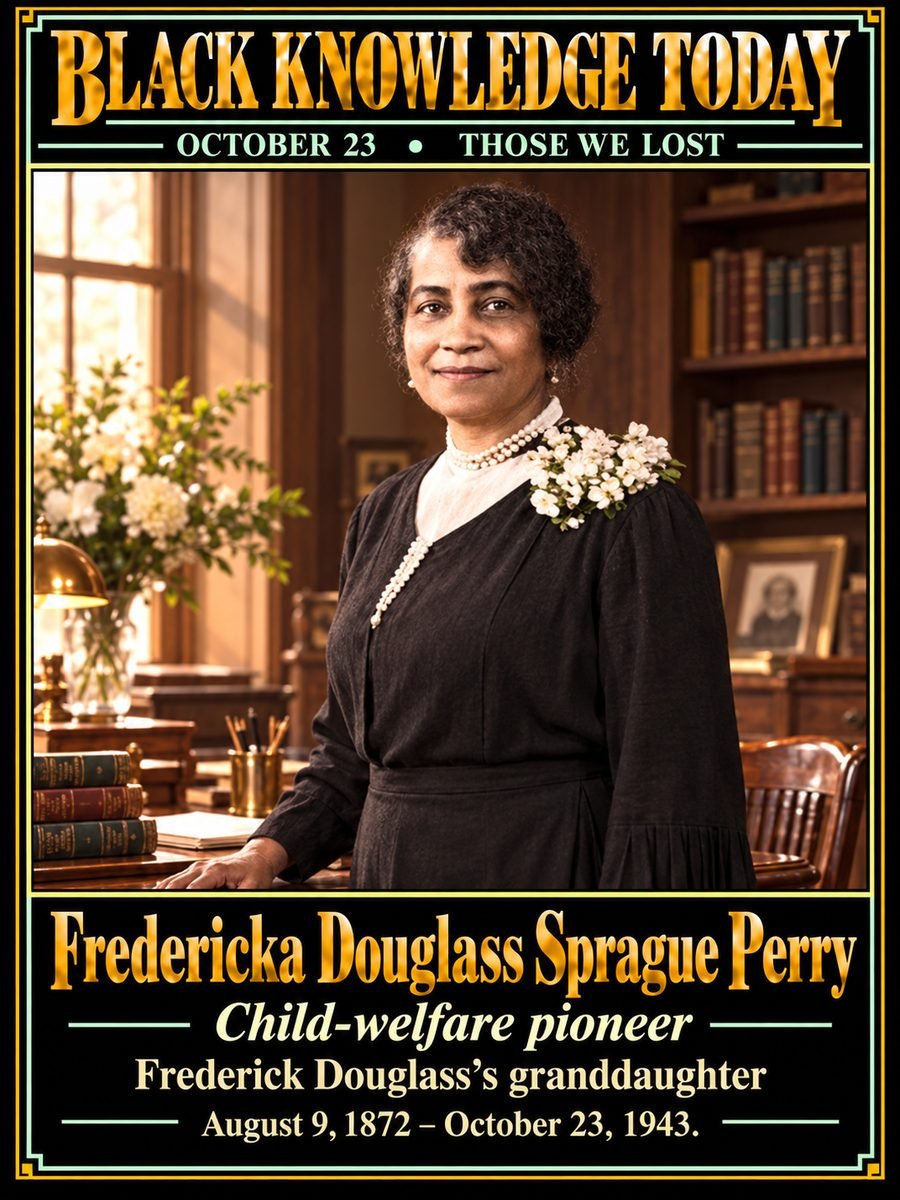
Born August 9, 1872 — died October 23, 1943
Child-welfare advocate, educator, and clubwoman
A granddaughter of Frederick Douglass, Perry taught home economics at Lincoln University in Missouri before moving to Kansas City. There she worked with her husband, Dr. John Edward Perry, at Wheatley-Provident Hospital. As a juvenile-court worker she recruited foster parents for Black children, and in 1934 she founded the Colored Big Sister Home for Girls. Her advocacy built foster care and child-welfare services for Black children in Kansas City at a time when state agencies excluded them.
Bill Traylor
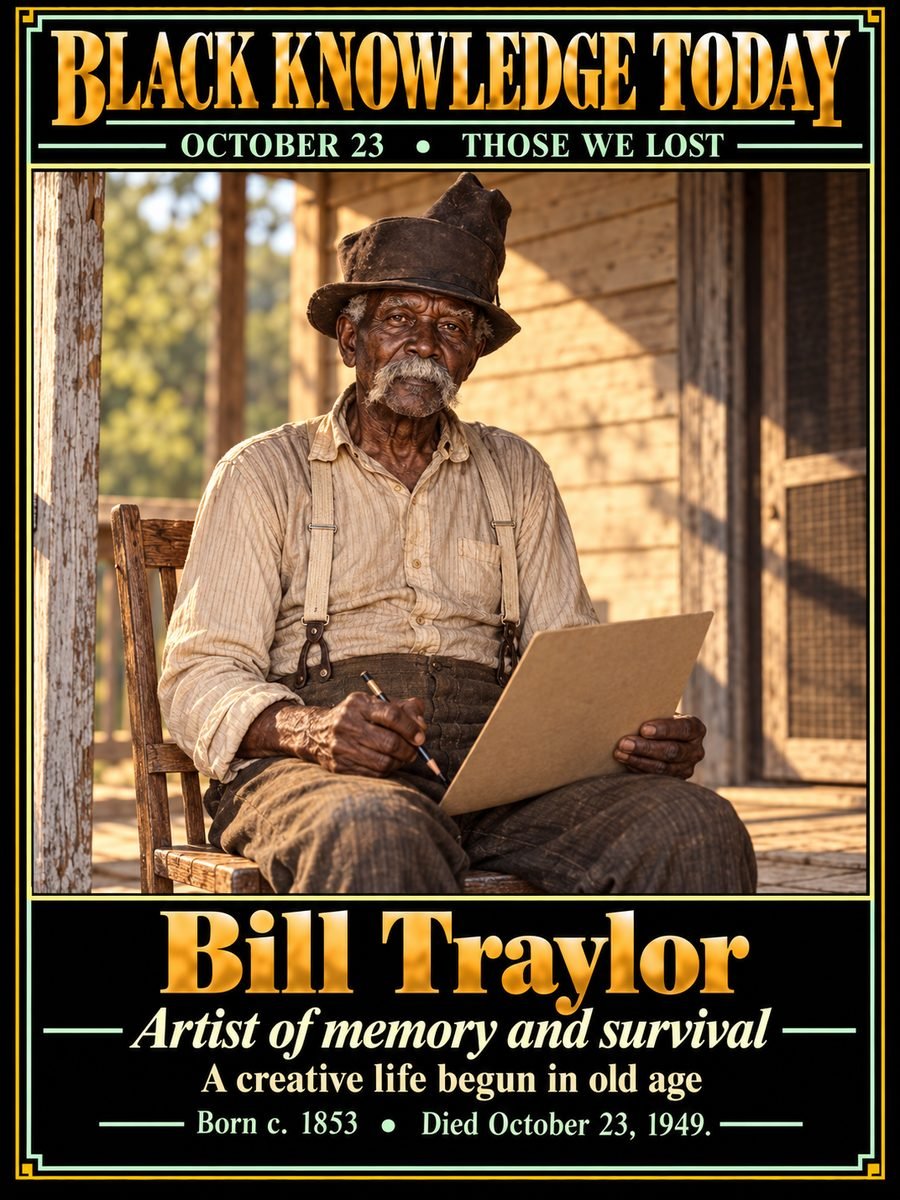
Born c. 1853 — died October 23, 1949
Self-taught artist and former agricultural laborer
Born into slavery in Alabama, Traylor spent most of his life farming and began drawing intensively in old age while living in Montgomery. He created more than one thousand surviving works. His spare, dynamic figures and coded scenes are now regarded as a major record of Black memory, labor, violence, humor, movement, and survival across slavery and freedom.
Esquerita
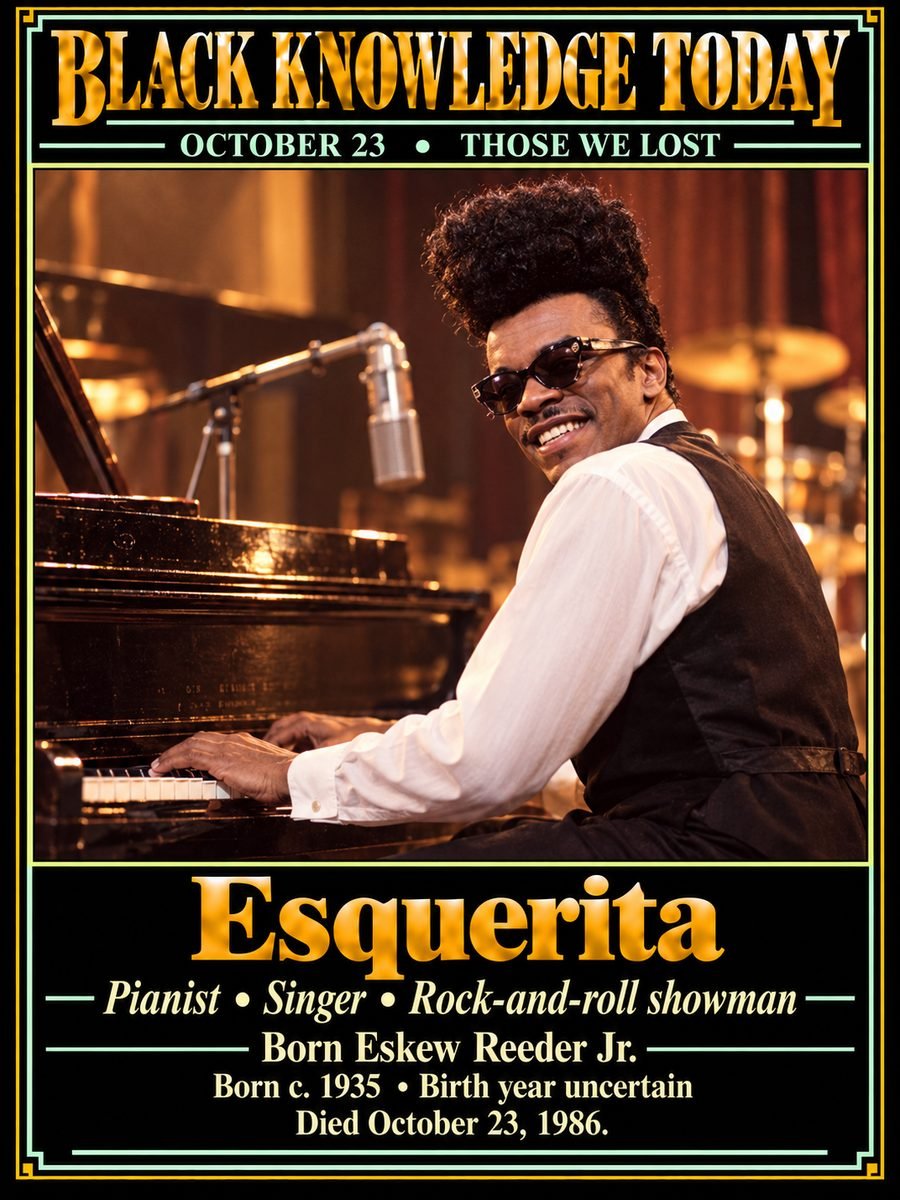
Born c. 1935 — died October 23, 1986
Rock and roll singer, songwriter, and pianist
Born Eskew Reeder Jr. in Greenville, South Carolina, Esquerita taught himself piano in church and became the house act at Greenville’s Owl Club. Through Gene Vincent’s guitarist, Paul Peek, he came to Capitol Records, where in 1958 he recorded twenty-eight songs; twelve were released as the LP Esquerita! He kept recording for small labels in the 1960s, including an early Motown label. His flamboyant style and pounding piano made him one of the wildest performers of early rock and roll, and he is widely credited as an influence on Little Richard.
Leon Bibb
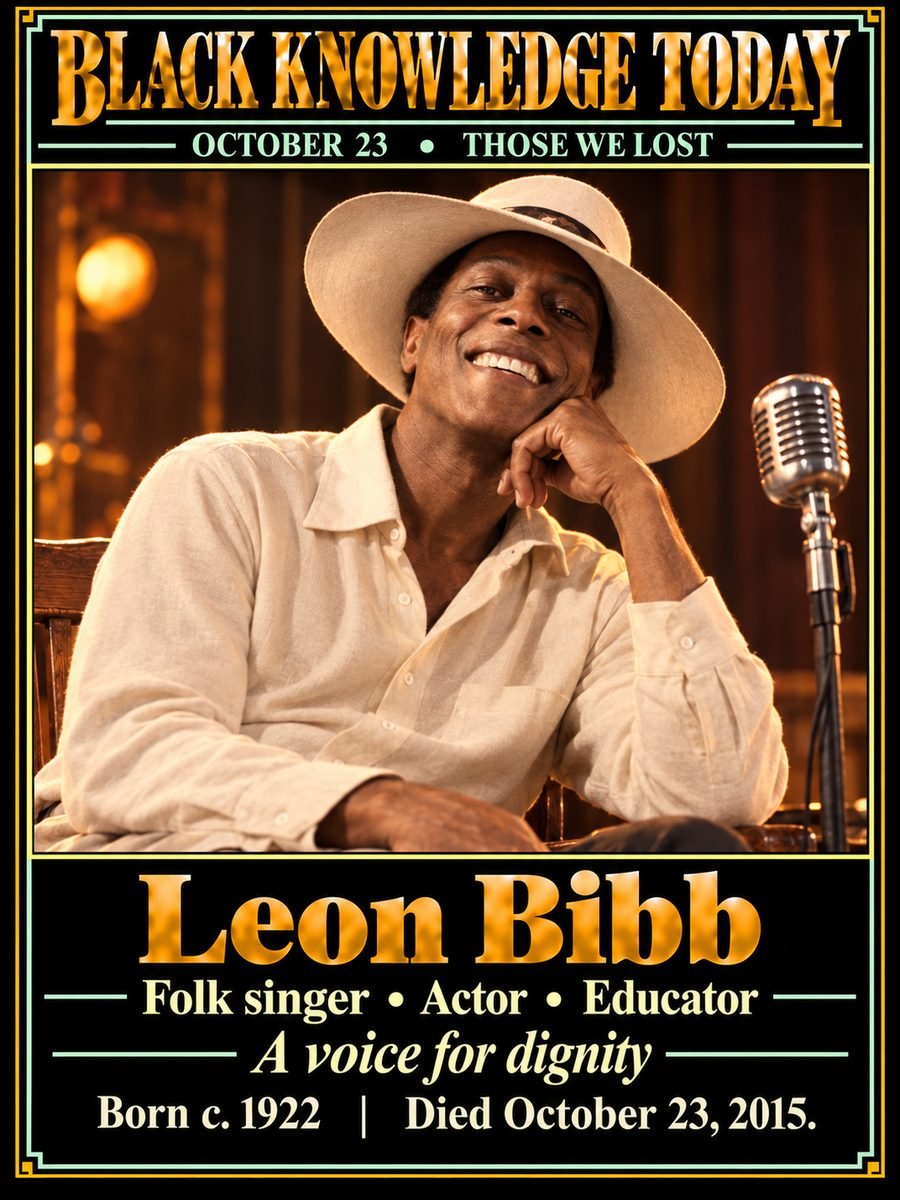
Born c. 1922 — died October 23, 2015
Folk singer, Broadway actor, and anti-racism educator
Bibb grew up under segregation, made his Broadway debut in 1946 in Annie Get Your Gun, and earned a Tony nomination in 1967 for A Hand Is on the Gate. He became prominent in the folk revival, appeared on The Ed Sullivan Show, and sang with Joan Baez and Harry Belafonte on the civil rights trail. He later moved to Vancouver. In the 1990s he founded an anti-racism program that he performed in schools across Canada, and he received the Order of British Columbia in 2009. His son is the blues musician Eric Bibb.
