
Black History Knowledge
Black History Knowledge — November 12
Nov
What happened on this day. These are the November 12 moments in Black history worth knowing, remembering, and passing on.
1775 — George Washington’s orders bar Black men from enlisting in the Continental Army
Washington’s general orders of November 12, 1775, issued at Cambridge, Massachusetts, stated that ‘Neither Negroes, Boys unable to bare Arms, nor old men’ were to be enlisted. Black minutemen had fought from the first shots at Lexington and Concord, and dozens of Black Patriots served at Bunker Hill. On December 30, 1775, Washington allowed recruiters to enlist free Black men.
1922 — Sigma Gamma Rho Sorority is founded in Indianapolis
Sigma Gamma Rho Sorority was organized in Indianapolis on November 12, 1922, by seven young Black women educators. It became an incorporated national collegiate sorority on December 30, 1929, when its Alpha chapter was chartered at Butler University. It is one of the nine historically Black Greek-letter organizations of the National Pan-Hellenic Council.
1925 — Louis Armstrong’s Hot Five makes its first recordings
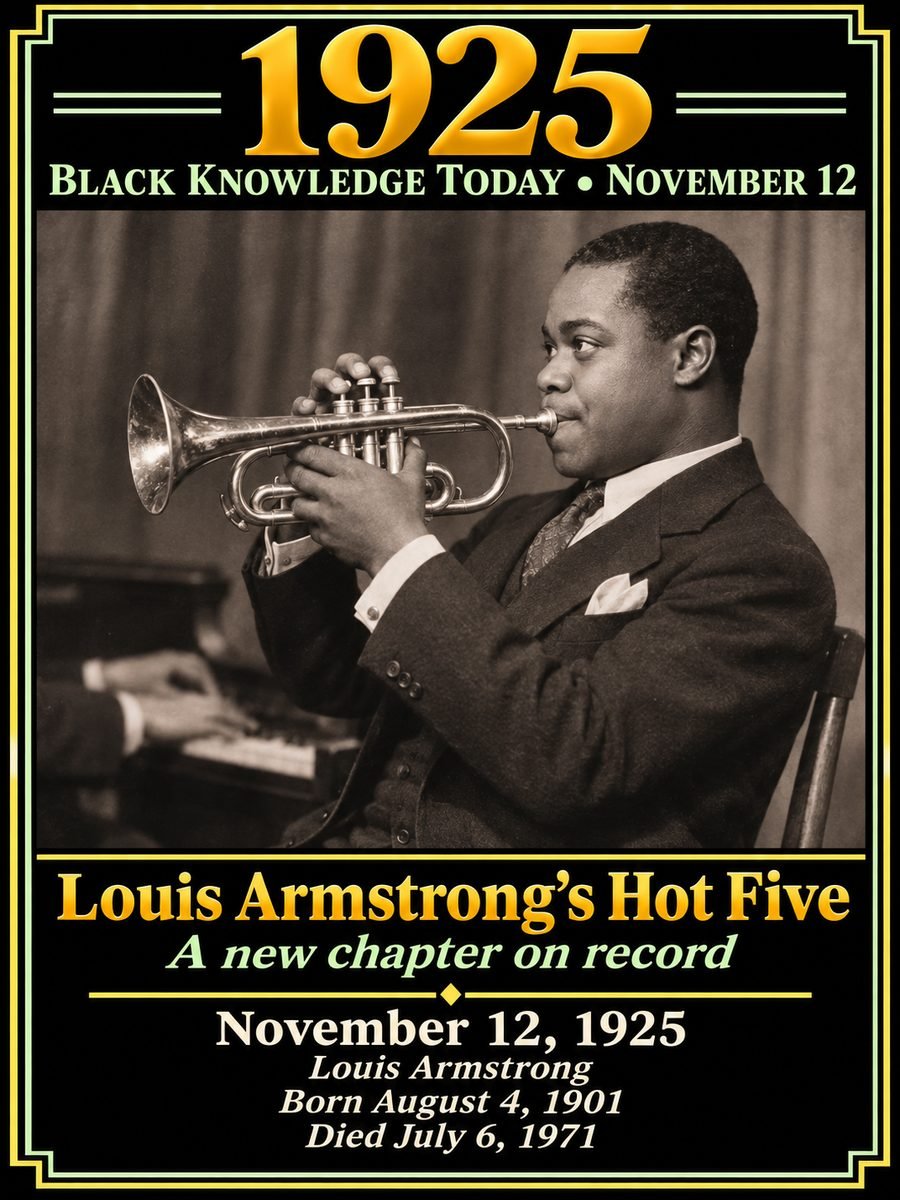
On November 12, 1925, Louis Armstrong led his Hot Five, with Lil Hardin Armstrong, Kid Ory, Johnny Dodds and Johnny St. Cyr, in its first recording session for OKeh Records in Chicago. The first sides included ‘Gut Bucket Blues’ and ‘Yes! I’m in the Barrel.’ The Hot Five and Hot Seven records made the improvising soloist the center of jazz.
1935 — A mob of 700 lynches two Black teenagers in Colorado County, Texas
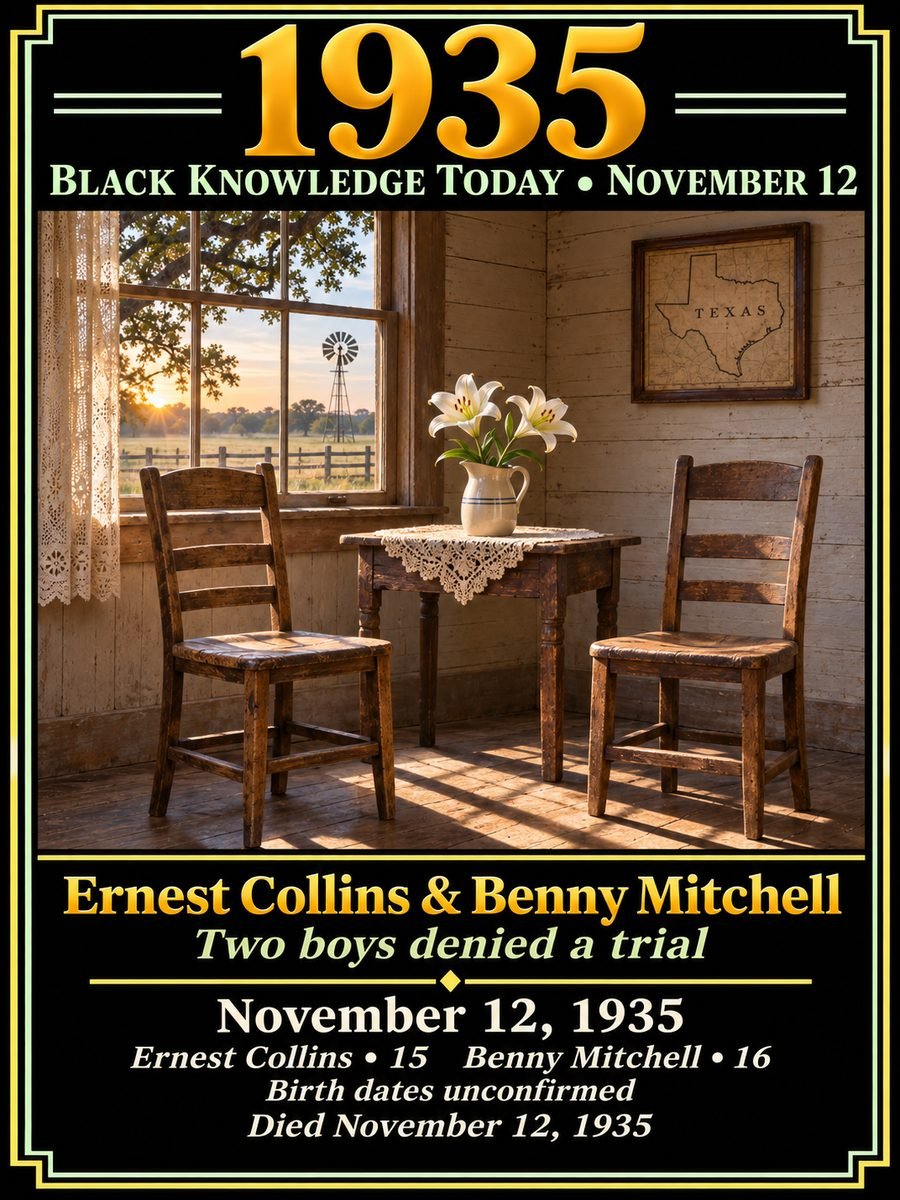
On November 12, 1935, a mob of at least 700 white men, women and children seized 15-year-old Ernest Collins and 16-year-old Benny Mitchell from the sheriff on their way to trial in Colorado County, Texas, and lynched them. The county attorney called the lynchings ‘an expression of the will of the people,’ and a local judge called them ‘justice.’ No one was ever held accountable.
1940 — Supreme Court rules for Carl Hansberry in Hansberry v. Lee
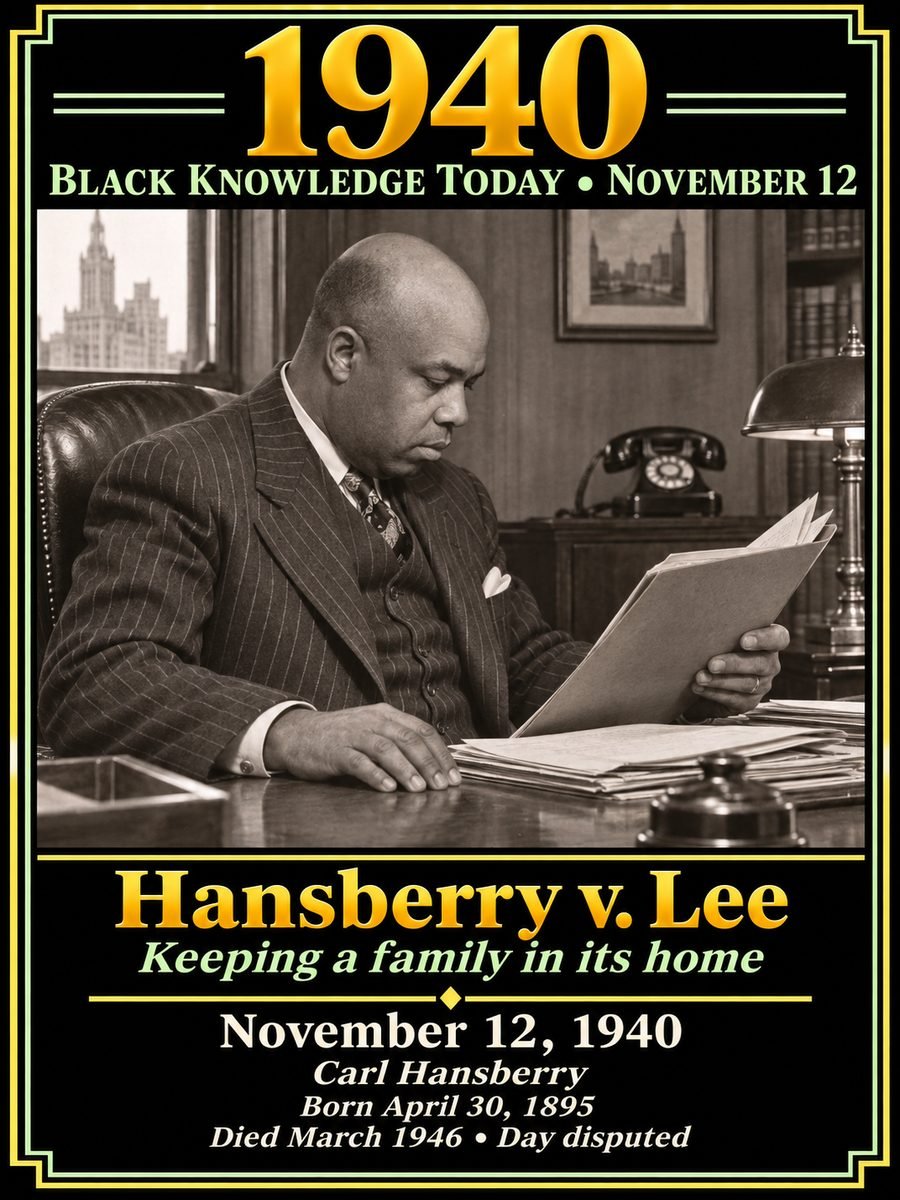
In Hansberry v. Lee, decided November 12, 1940, the U.S. Supreme Court ruled that Carl Hansberry, a Black real estate broker, could not be bound by an earlier lawsuit enforcing a racially restrictive covenant on Chicago’s South Side. The decision let his family keep their home. His daughter, playwright Lorraine Hansberry, drew on the experience in ‘A Raisin in the Sun.’
