
Black History Knowledge
Black History Knowledge — November 23
Nov
What happened on this day. These are the November 23 moments in Black history worth knowing, remembering, and passing on.
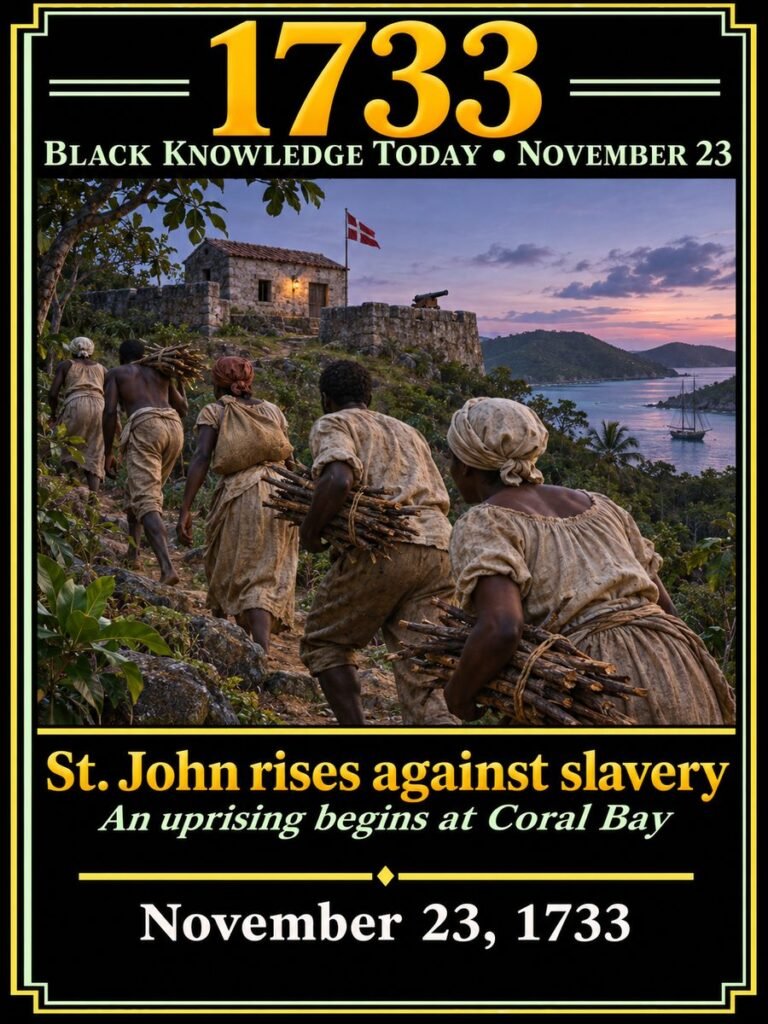
1733 — Enslaved Akwamu people revolt on St. John, now in the U.S. Virgin Islands
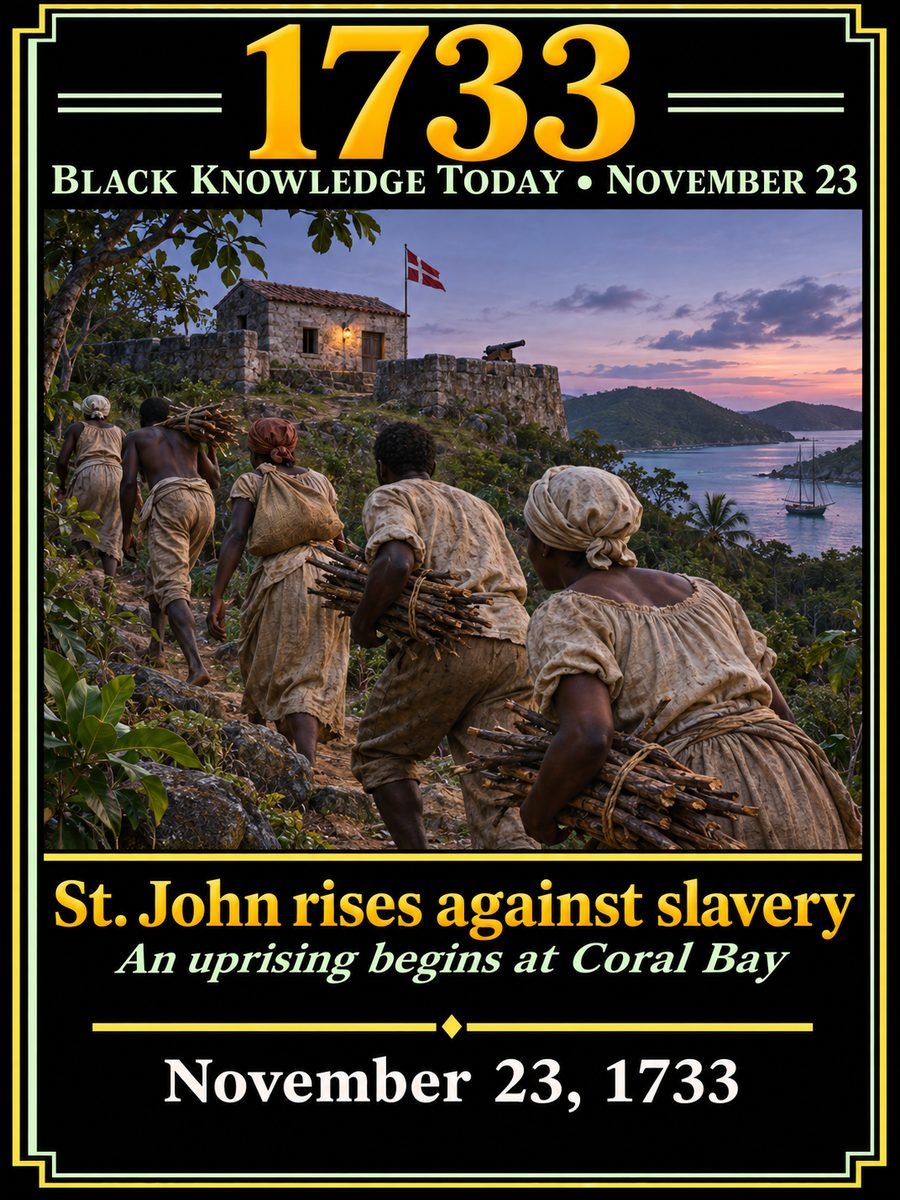
In the early morning of November 23, 1733, enslaved Akwamu people on St. John, then part of the Danish West Indies and now part of the U.S. Virgin Islands, entered the Danish fort at Coral Bay with cane knives hidden in firewood, took it, and fired its cannon to signal a wider uprising. The fighting lasted about six months, until French troops from Martinique helped the Danes end it.
1887 — Thibodaux massacre of striking Black sugar workers, Louisiana
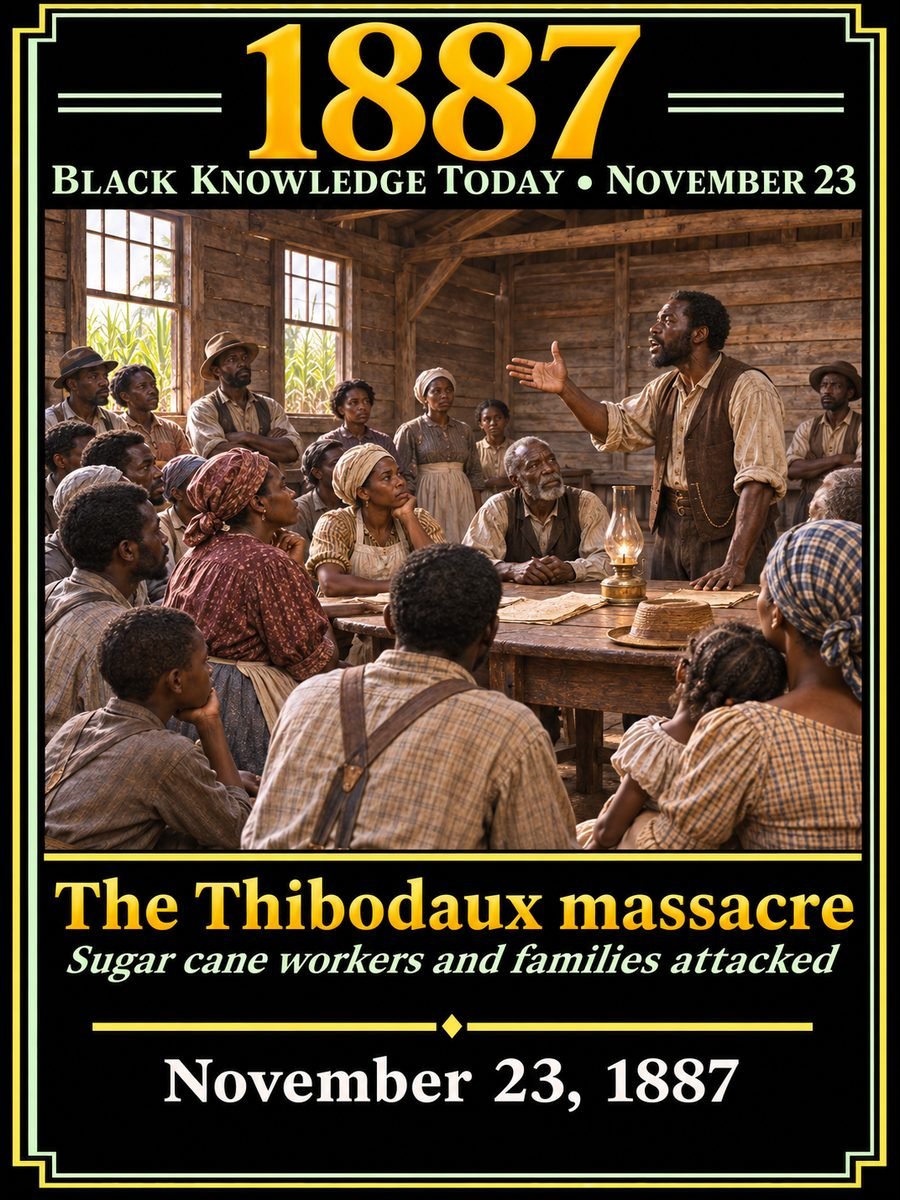
On November 23, 1887, armed white vigilantes, alongside the state militia, attacked the Black community of Thibodaux, Louisiana, going door to door and killing an estimated 30 to 60 people, including women and children. The victims were Black sugar cane workers and their families, who had gone on strike that month with the Knights of Labor. The massacre broke the strike.
1897 — Andrew J. Beard and John Lee Love receive patents the same day
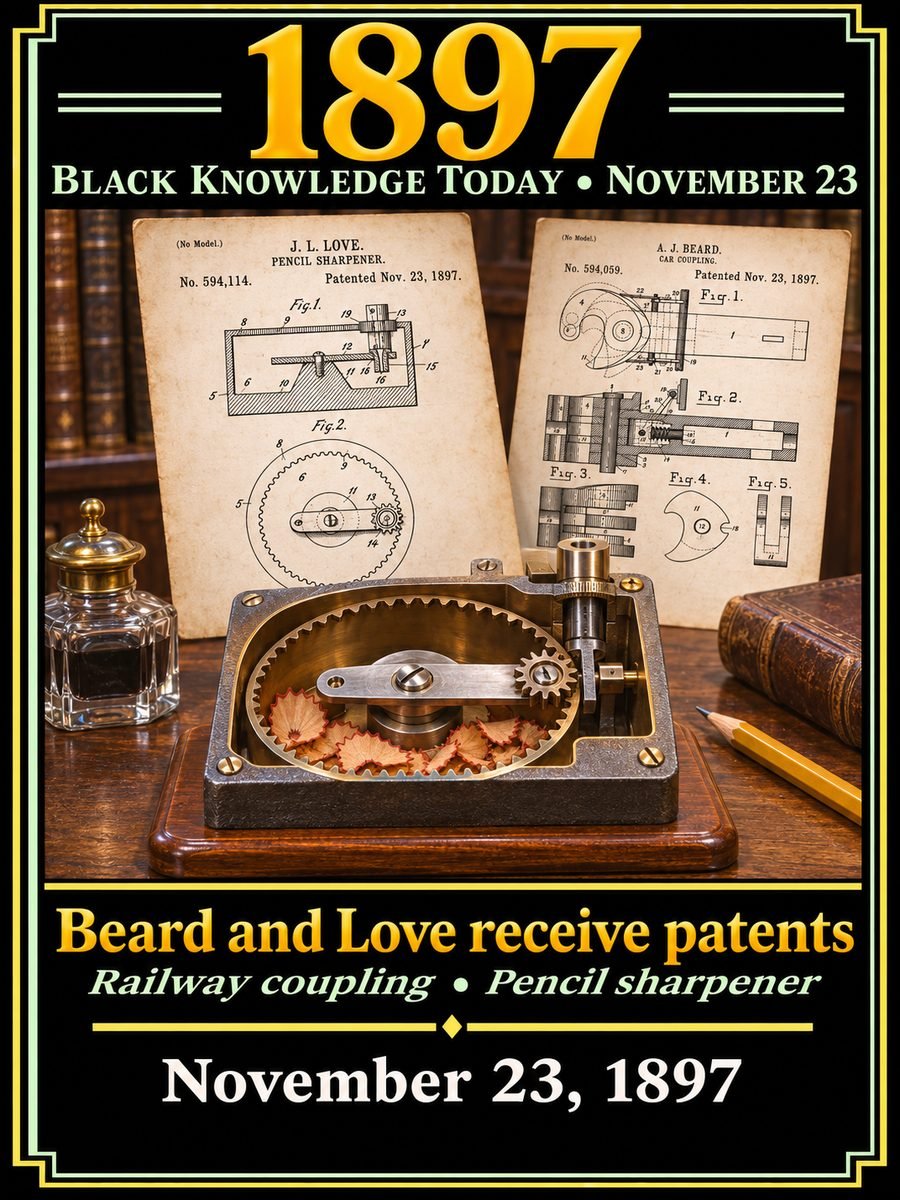
On November 23, 1897, Andrew J. Beard of Eastlake, Alabama, received patent No. 594,059 for an automatic car coupling, and John Lee Love of Fall River, Massachusetts, received patent No. 594,114 for a pencil sharpener. Beard, born into an enslaved family, had worked for the Alabama & Chattanooga Railroad, where men coupling cars by hand often lost fingers and limbs; his ‘Jenny coupler’ locked cars together automatically when they bumped. Love’s sharpener caught the shavings in a chamber and could double as a paperweight.
1936 — Robert Johnson records his first songs in San Antonio
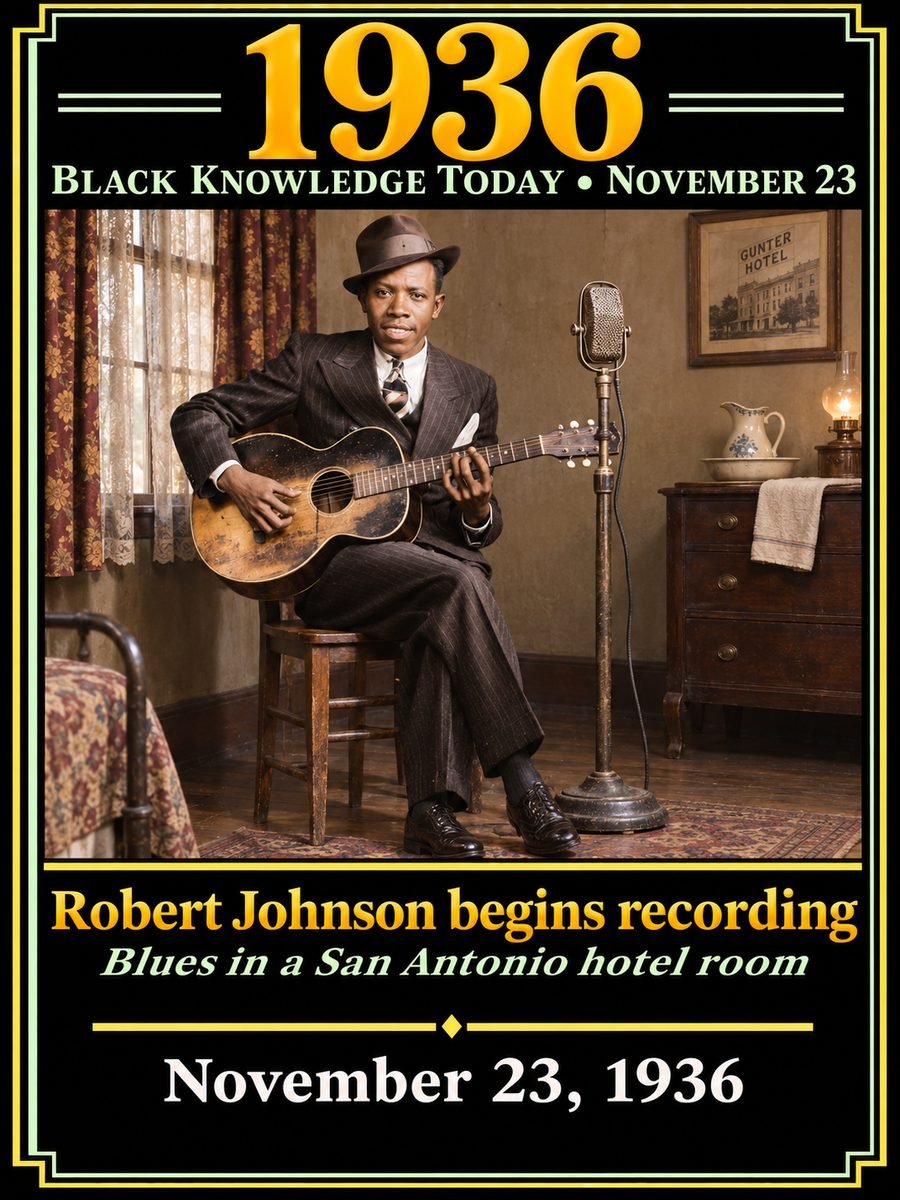
On November 23, 1936, Mississippi bluesman Robert Johnson made his first recordings, in Room 414 of the Gunter Hotel in San Antonio, Texas, cutting eight tracks for the American Recording Company, including ‘I Believe I’ll Dust My Broom’ and ‘Sweet Home Chicago.’ He returned days later to record ‘Cross Road Blues,’ and his first single, ‘Terraplane Blues,’ came from the Gunter sessions. He recorded again in Dallas in June 1937.
Wear the history: Andrew J. Beard — from the Black Knowledge Wear collection.
