
Black History Knowledge
Black History Knowledge — November 25
Nov
What happened on this day. These are the November 25 moments in Black history worth knowing, remembering, and passing on.
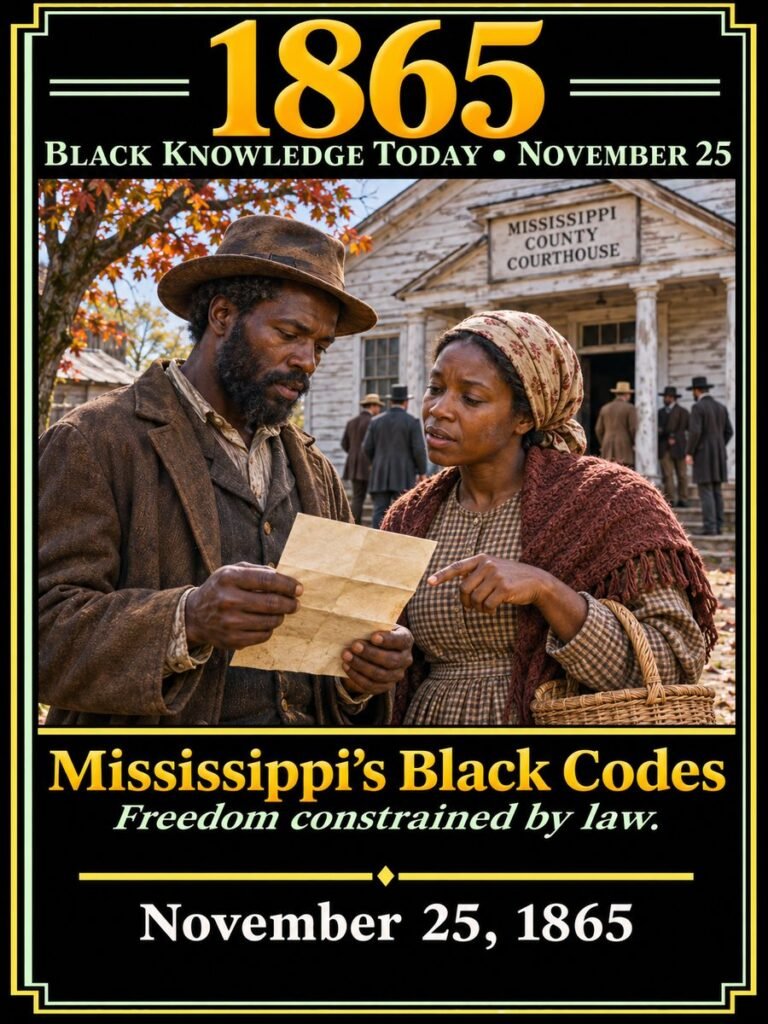
1865 — Mississippi passes the nation’s first Black Codes
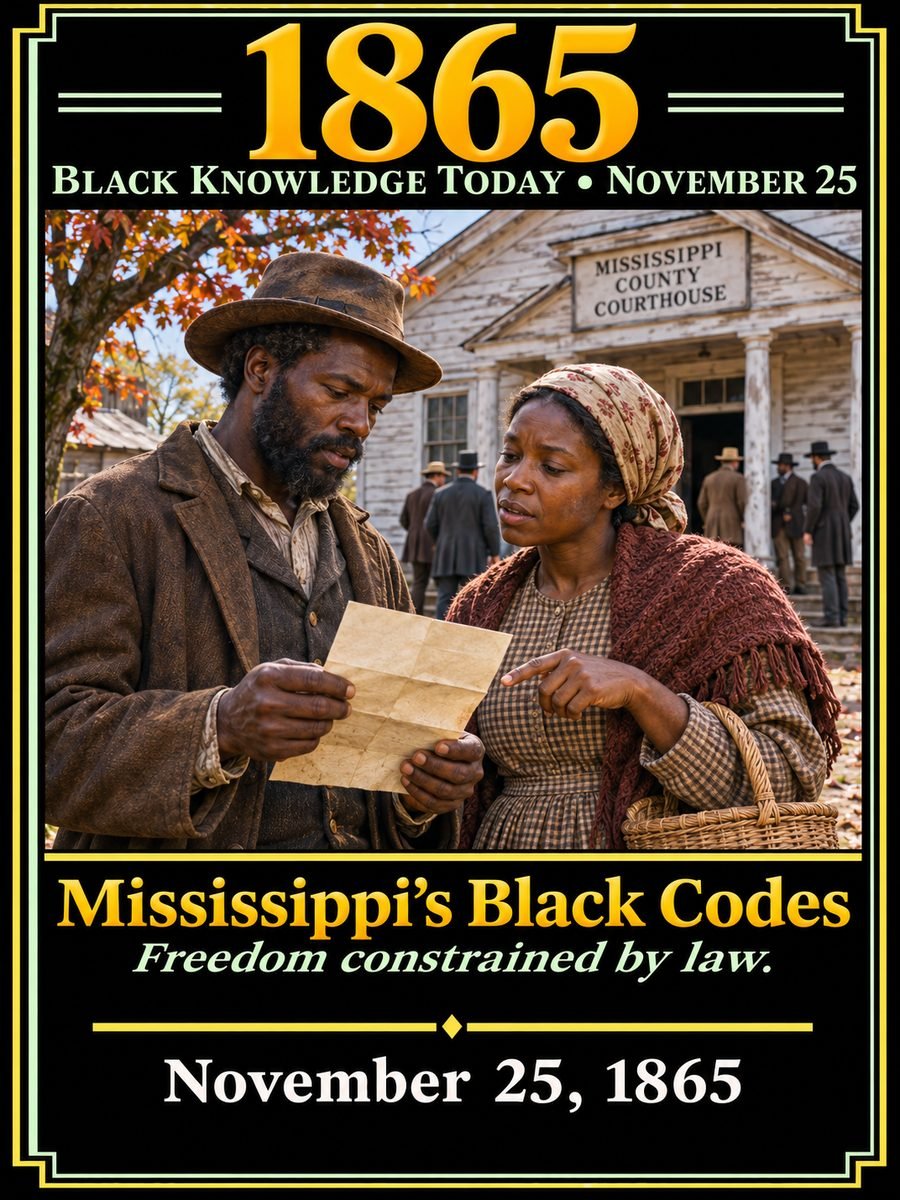
On November 25, 1865, Mississippi passed ‘An Act to Confer Civil Rights on Freedmen,’ one of four late-November acts that made up the nation’s first Black Codes. It barred marriage between Black and white people, barred freed people from renting or leasing land outside towns and cities, required them to carry written proof of a home or job each January, and limited how they could leave their jobs. Similar codes were quickly adopted in nearly every other Southern state.
1922 — Marcus Garvey lays out the principles of the UNIA in New York
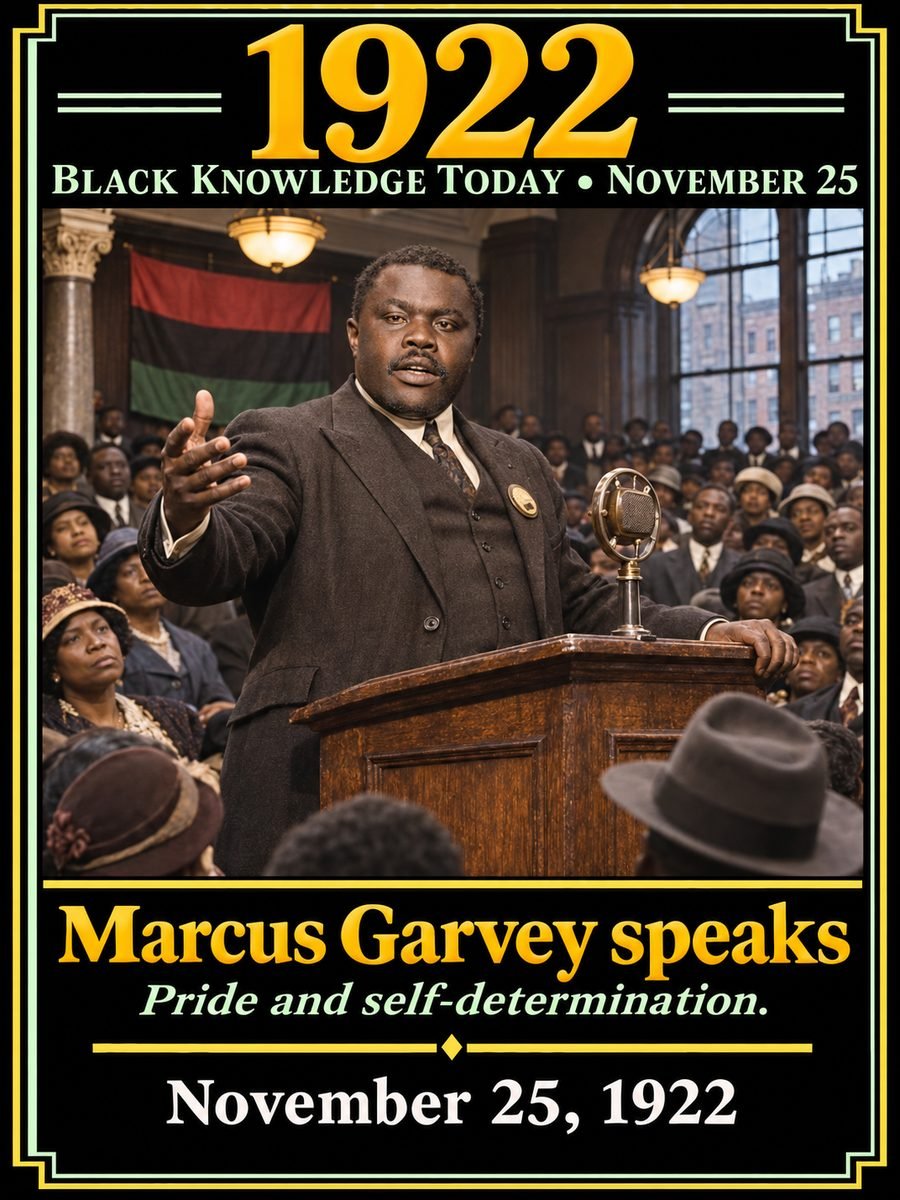
On November 25, 1922, Marcus Garvey gave a speech in New York City explaining the principles of the Universal Negro Improvement Association. The Jamaican-born leader had brought the UNIA to Harlem, where it published the Negro World newspaper and launched the Black Star Line. Garvey was indicted for mail fraud in 1922, served part of a five-year sentence, and was deported in 1927.
1940 — Supreme Court overturns a conviction from a Texas grand jury that excluded Black citizens
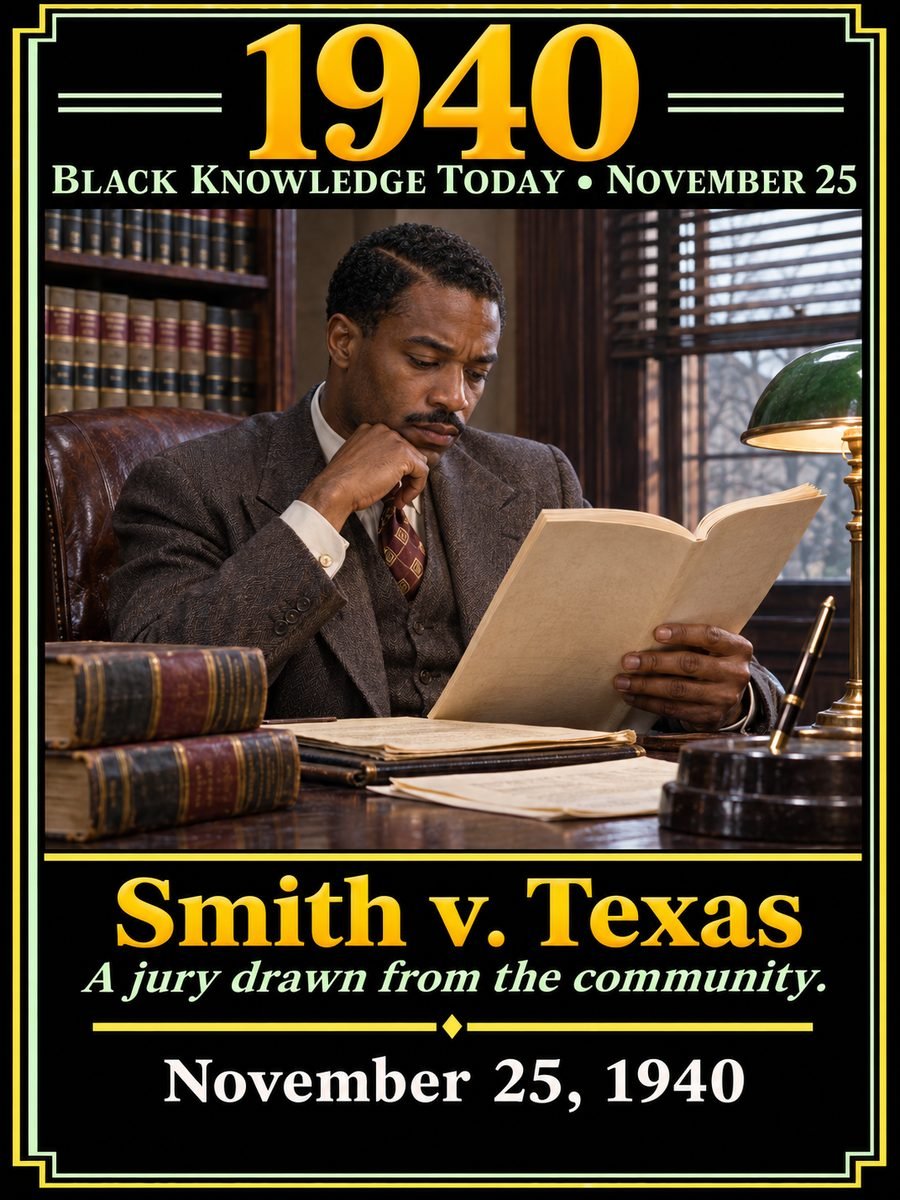
In Smith v. Texas, decided November 25, 1940, the U.S. Supreme Court reversed the rape conviction of a Black man indicted in Harris County, Texas, because Black citizens had been systematically kept off its grand juries. Justice Hugo Black wrote that a jury should be ‘a body truly representative of the community’ and that excluding qualified people because of race violates the Constitution.
Wear the history: Marcus Garvey — from the Black Knowledge Wear collection.
