
Black History Knowledge
Black History Knowledge — November 20
Nov
What happened on this day. These are the November 20 moments in Black history worth knowing, remembering, and passing on.
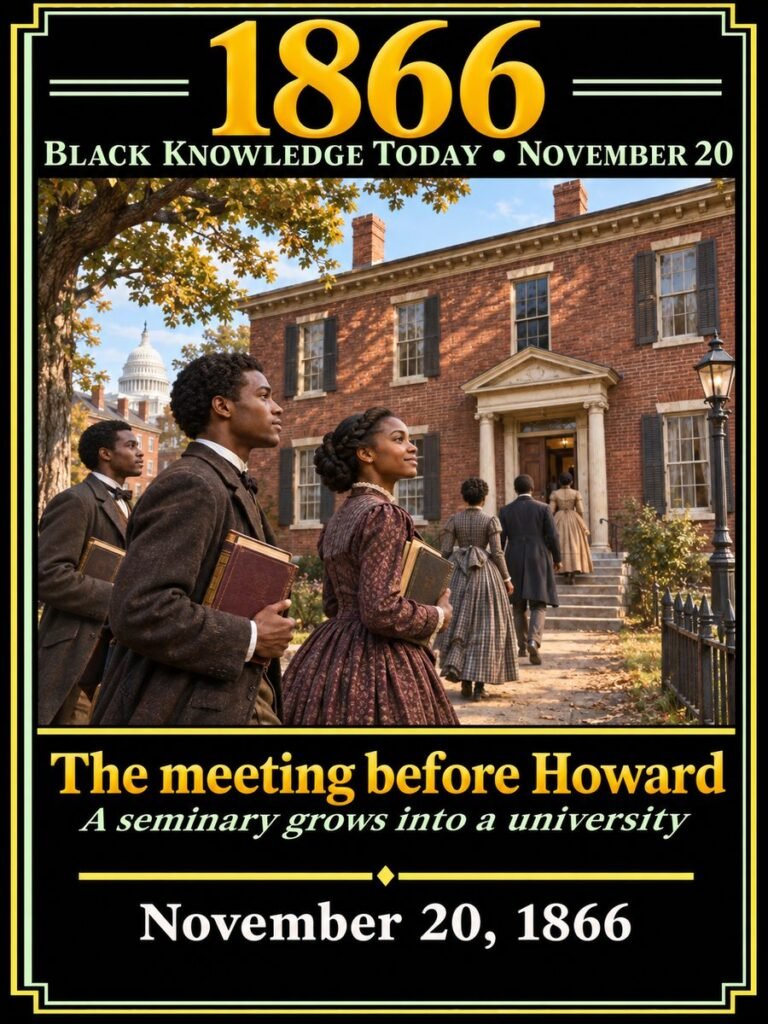
1866 — A church meeting in Washington launches what becomes Howard University
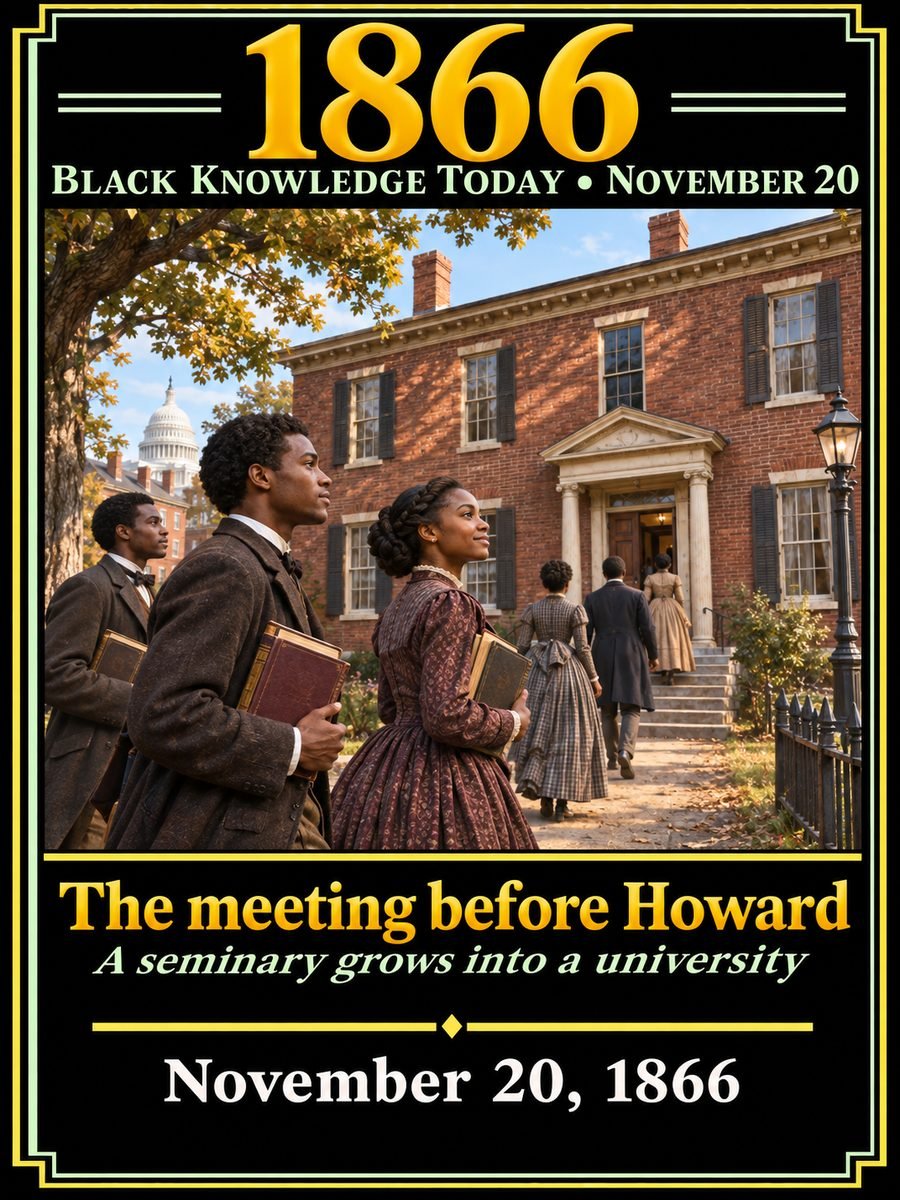
On November 20, 1866, ten members of the First Congregational Society of Washington, D.C., met at the home of Deacon Henry Brewster and resolved to found a seminary to train Black ministers. By early 1867 the plan had grown into a university with liberal arts and medical colleges, named for Freedmen’s Bureau commissioner General Oliver O. Howard. Congress chartered Howard University on March 2, 1867.
1923 — Garrett Morgan patents a traffic signal
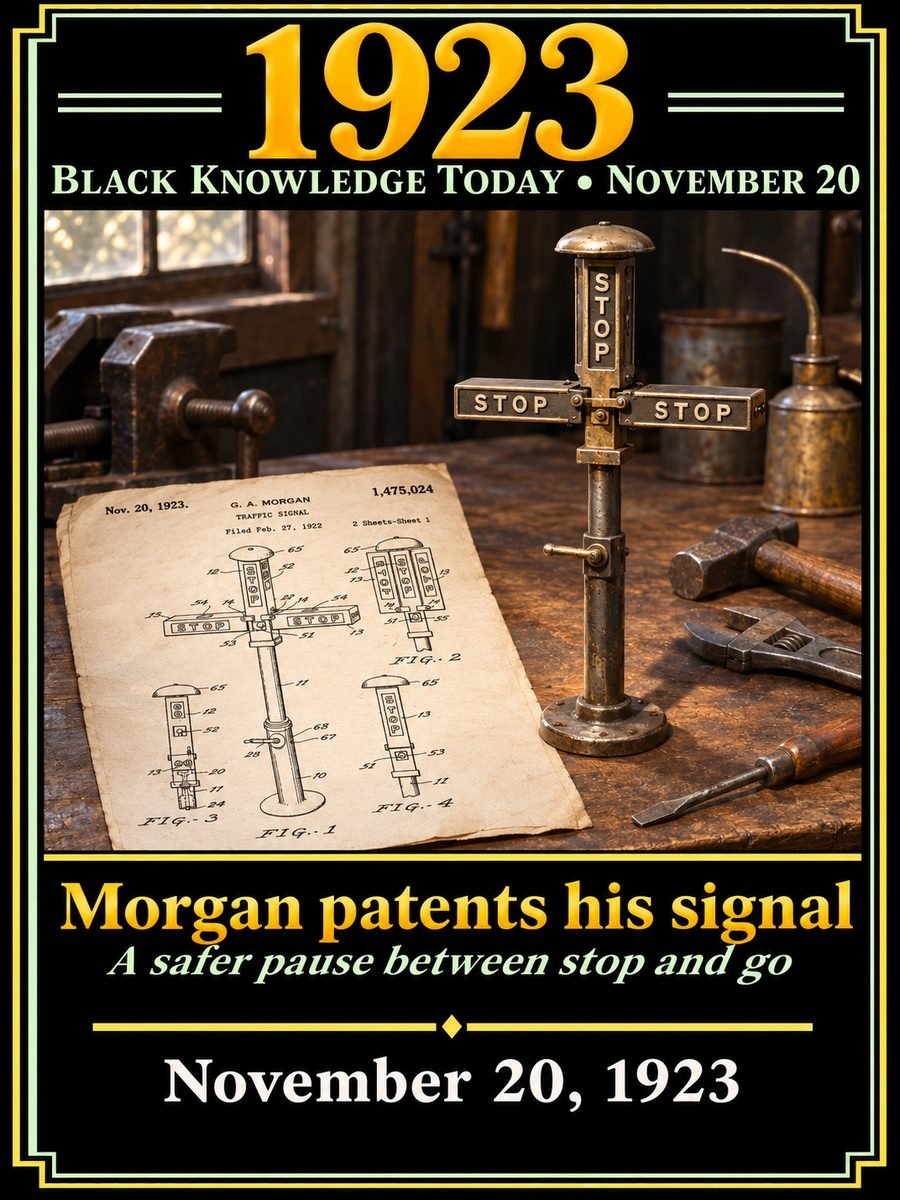
On November 20, 1923, Garrett A. Morgan of Cleveland received patent No. 1,475,024 for a traffic signal with a third ‘all stop’ position between go and stop. The design gave drivers a warning interval, a forerunner of the modern yellow light. Morgan, the son of formerly enslaved parents, also invented a breathing device used in a 1916 tunnel rescue and founded the Cleveland Call newspaper.
1962 — President Kennedy bans discrimination in federally funded housing
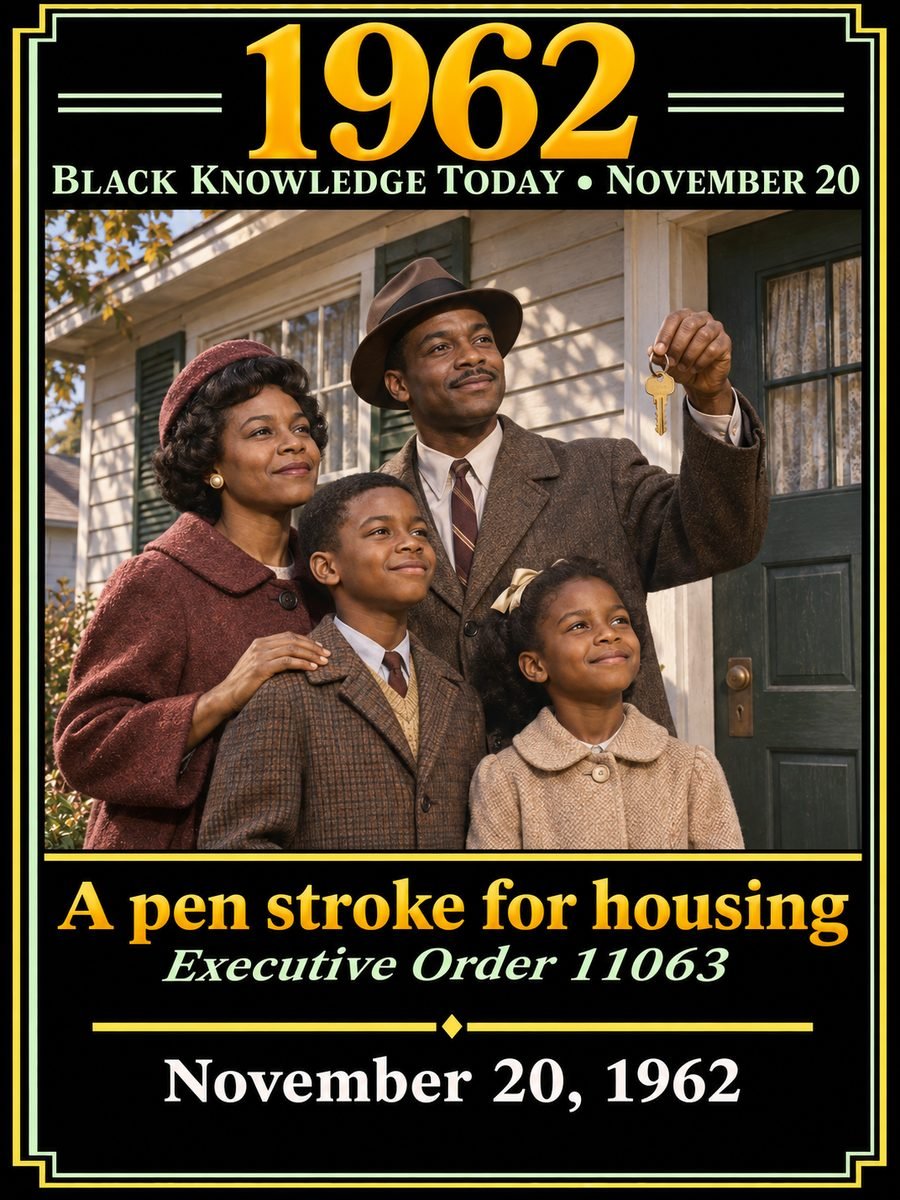
On November 20, 1962, President John F. Kennedy signed Executive Order 11063, which barred discrimination because of race, color, creed or national origin in housing owned, operated or financed with federal aid. In 1960 he had promised to act ‘by a stroke of the pen,’ then waited two years. The order reached about 1 million housing units; far broader protection came with the Fair Housing Act of 1968.
Wear the history: Garrett Morgan — from the Black Knowledge Wear collection.
