Black History Knowledge
Black History Knowledge — October 16
Oct
What happened on this day. These are the October 16 moments in Black history worth knowing, remembering, and passing on.
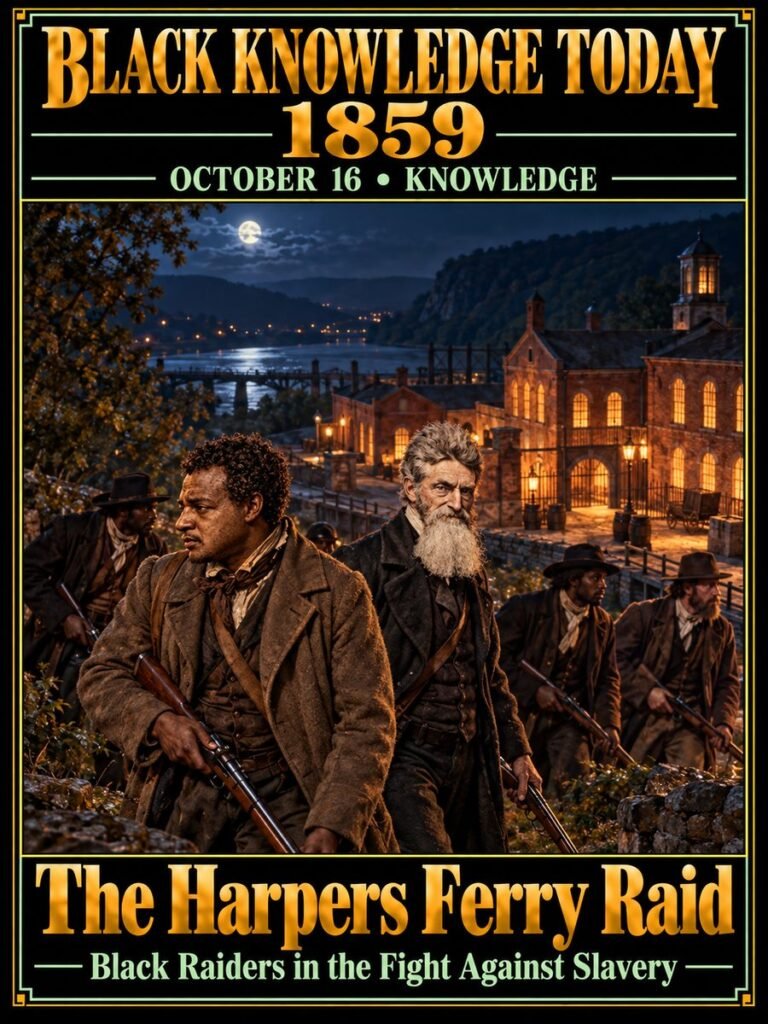
1859 — John Brown’s interracial force began its raid on Harpers Ferry
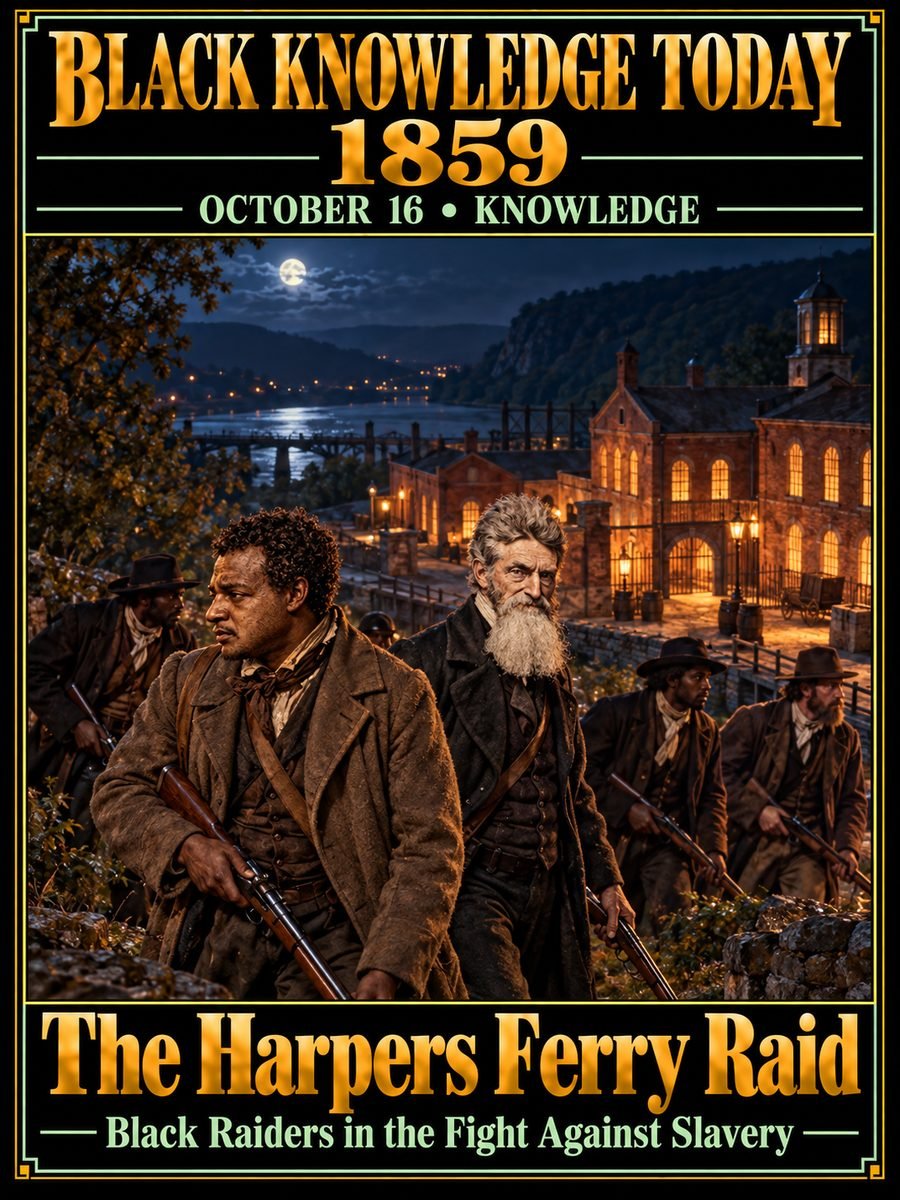
On the evening of October 16, 1859, John Brown and eighteen of his men moved into Harpers Ferry and seized the federal armory, arsenal, and rifle works in an attempt to spark a broader uprising against slavery. Five Black men were among the twenty-one men who joined Brown’s force. The raid intensified the national crisis over slavery. Centering the Black raiders corrects retellings that treat the action as Brown’s story alone.
1901 — Booker T. Washington dined at the White House
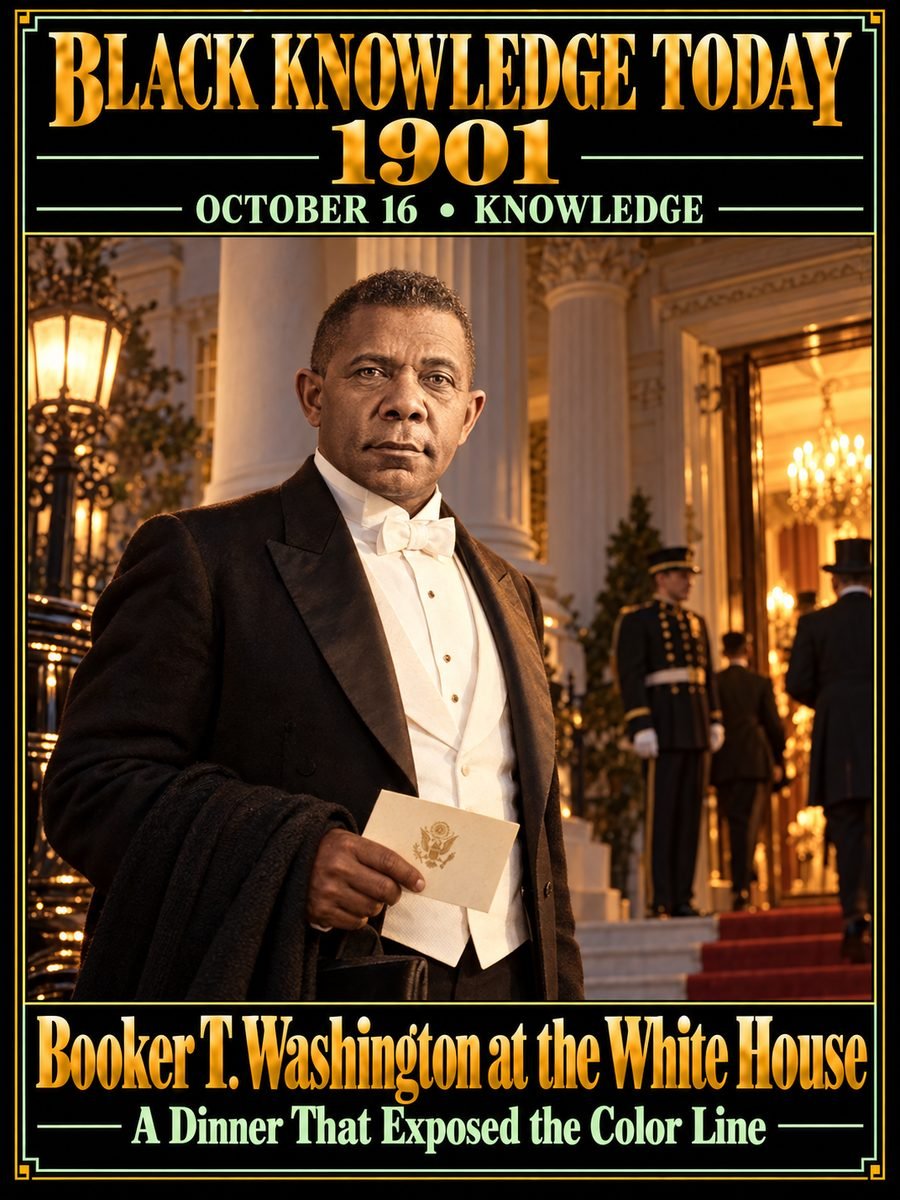
President Theodore Roosevelt invited Booker T. Washington to dine with his family at the White House on October 16, 1901. The dinner drew widespread condemnation from white Southern politicians and newspapers. The event illustrates both Washington’s political access and the rigid racial boundaries attached even to ordinary social equality at the start of the twentieth century.
1968 — Tommie Smith and John Carlos raised gloved fists at the Mexico City Olympics
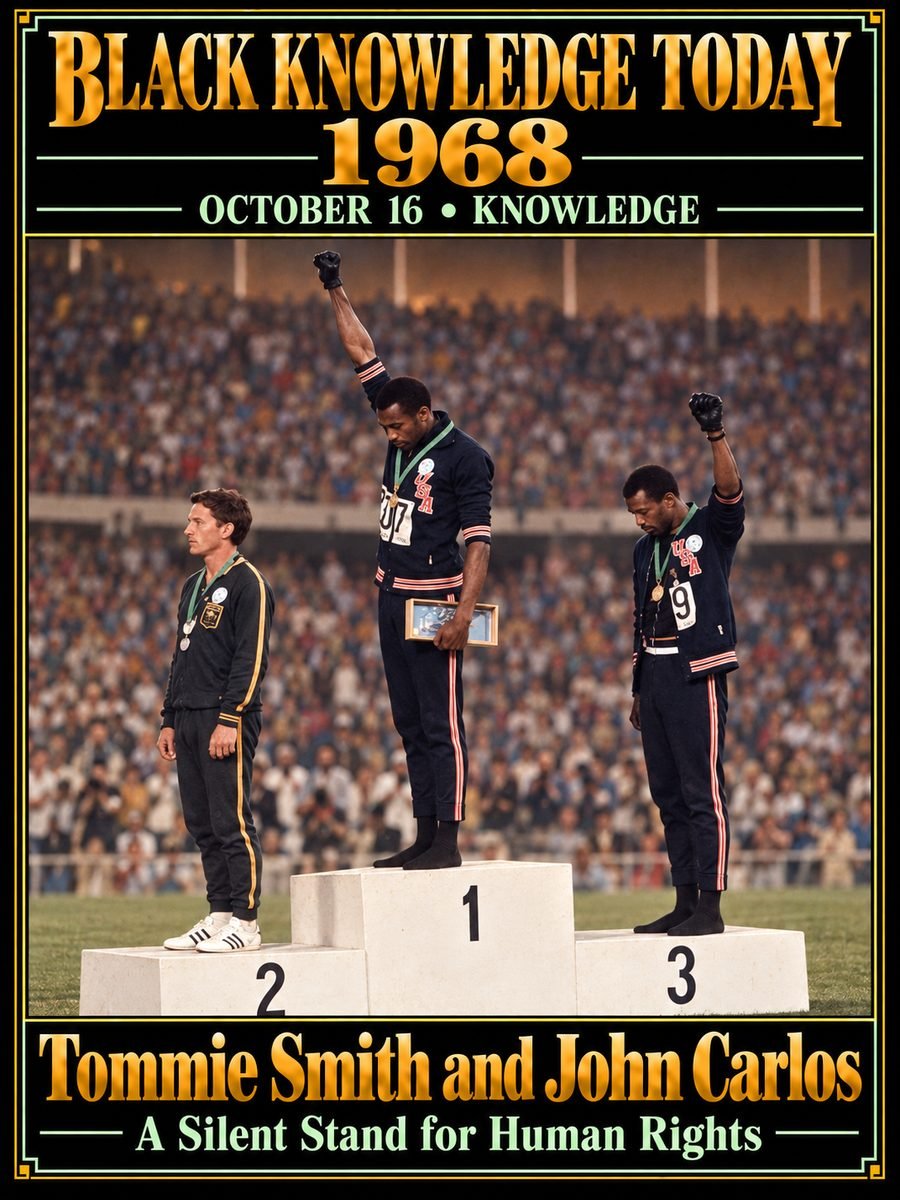
During the October 16 medal ceremony for the 200-meter race, gold medalist Tommie Smith and bronze medalist John Carlos bowed their heads and raised black-gloved fists during the U.S. anthem. The silent protest became one of the most recognizable images of athlete activism, linking the Olympic stage to demands for human rights and racial justice.
1995 — The Million Man March gathered in Washington
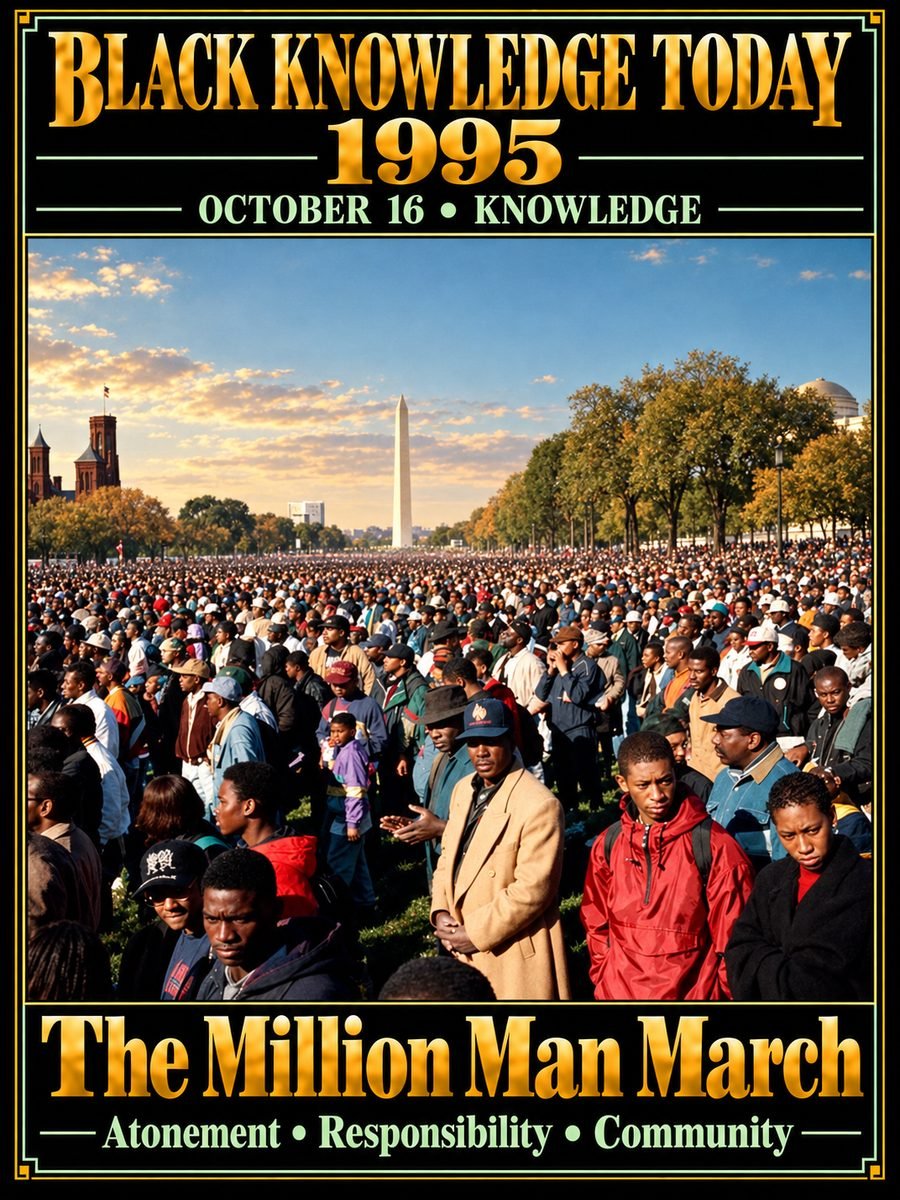
On October 16, 1995, a vast gathering of Black men assembled on the National Mall for a day framed around atonement, responsibility, political engagement, and community renewal. The march was one of the largest Black-led demonstrations in U.S. history and remains important both for its mobilizing power and for debates over leadership, gender, and political strategy.
