
Black History Knowledge
Black History Knowledge — October 2
Oct
What happened on this day. These are the October 2 moments in Black history worth knowing, remembering, and passing on.
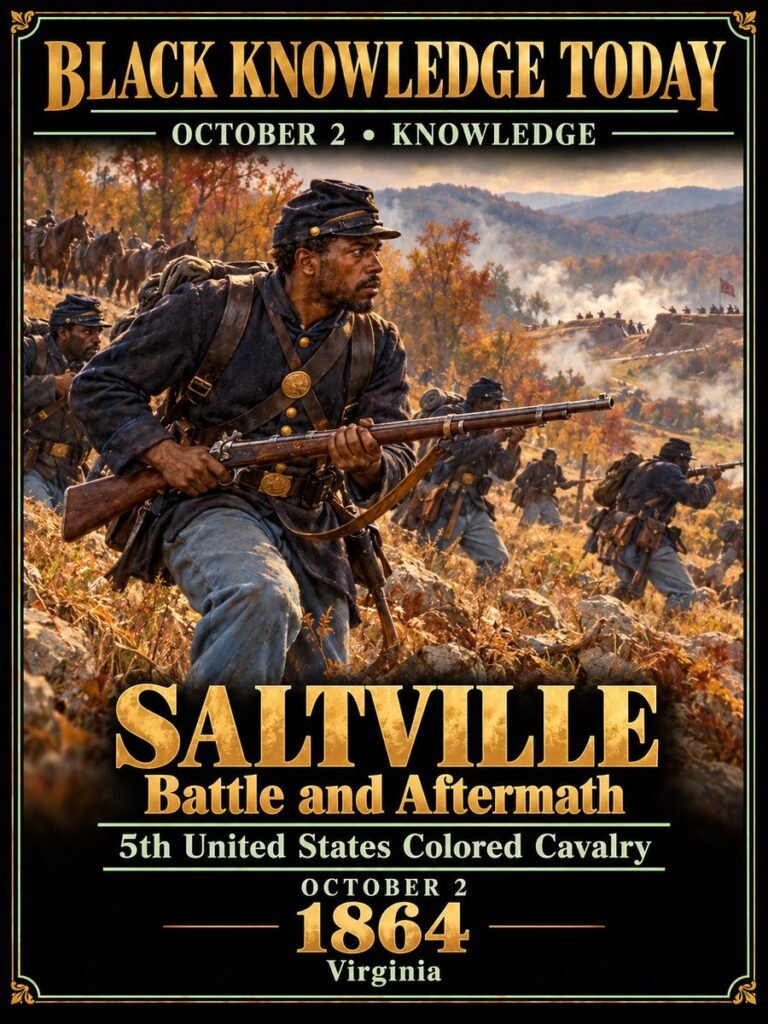
1864 — Black Union cavalrymen were murdered after the First Battle of Saltville
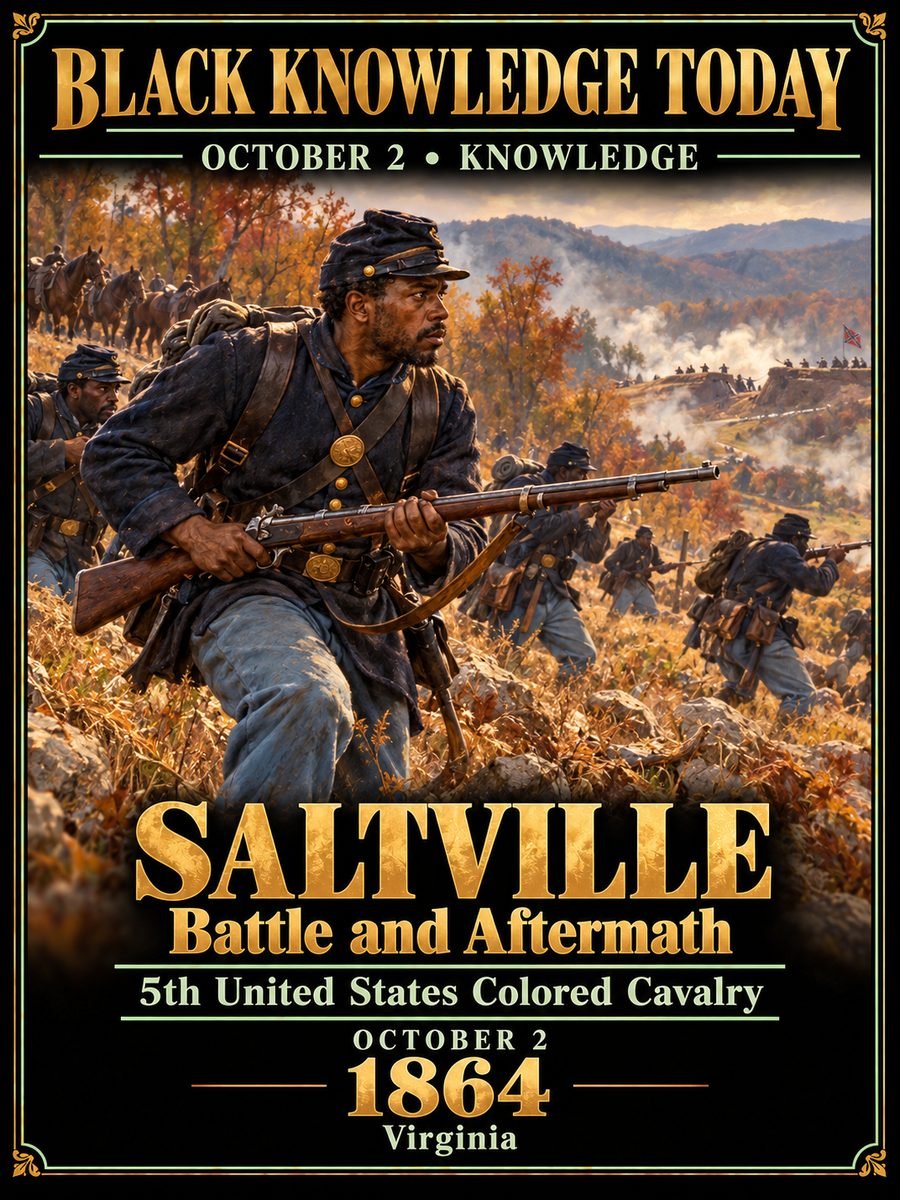
On October 2, 1864, Union troops including the 5th United States Colored Cavalry fought at Saltville. Afterward, Confederate soldiers, mostly militia irregulars, were said to have murdered as many as fifty captured Black soldiers of the 5th Colored Cavalry. Captured Black Union soldiers faced execution rather than treatment as prisoners of war. Champ Ferguson was tried and executed after the war for these and related killings.
1954 — Duke Washington became the first Black player to play and score at Texas’s Memorial Stadium
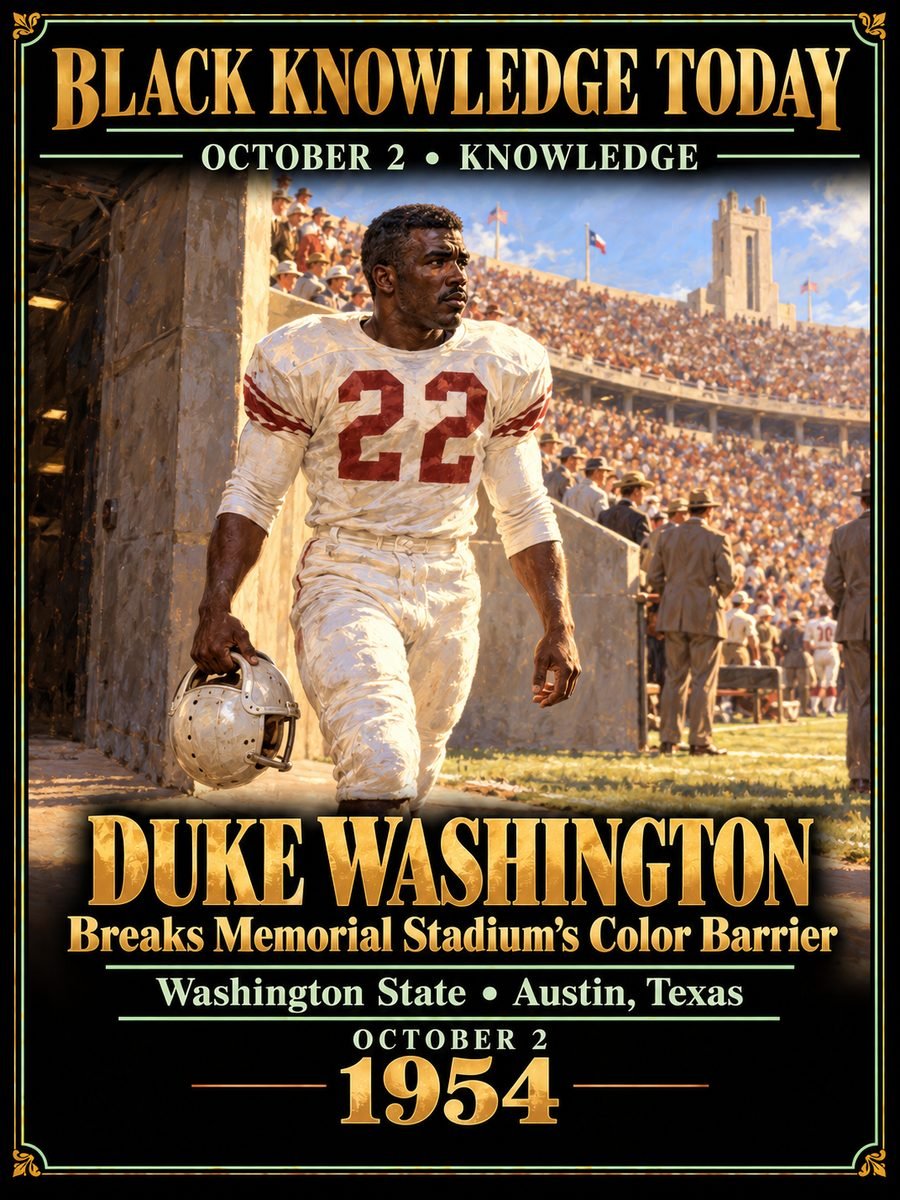
On October 2, 1954, Washington State running back Duke Washington became the first African American to play football in the University of Texas’s Memorial Stadium, and the first to score a touchdown there. Texas won the game 40-14. A Black athlete played and scored in a major stadium of the segregated South that had never allowed one. Washington State honors Washington as a civil-rights pioneer of its football program.
1967 — Thurgood Marshall was sworn in as a U.S. Supreme Court justice
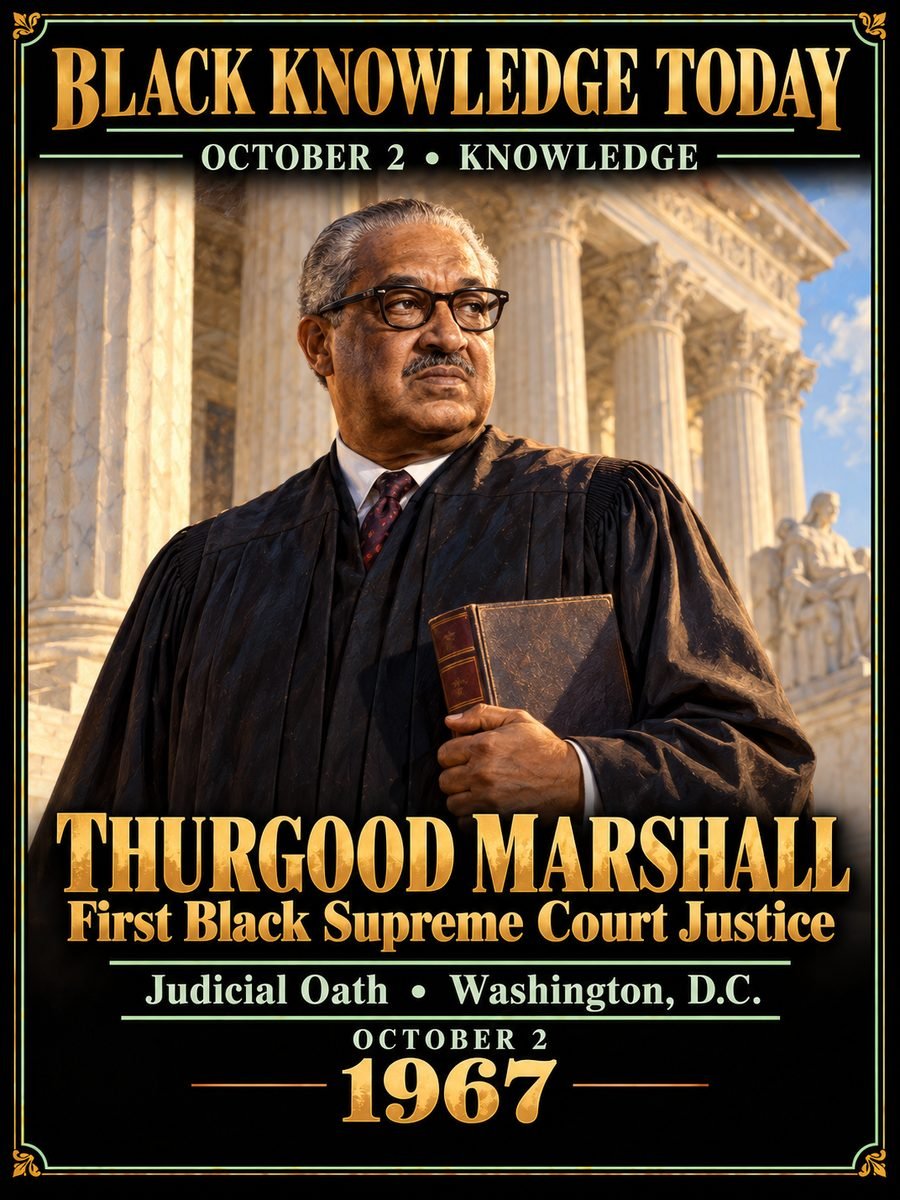
Thurgood Marshall took the judicial oath on October 2, 1967, becoming the first Black justice of the United States Supreme Court. The civil-rights lawyer who had argued Brown v. Board of Education moved from challenging discriminatory law to interpreting the Constitution from the nation’s highest court.
1971 — Soul Train began national syndication
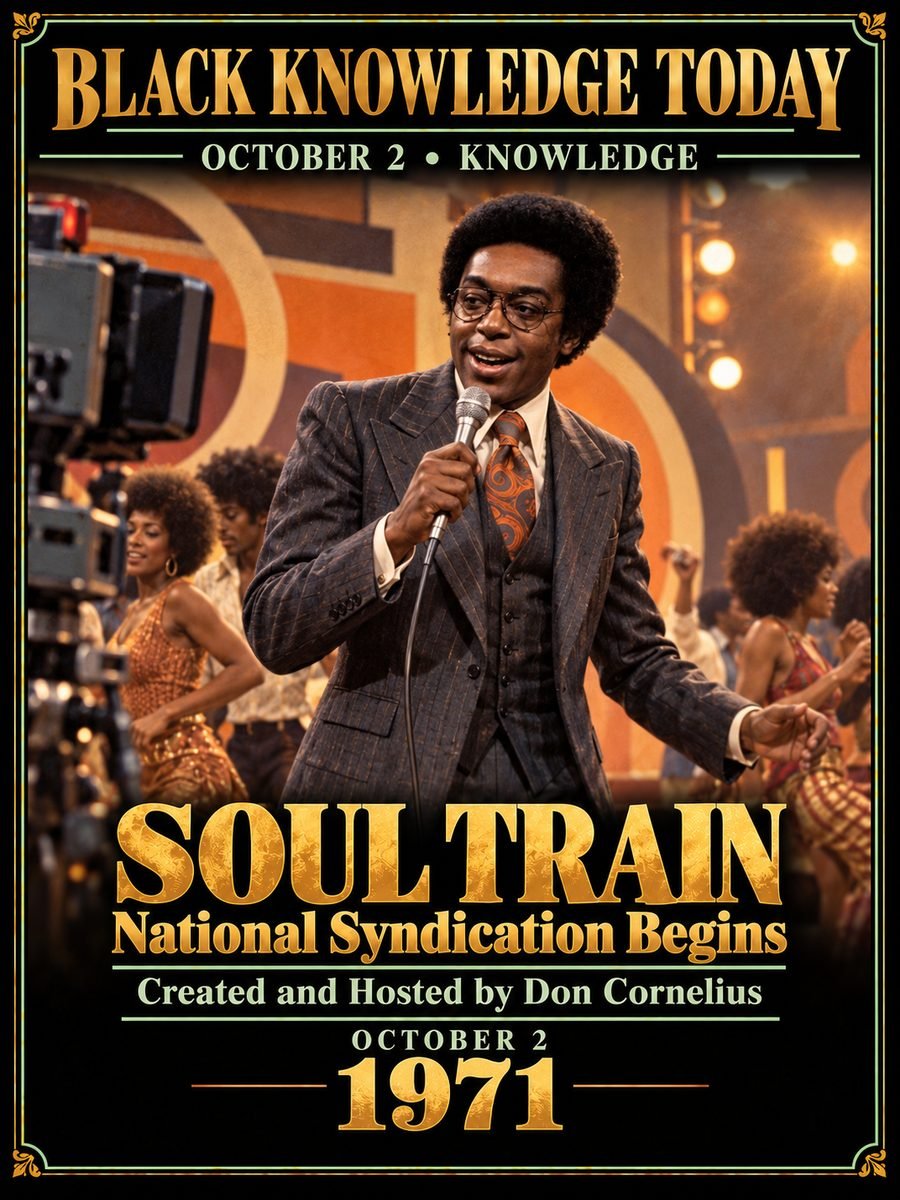
On October 2, 1971, Soul Train, created, produced and hosted by Don Cornelius, began airing weekly in national syndication, a year after its Chicago debut on WCIU-TV. Its early national episodes showcased acts such as Gladys Knight & the Pips and Eddie Kendricks. Britannica calls it the first nationally syndicated music variety show to prominently feature African American musical acts and dancers. It ran until 2006 and became one of the longest-running syndicated programs in American television history.
1980 — Larry Holmes stopped Muhammad Ali to keep the heavyweight championship
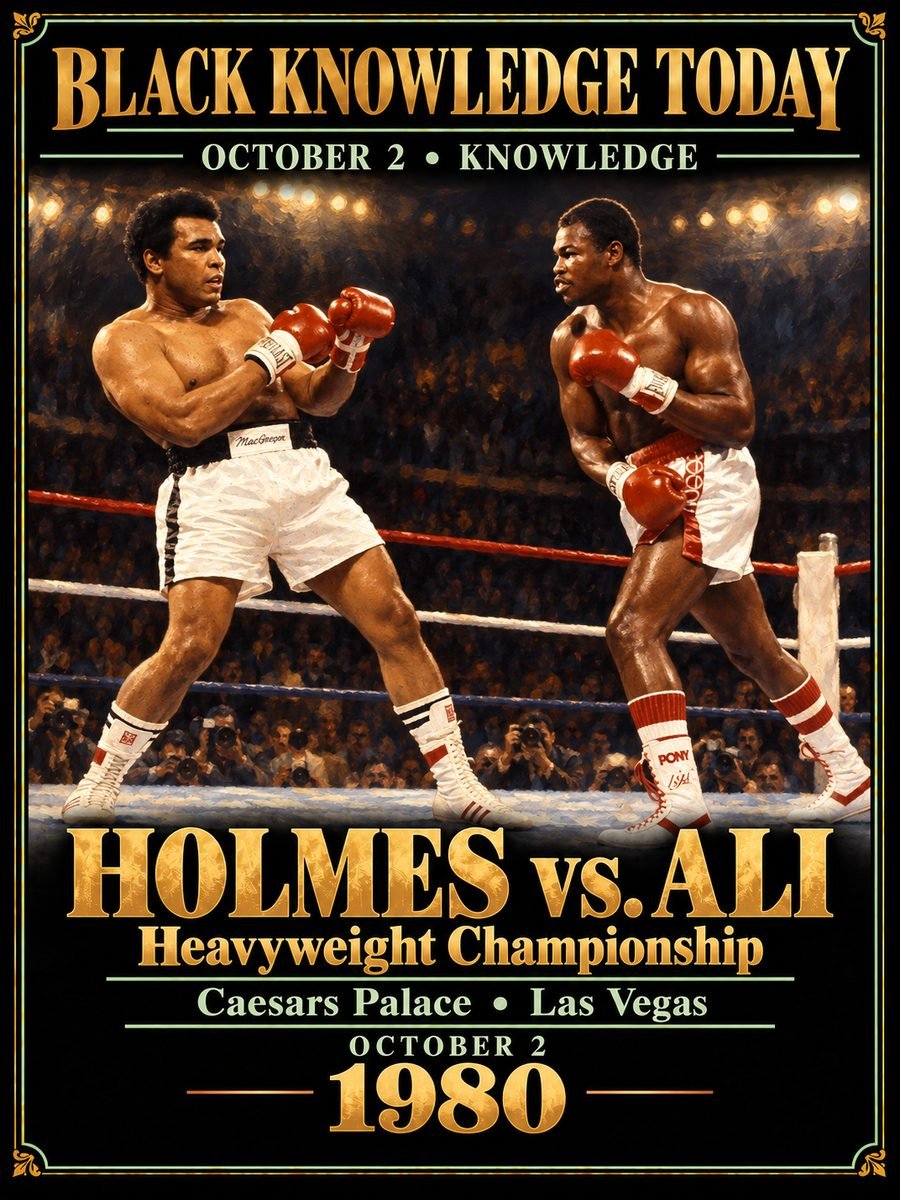
On October 2, 1980, WBC heavyweight champion Larry Holmes defended his title against Muhammad Ali, 38 years old and out of retirement, in a temporary outdoor arena built by Caesars Palace. Holmes dominated every round; after the tenth, Ali’s trainer Angelo Dundee stopped the fight. It was the only stoppage loss of Muhammad Ali’s career. Sports Illustrated headlined its report “Doom in the Desert.”
1986 — The Senate overrode Reagan’s veto and the Comprehensive Anti-Apartheid Act became law
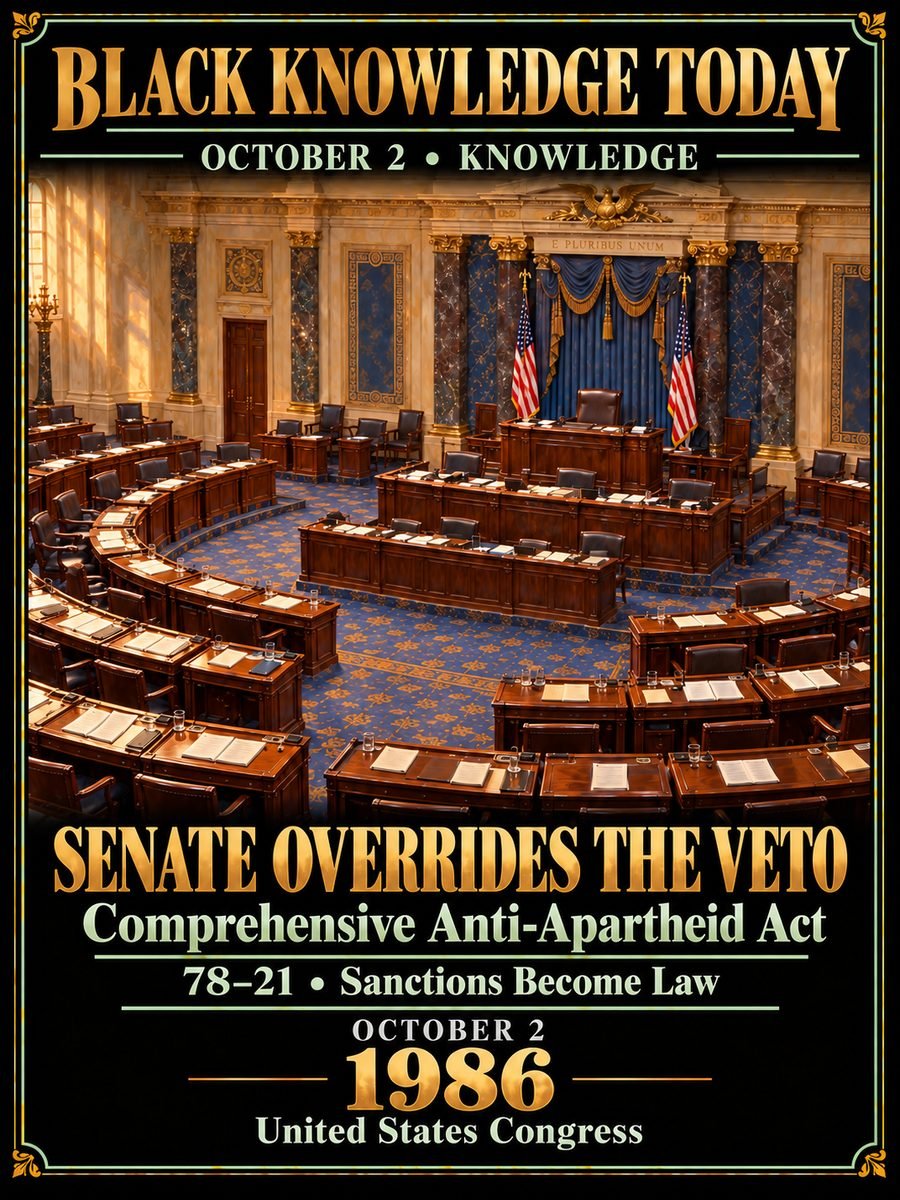
On October 2, 1986, the Senate voted 78-21 to override President Reagan’s September 26 veto of the Comprehensive Anti-Apartheid Act, three days after the House had overridden it. The act became Public Law 99-440 that day. It banned new U.S. trade and investment in South Africa and direct air links, and set conditions for lifting the sanctions that included the release of all political prisoners. The bill was a compromise between measures sponsored by William Gray of Pennsylvania and Ronald Dellums of California, and the U.S. House history office describes the Congressional Black Caucus as “a prime mover in the anti-apartheid cause”; Mickey Leland called the override “probably the greatest victory we’ve ever experienced.” It was the first time in the twentieth century that a president’s foreign-policy veto was overridden.
