
Black History Knowledge
Black History Knowledge — October 21
Oct
What happened on this day. These are the October 21 moments in Black history worth knowing, remembering, and passing on.
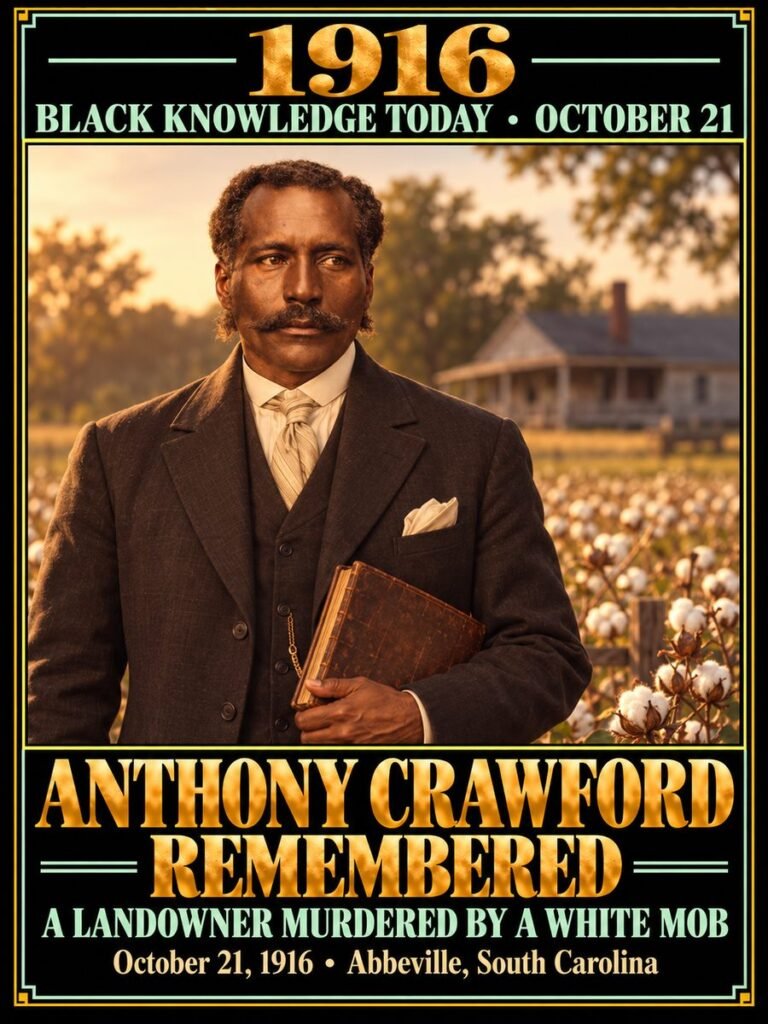
1916 — A white mob lynched landowner Anthony Crawford in Abbeville, South Carolina
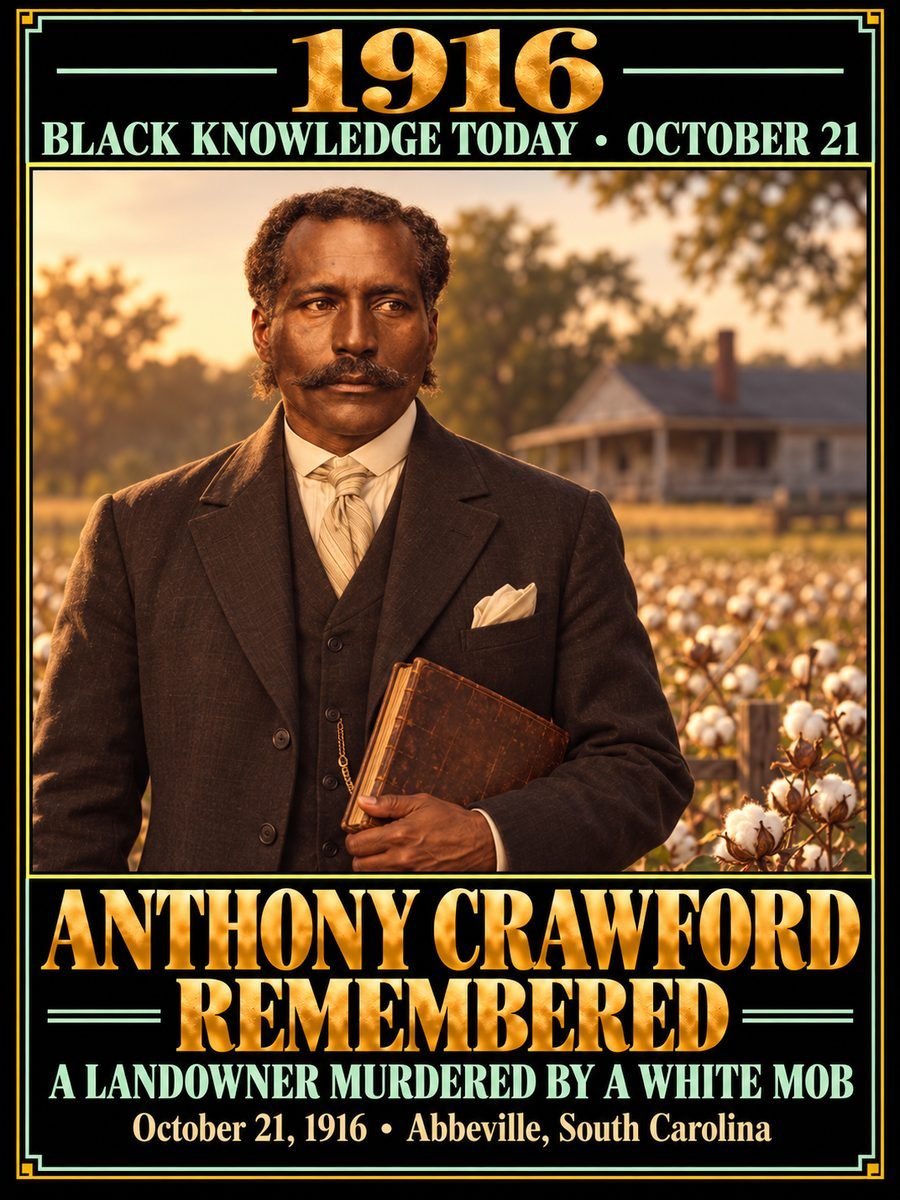
On October 21, 1916, Anthony Crawford, a 56-year-old Black planter who owned 427 acres, was arrested after he argued with a white merchant who demanded to buy his cottonseed for a lower price. Hours later, about 300 white men seized him from jail and dragged, stabbed, beat, hanged, and shot him. Crawford had helped establish a school, a church, and farms in Abbeville’s Black community. After continued threats, most of his family left for the North, an example of how racial terror drove successful Black families from the South.
1948 — Jesse L. Brown received his naval aviator designation
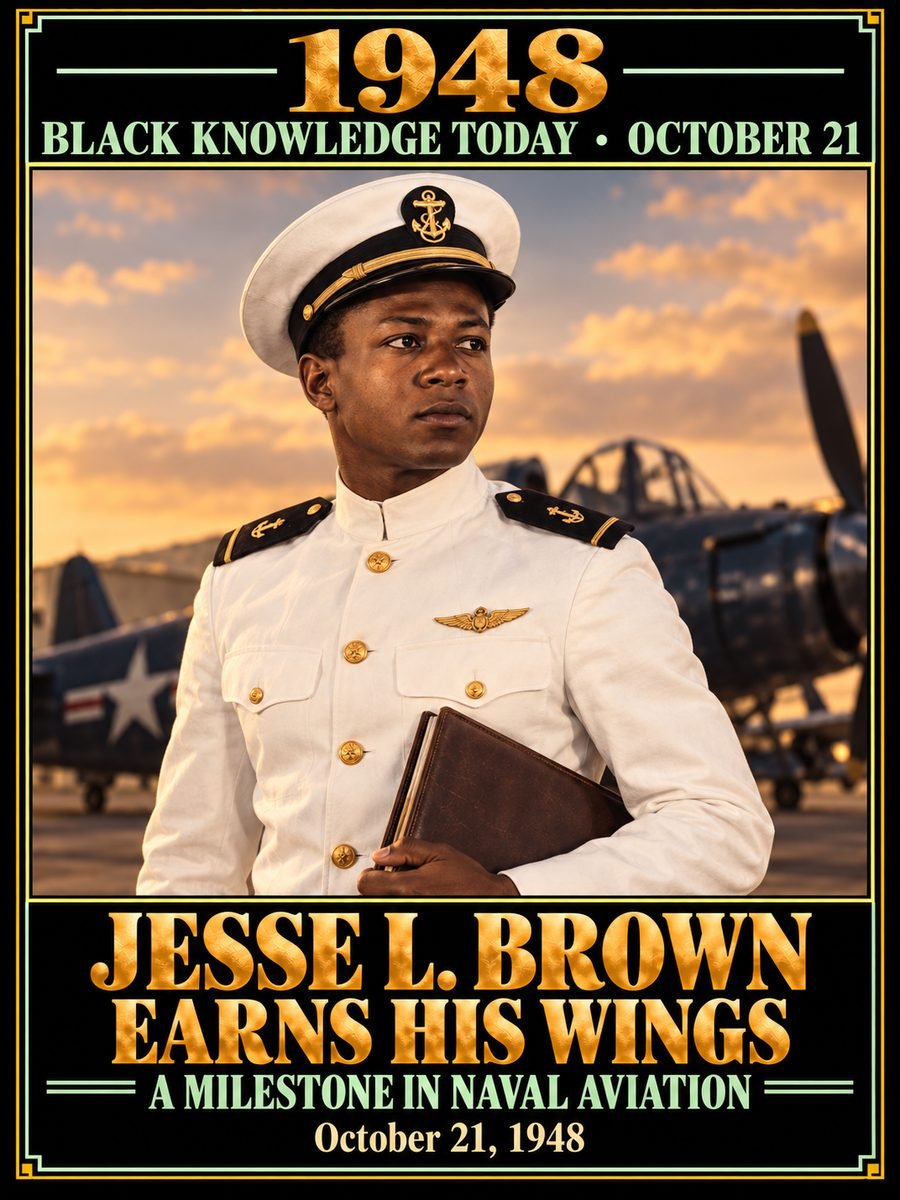
On October 21, 1948, Jesse L. Brown was designated a Naval Aviator (Heavier-Than-Air), becoming the first African American to complete the Navy’s basic flight training program and be designated a naval aviator. Brown broke a major military aviation barrier and later died during the Korean War after flying combat missions from USS Leyte.
1955 — Mary Louise Smith was arrested for refusing to give up her bus seat in Montgomery
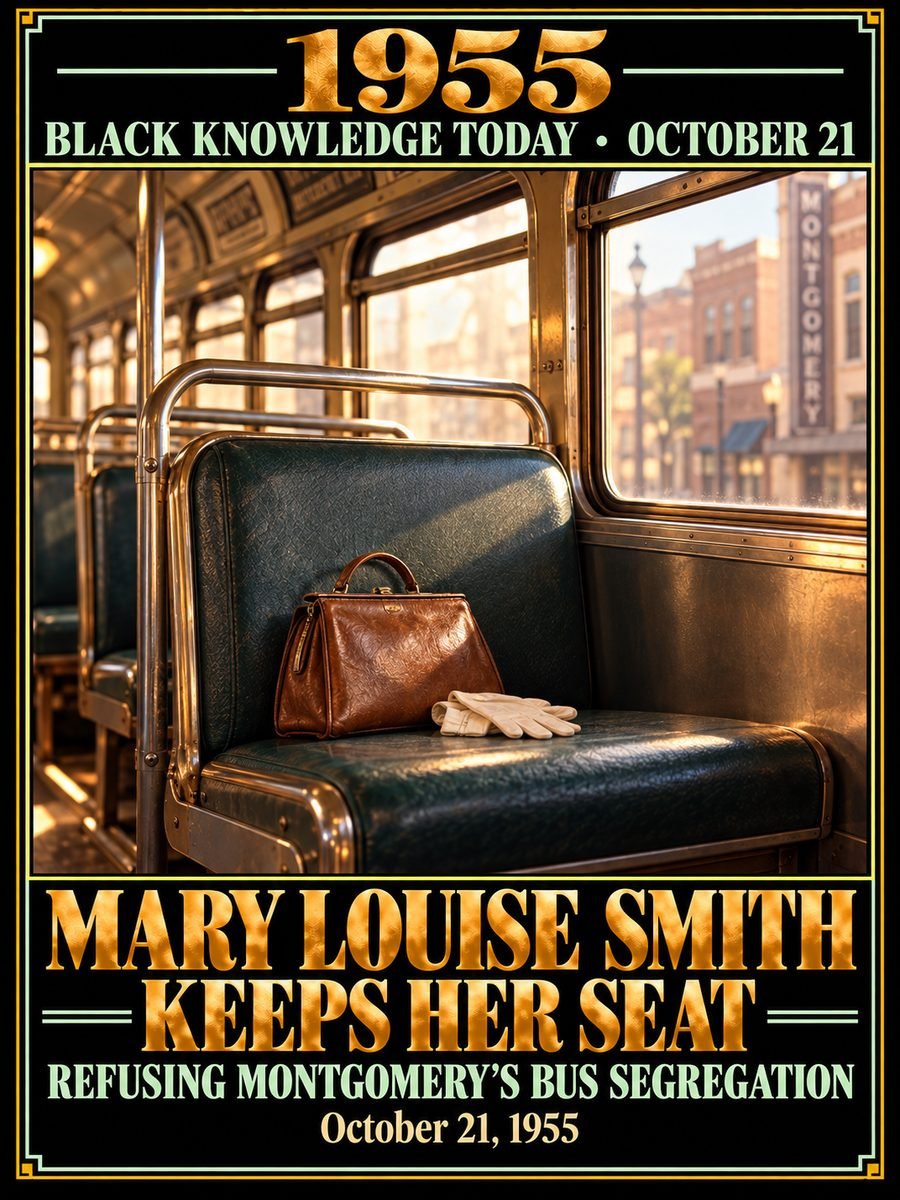
On October 21, 1955, Mary Louise Smith, a frequent rider of Montgomery’s city buses, refused to give up her seat to a white woman, saying, ‘I got the privilege to sit here like anybody else.’ She was arrested, held in jail for more than two hours, and later fined $14. Her protest came about a month and a half before Rosa Parks’s arrest. Smith became one of the plaintiffs in Browder v. Gayle, the federal case filed on February 1, 1956, that challenged Montgomery’s bus segregation law and reached the U.S. Supreme Court, which upheld the ruling that the law was unconstitutional.
1963 — Florida A&M students staged a sleep-in protest
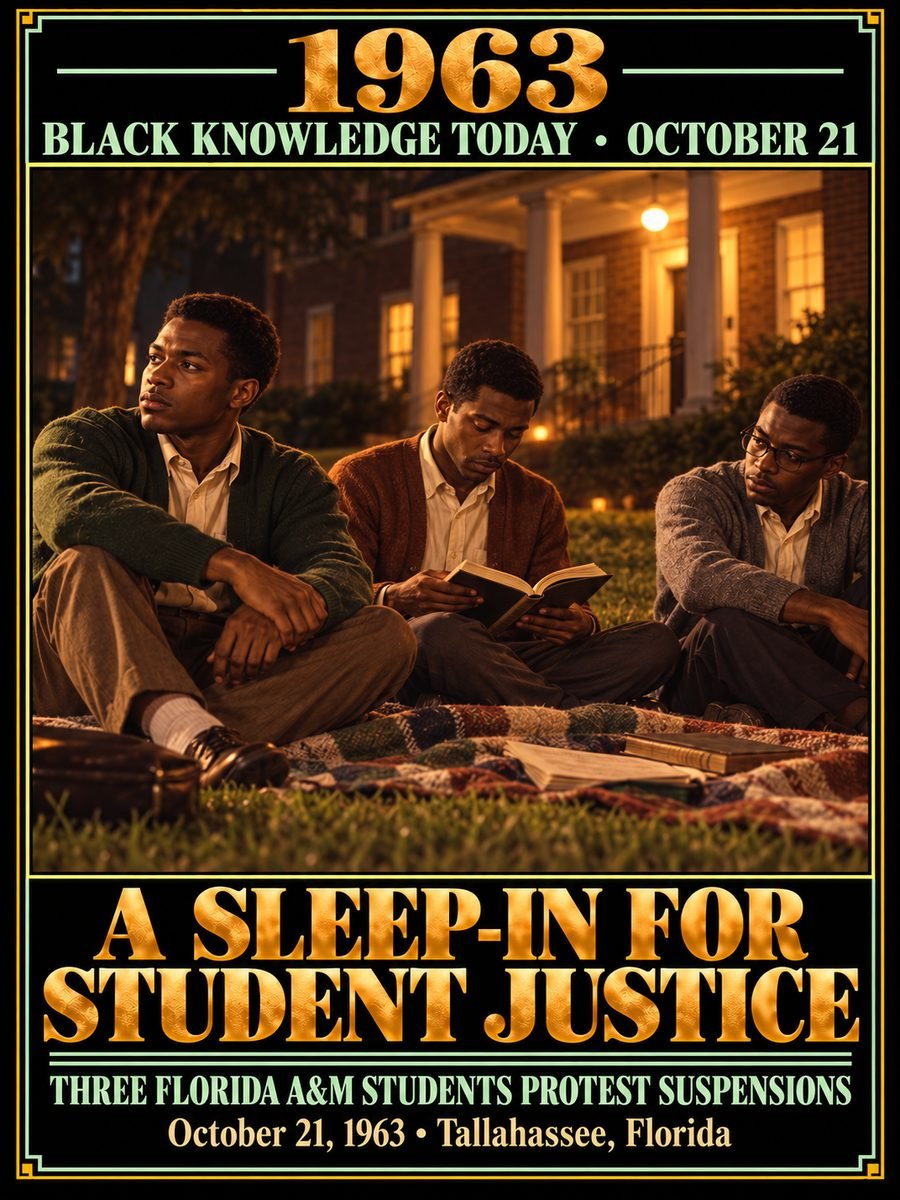
On the night of October 21, 1963, three Florida A&M students began a sleep-in on the lawn of Sunshine Manor to protest the university’s suspension of fellow students Patricia Stephens Due and Rubin Kenon. The action shows how student activists used inventive local tactics beyond lunch-counter sit-ins and major marches to challenge the everyday operation of segregation.
1980 — NASA scientist Valerie L. Thomas received a patent for the illusion transmitter
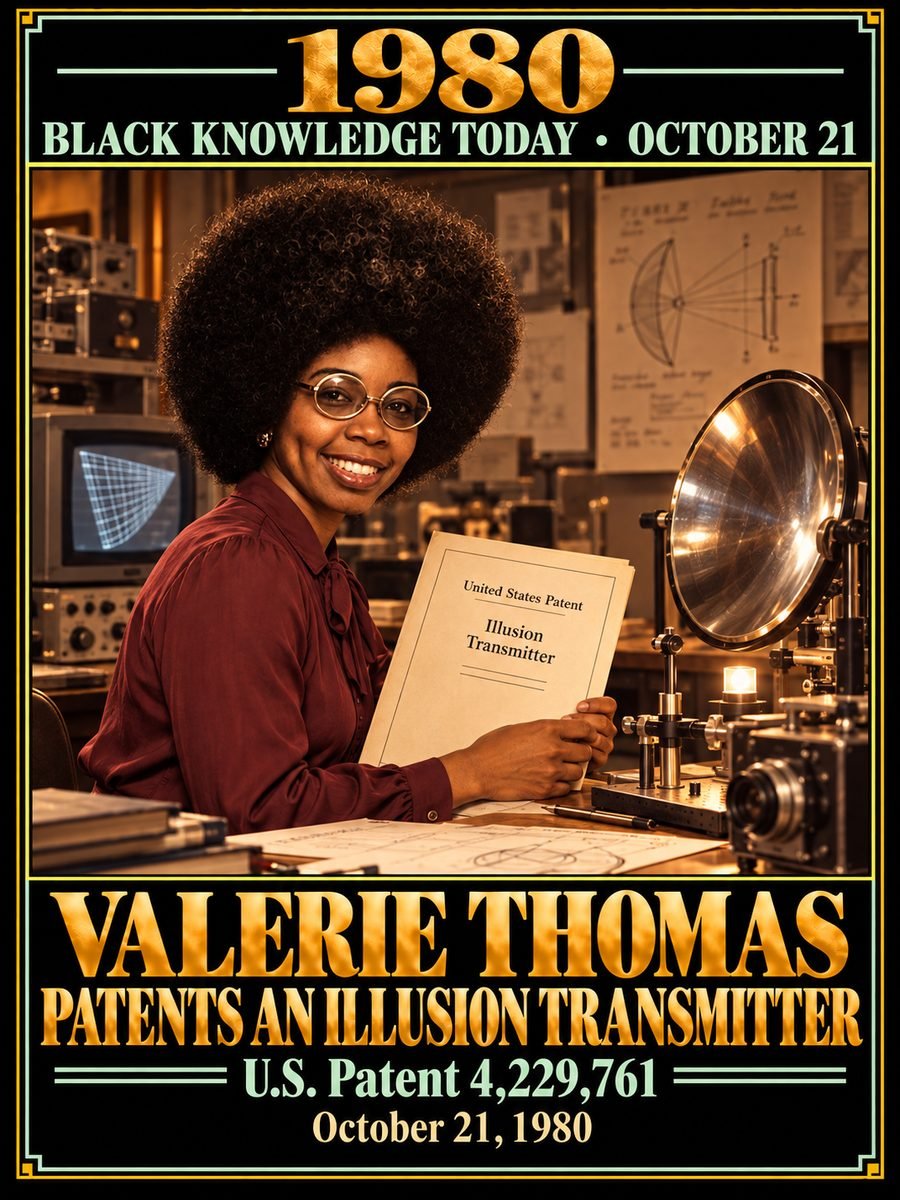
On October 21, 1980, Valerie L. Thomas was issued U.S. Patent No. 4,229,761 for an ‘illusion transmitter.’ The device uses a parabolic (concave) mirror at the transmitting end and another at a remote receiving end to transmit and project three-dimensional illusions of an object. Thomas, a Morgan State graduate who worked as a mathematician and data analyst at NASA’s Goddard Space Flight Center, began experimenting with the idea after seeing a concave-mirror illusion of a light bulb at a 1976 exhibit. Thomas, raised in Baltimore’s all-Black Cherry Hill community, became a recognized Black woman inventor in optics and imaging while building a NASA career in Landsat image processing and data networks that ended as associate chief of the Space Science Data Operations Office.
