
Black History Knowledge
Black History Knowledge — October 26
Oct
What happened on this day. These are the October 26 moments in Black history worth knowing, remembering, and passing on.
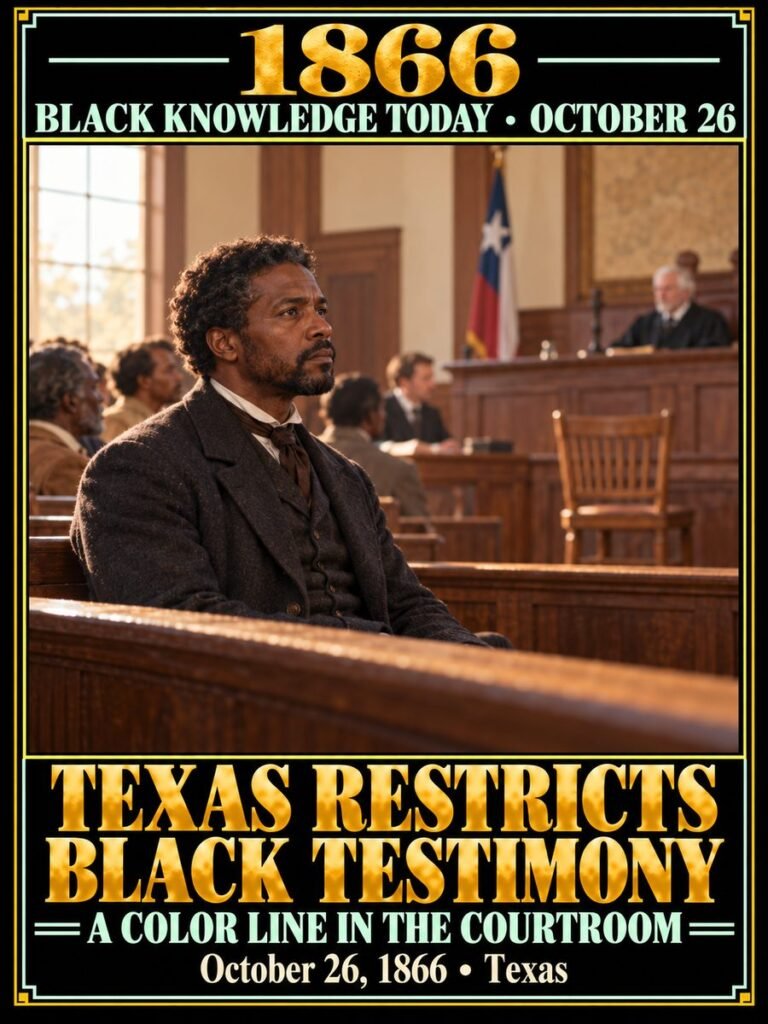
1866 — Texas passed a law limiting Black testimony in court
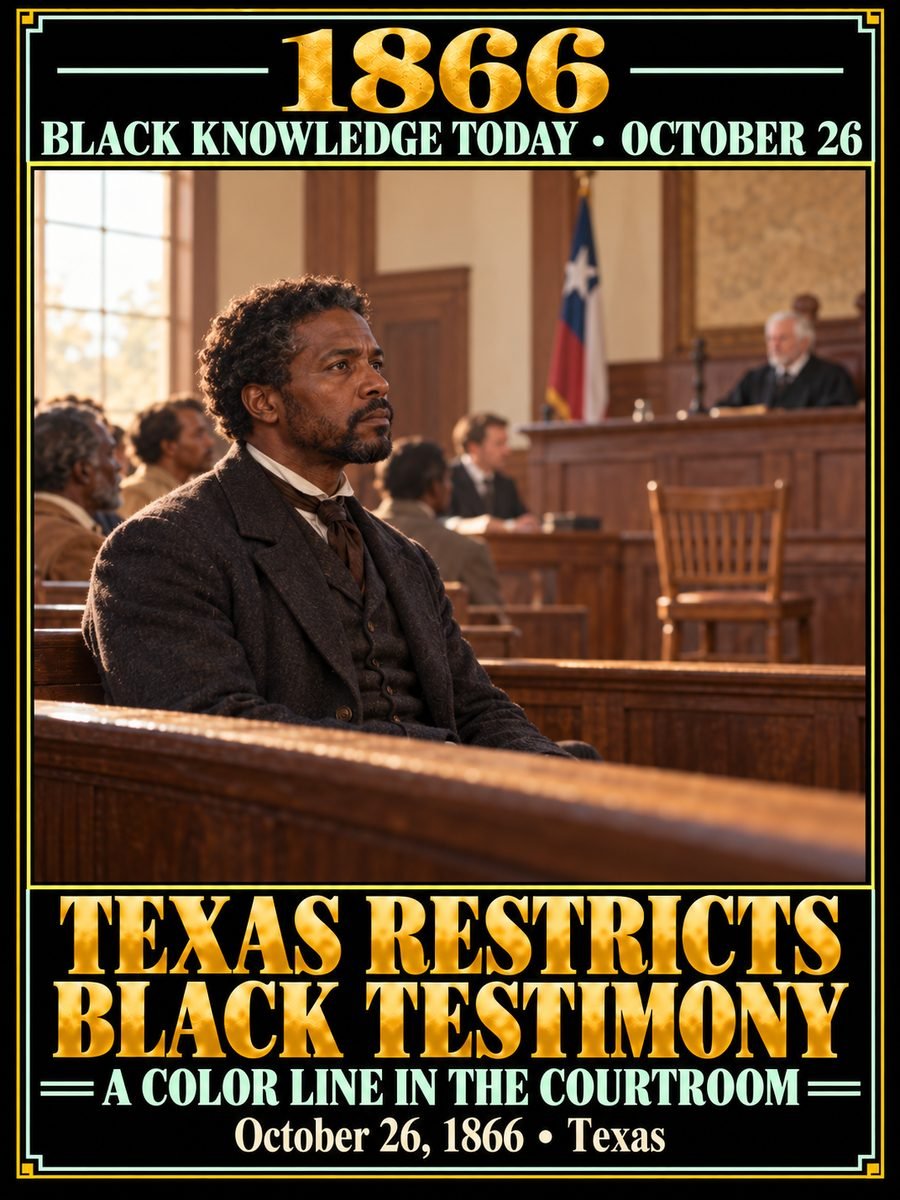
On October 26, 1866, the Texas legislature passed a law stating that “persons of color shall not testify” except in cases where the prosecution was against a person of color or the offense was charged against a person of color or their property. In civil cases between white parties, and in criminal cases against white people not charged with harming a Black person, Black people still could not testify. The law shows how a former Confederate state used new legal wording to keep Black people out of most courtroom testimony after emancipation.
1921 — President Harding addressed Black political and economic rights in Birmingham
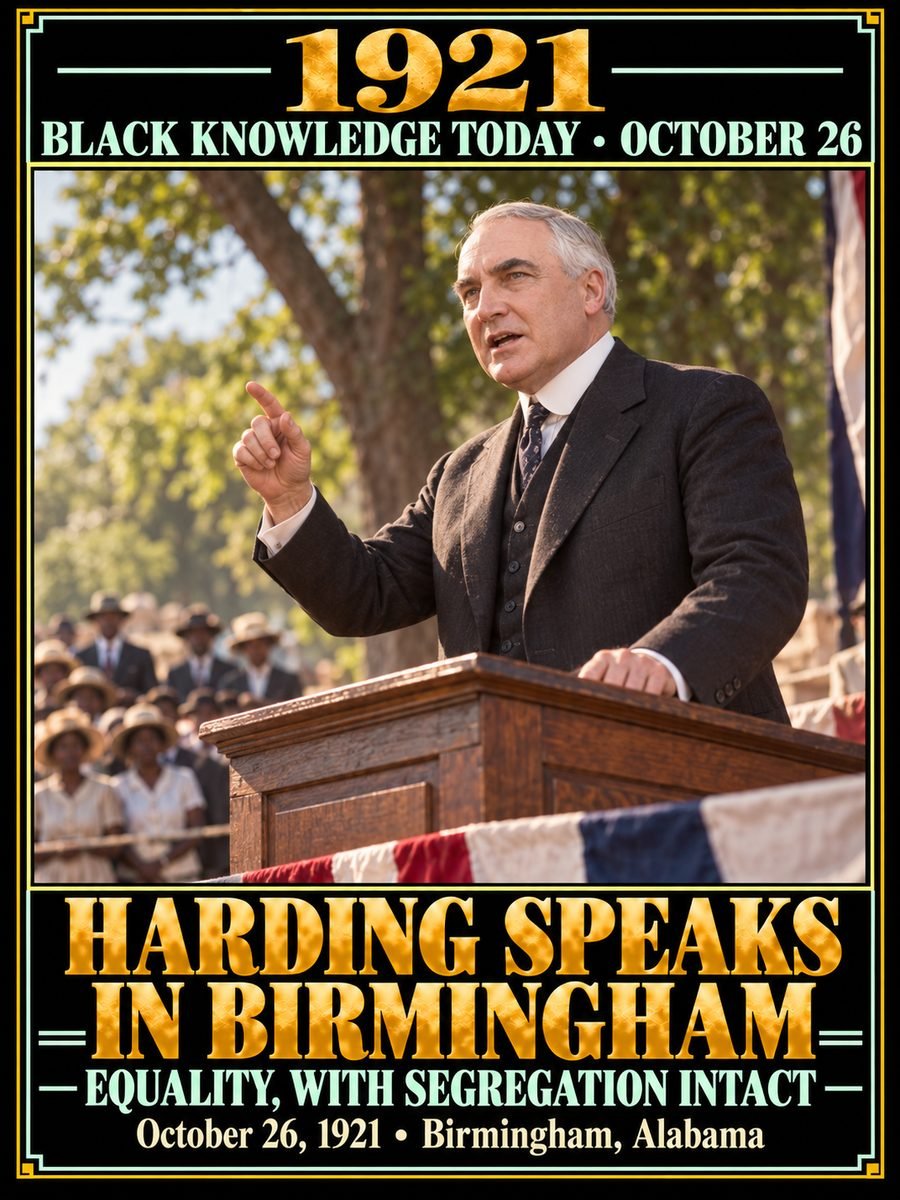
Speaking to a segregated audience on October 26, 1921, President Warren G. Harding called for political and economic equality for Black Americans while also accepting social separation between the races. The speech was unusual for a sitting president in the Jim Crow South, but its limits matter: Harding defended voting, education, and opportunity without endorsing social equality or dismantling segregation.
1970 — Muhammad Ali returned to boxing after a three-and-a-half-year exile
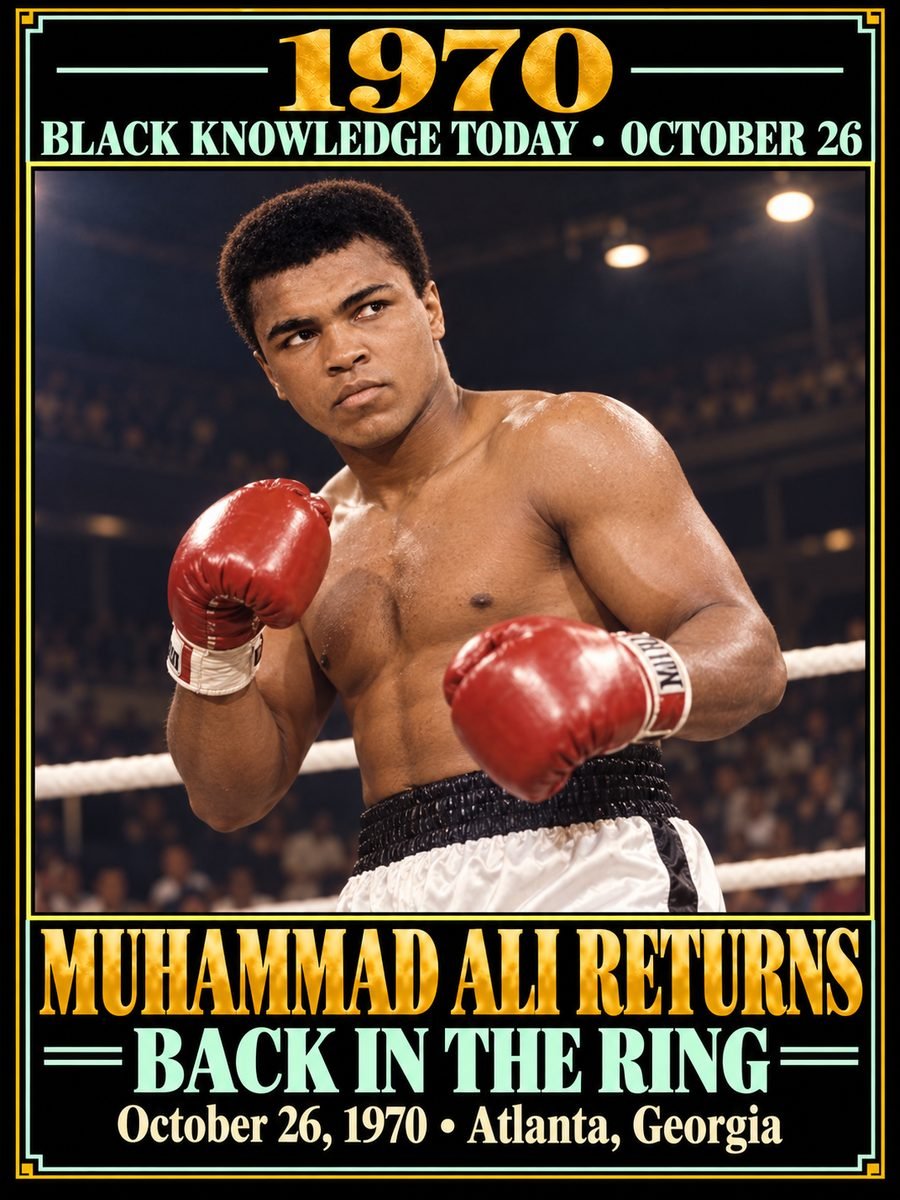
On October 26, 1970, Muhammad Ali fought for the first time since being barred from boxing in 1967 over his refusal of military induction, stopping Jerry Quarry in the third round at Atlanta’s Municipal Auditorium. Quarry’s trainer asked the referee to end the bout because of a deep cut over Quarry’s eye. The fight ended Ali’s exile from the ring and began the comeback that led to his later title fights.
1992 — Congress established the Brown v. Board of Education National Historic Site
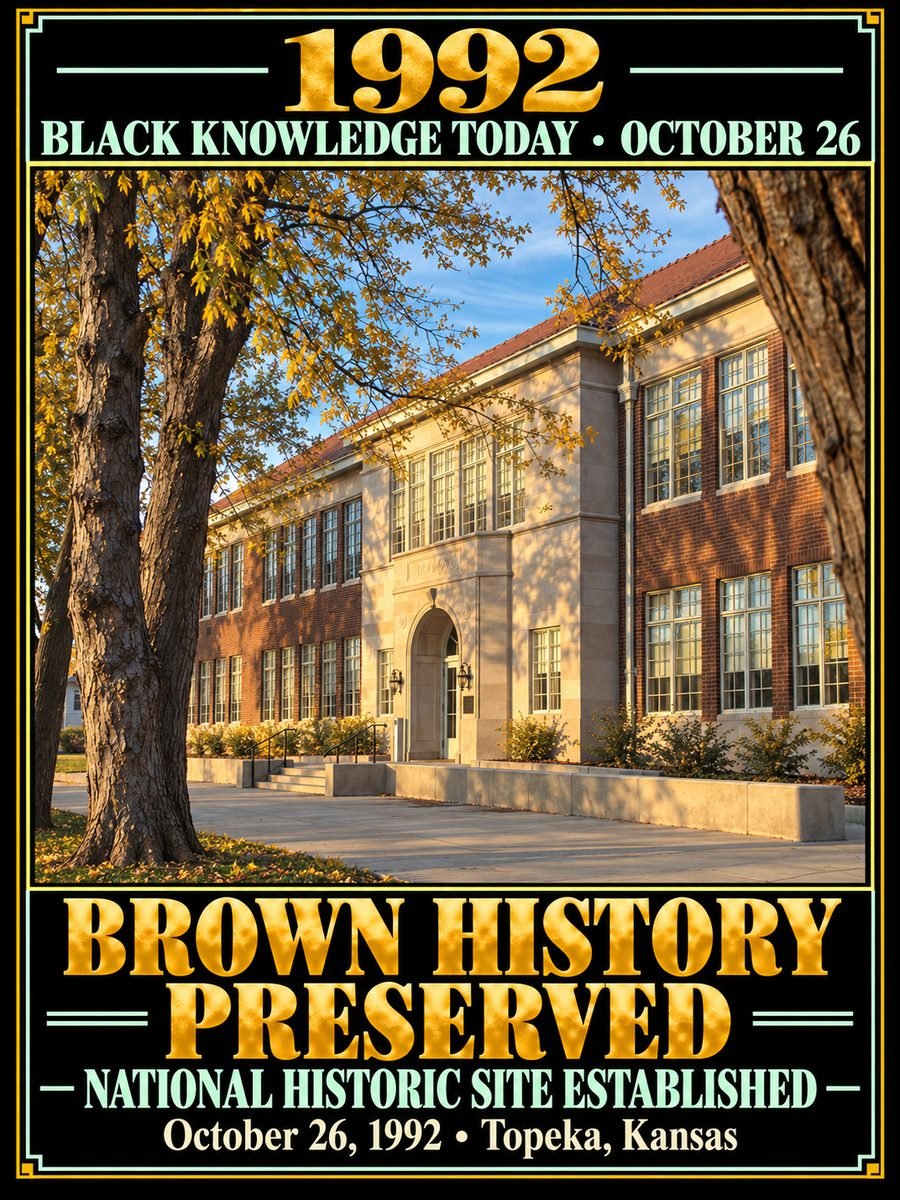
On October 26, 1992, Public Law 102-525 established the Brown v. Board of Education National Historic Site in Topeka, Kansas. The law cited the Supreme Court’s 1954 ruling against school segregation and named Monroe Elementary, the segregated school Linda Brown was required to attend, as part of the story. The law made the National Park Service responsible for preserving and interpreting a site tied to the Brown decision; it is now Brown v. Board of Education National Historical Park.
