
Black History Knowledge
Black History Knowledge — October 5
Oct
What happened on this day. These are the October 5 moments in Black history worth knowing, remembering, and passing on.
1850 — Black Bostonians organized resistance to the Fugitive Slave Act
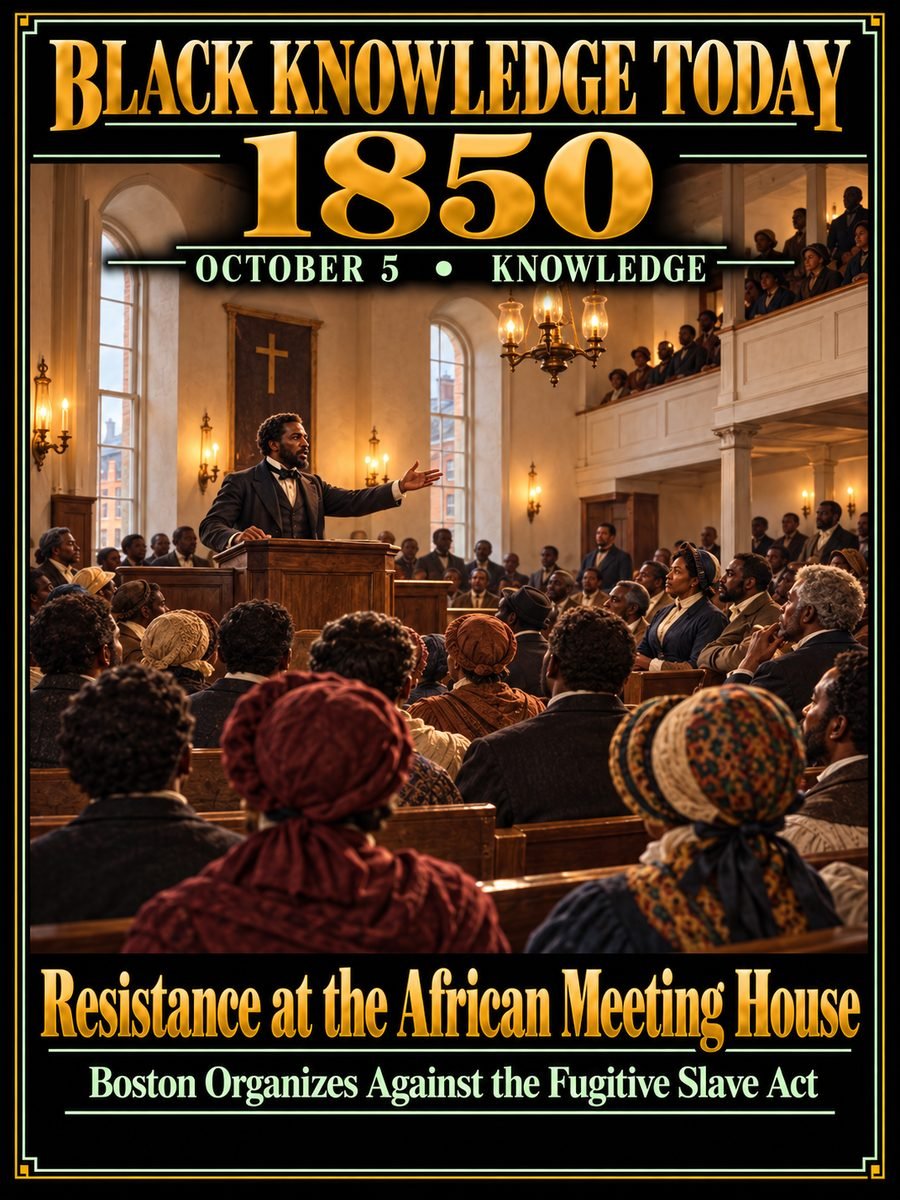
On October 5, 1850, Black Bostonians met at the African Meeting House and organized a vigilance network to resist enforcement of the new Fugitive Slave Act. The meeting shows that resistance to slave catching was organized, community-based, and often led by free Black activists who risked arrest to protect freedom seekers.
1958 — A bomb destroyed Clinton High School after desegregation
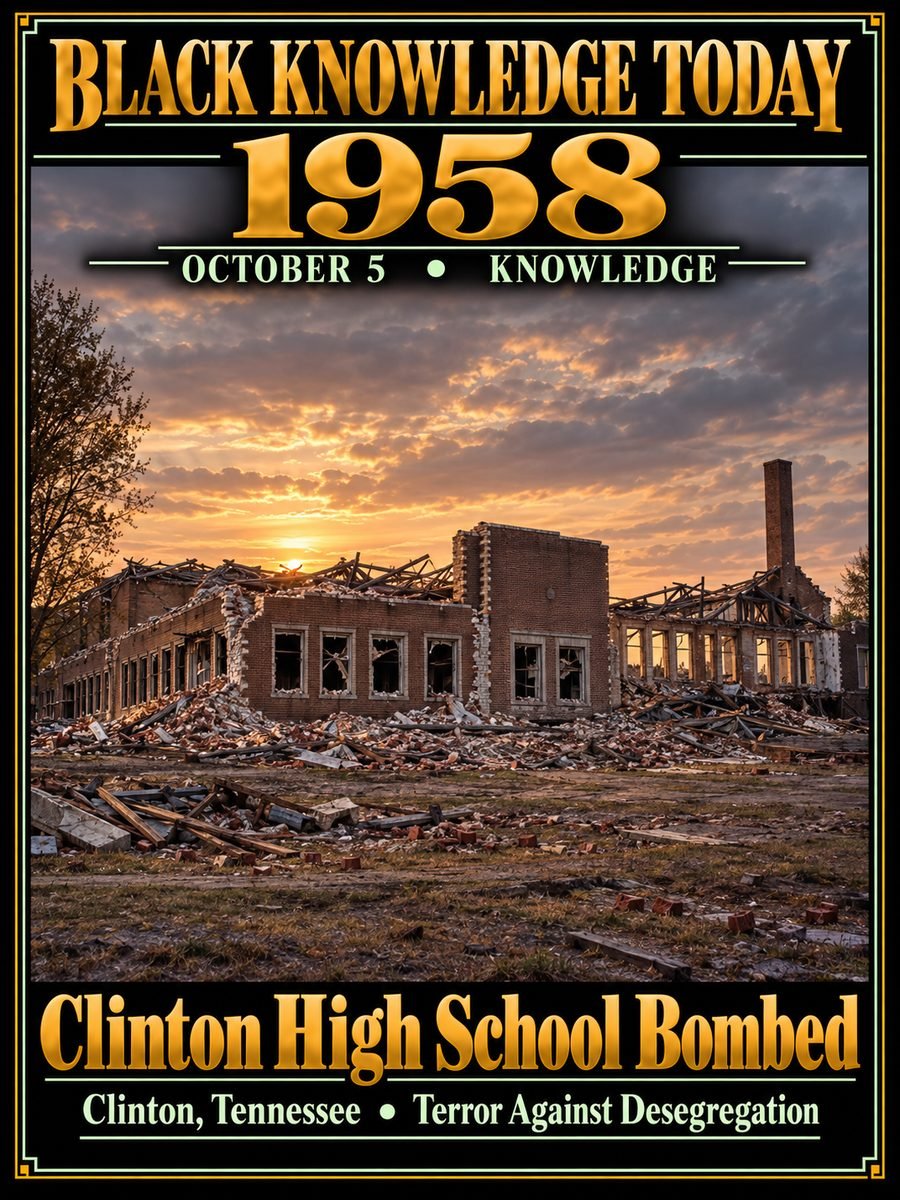
Early on October 5, 1958, dynamite explosions destroyed much of Clinton High School, two years after twelve Black students had desegregated the school under federal court order. The bombing revealed the organized terror used to resist school desegregation even after Black students had successfully entered formerly white institutions.
1985 — The NAACP led a National Day of Mourning against apartheid
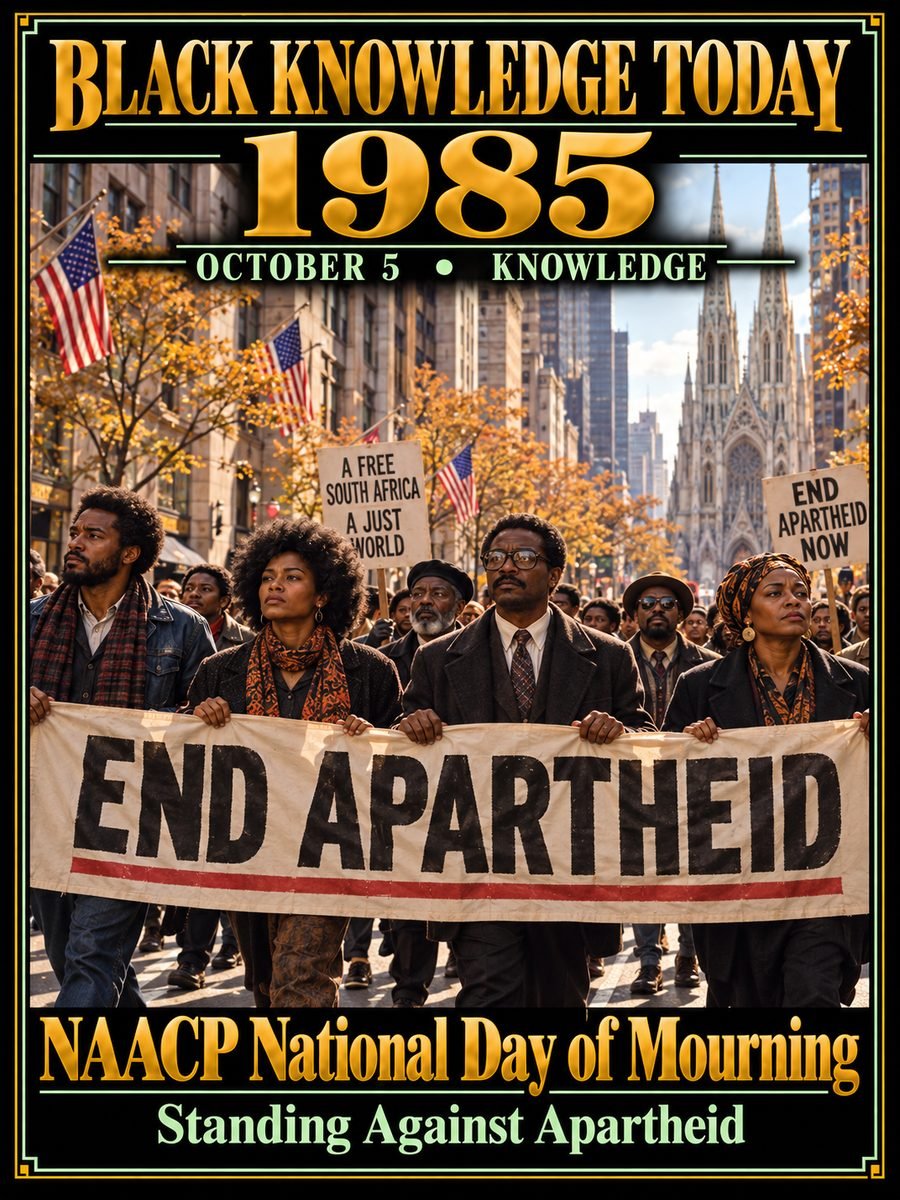
The NAACP designated October 5, 1985, a National Day of Mourning to mobilize opposition to apartheid and U.S. policies that sustained South Africa’s white-minority government. The action connects Black American civil-rights organizing with international solidarity against racial rule in southern Africa.
2007 — African Burial Ground National Monument was dedicated
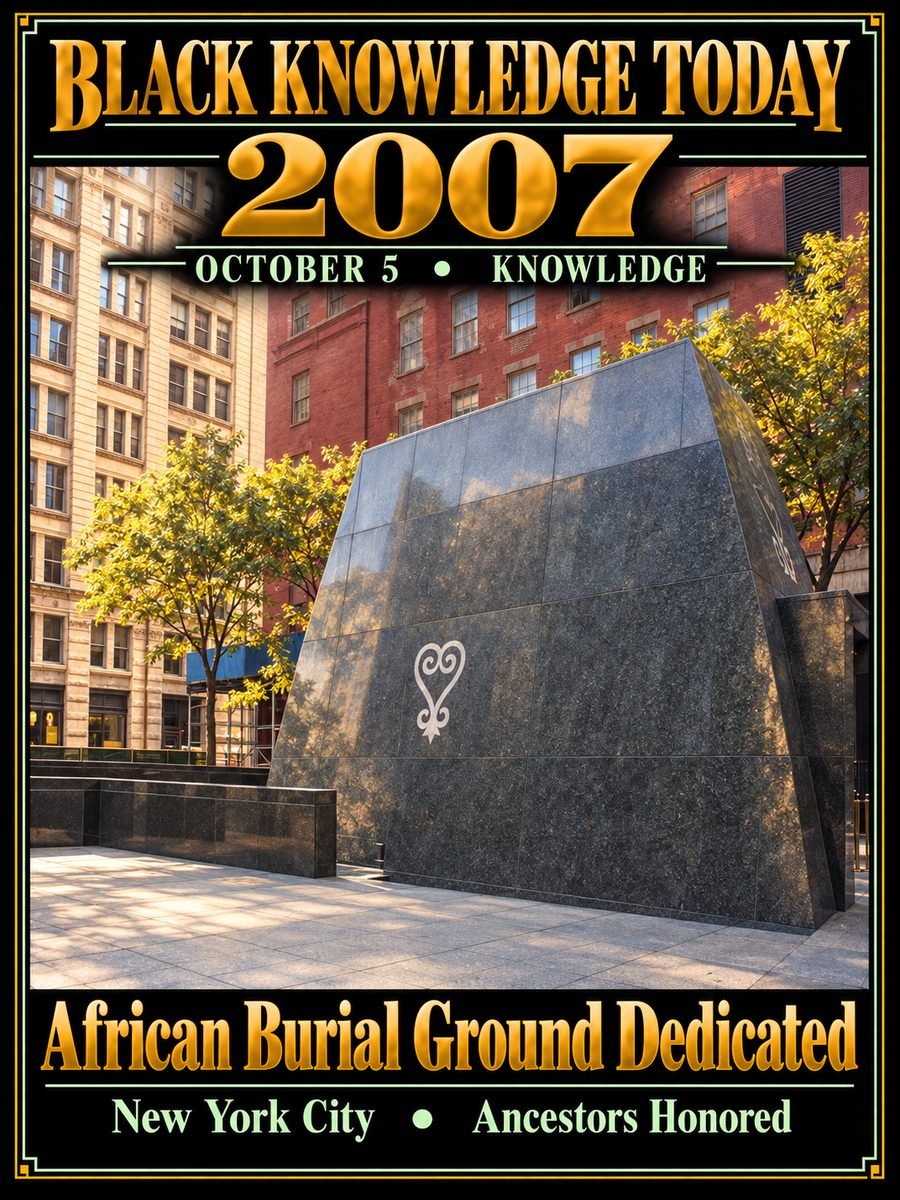
The memorial and visitor site at the African Burial Ground was dedicated on October 5, 2007, preserving a colonial-era cemetery where free and enslaved Africans and their descendants were buried. The site transformed a rediscovered burial ground into a national place of memory, scholarship, and public reckoning with slavery in northern cities.
