Those We Lost
Those We Lost — October 10
Oct
Honoring those we lost on October 10 — remembered for what they gave, and for what they left behind.
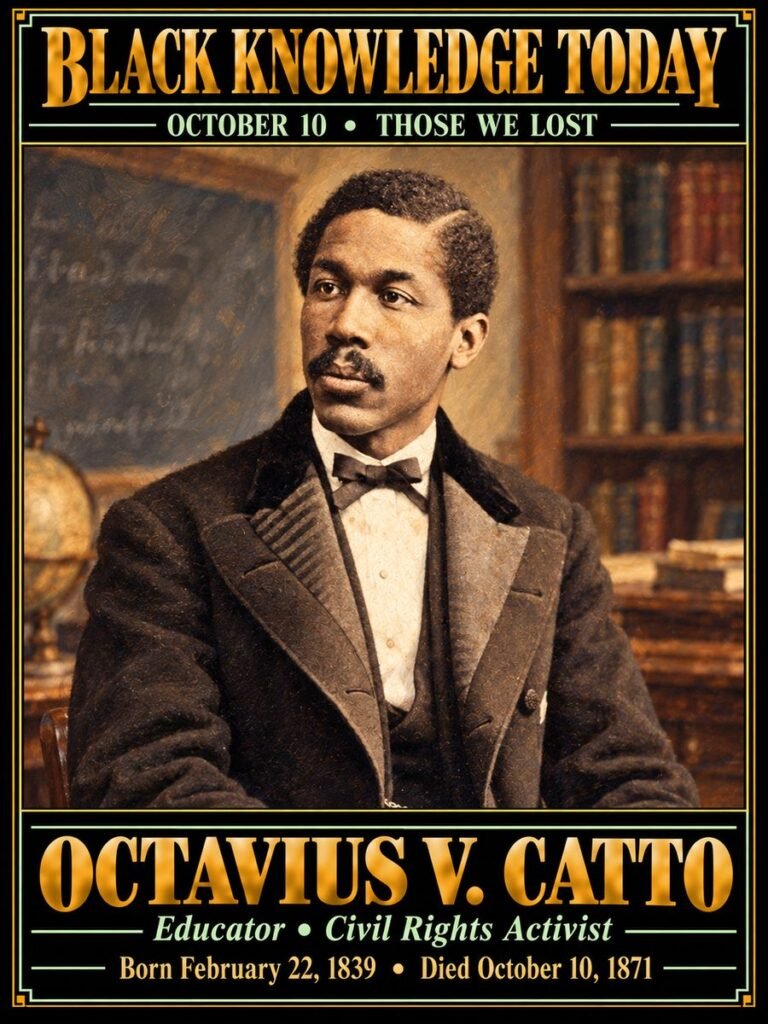
Octavius V. Catto
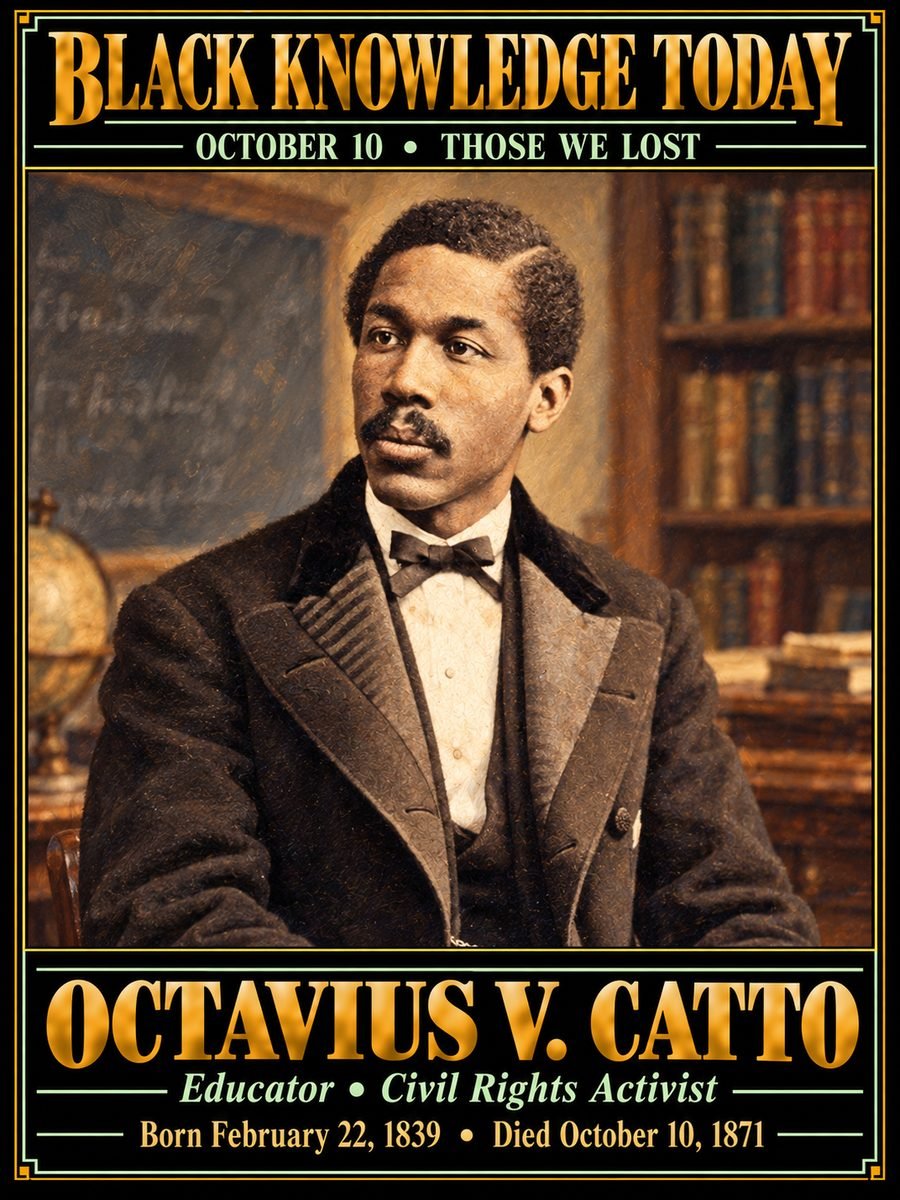
Born February 22, 1839 — died October 10, 1871
Educator, civil-rights activist, athlete, and military recruiter
Catto taught at Philadelphia’s Institute for Colored Youth, helped recruit Black Union soldiers, organized for voting rights, and fought successfully to desegregate Pennsylvania streetcars. He joined education, politics, military service, and baseball in a broad campaign for full citizenship during Reconstruction.
Elijah McCoy
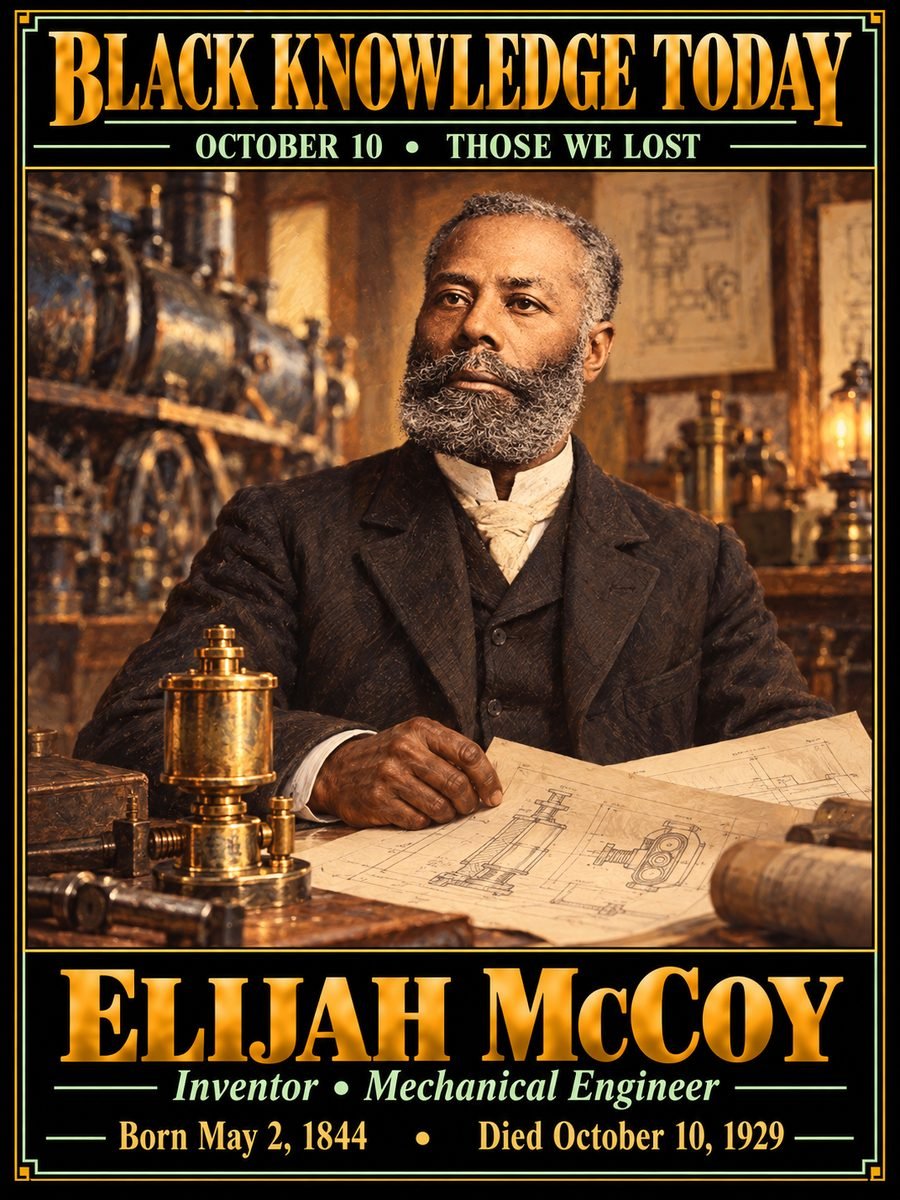
Born May 2, 1844 — died October 10, 1929
Inventor and mechanical engineer
Born in Colchester, Ontario, to parents who had escaped slavery in Kentucky by the Underground Railroad, McCoy worked as a fireman for the Michigan Central Railroad, oiling axles, bearings and moving parts, and in 1872 patented a lubricating cup that let engines be oiled while they ran. He settled in Detroit in 1882, became a consultant to the railroad industry, founded the Elijah McCoy Manufacturing Company in 1920, and filed 57 U.S. patents; Booker T. Washington cited him as having produced more patents than any other African American inventor of his time. He was inducted into the National Inventors Hall of Fame in 2001, and in 2012 the U.S. Patent and Trademark Office named its Detroit office the Elijah J. McCoy Midwest Regional Patent Office.
Ralph Metcalfe
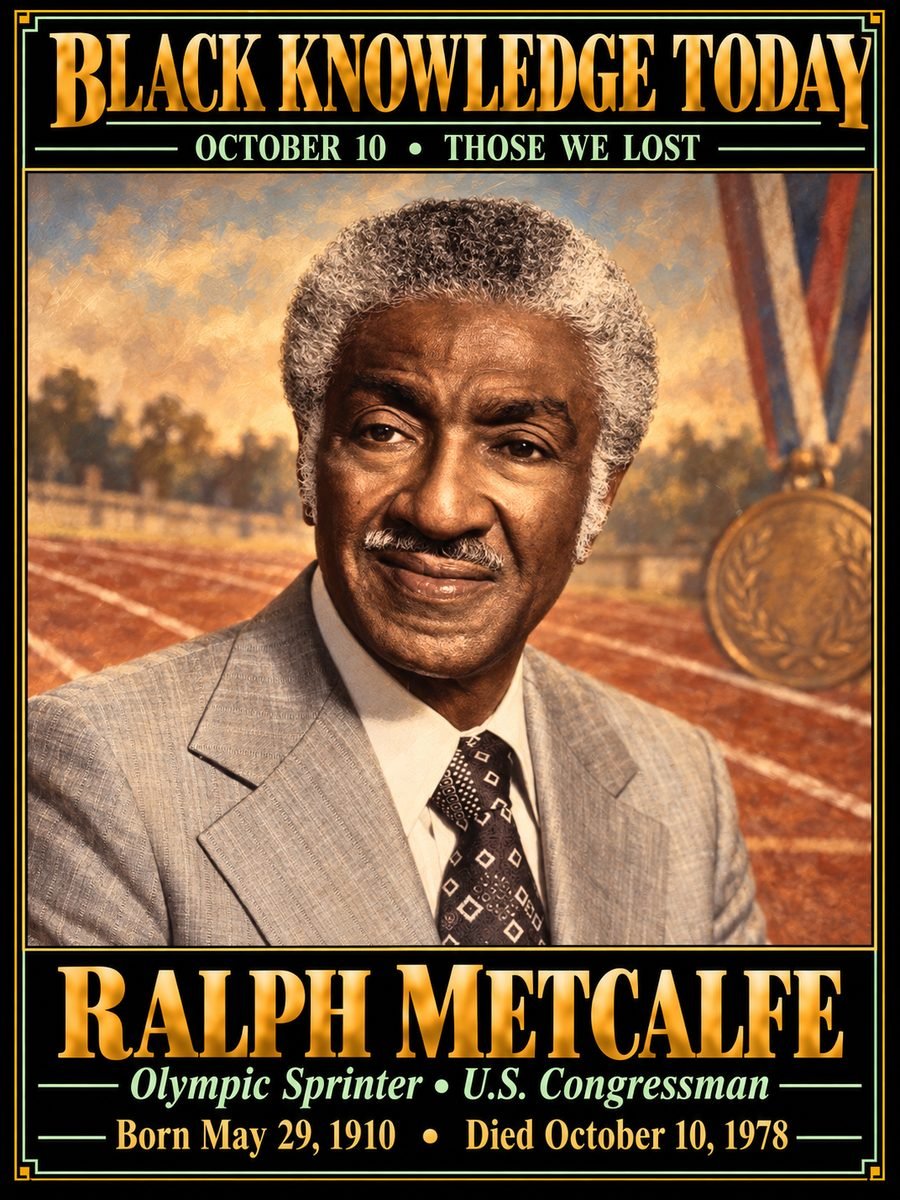
Born May 29, 1910 — died October 10, 1978
Olympic sprinter, track coach, Chicago alderman and U.S. representative
At the 1932 Los Angeles Olympics Metcalfe lost the 100 meters by an inch to Eddie Tolan and finished third in the 200 meters; at Berlin in 1936 he took silver behind Jesse Owens in the 100 meters and ran with Owens on the gold-medal 4×100 relay that set a world record. At Marquette he won the NCAA 100- and 200-meter double three straight years (1932-1934); he later coached track at Xavier University in New Orleans, served as a Chicago alderman, and represented Illinois in the U.S. House from January 3, 1971, until his death. He was a founding member of the Congressional Black Caucus in 1971, declaring that members put the interests of Black people first, and he is a member of the USA Track and Field Hall of Fame.
Solomon Burke
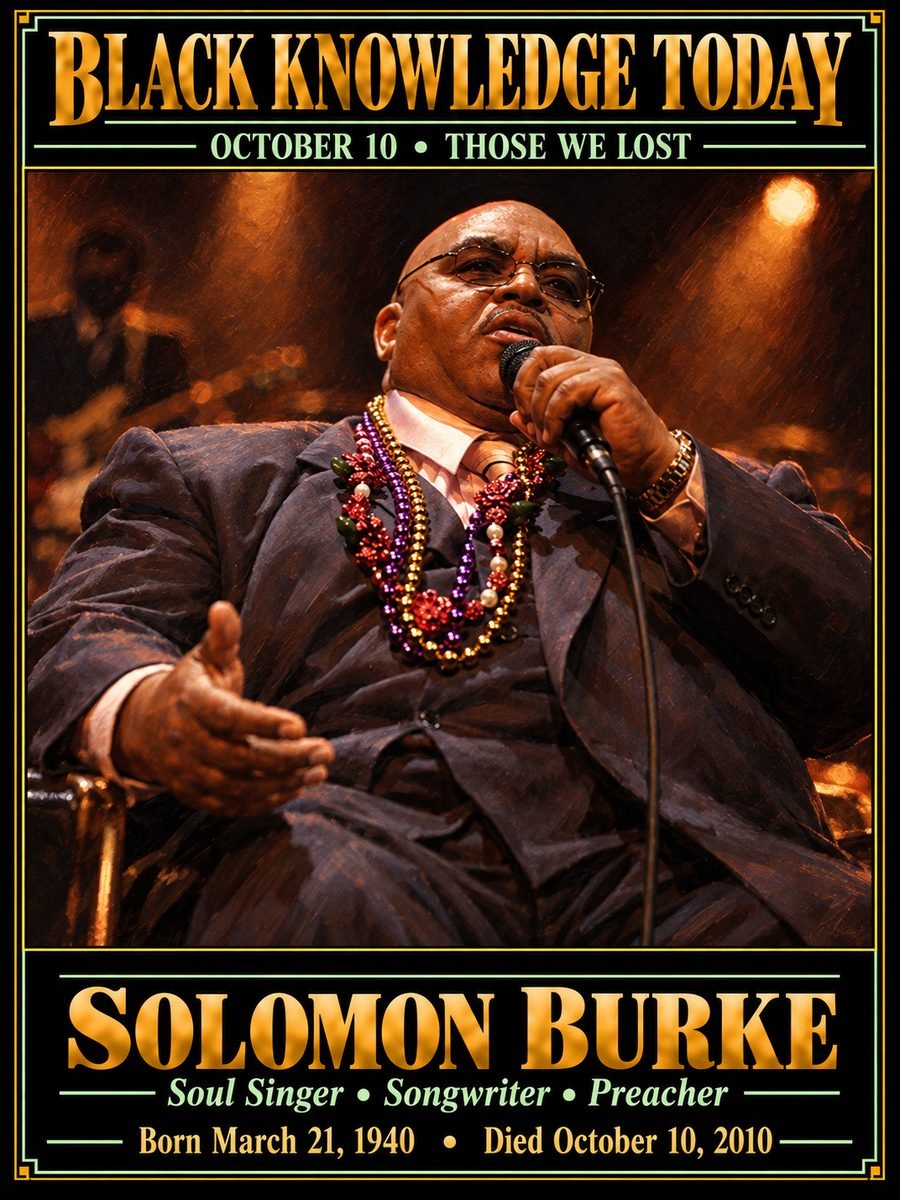
Born March 21, 1940 — died October 10, 2010
Soul singer, songwriter and preacher
Burke, who began preaching as a child in Philadelphia, recorded a string of soul hits in the 1960s including Cry to Me, If You Need Me, Everybody Needs Somebody to Love (later covered by the Rolling Stones and Wilson Pickett) and Got to Get You Off My Mind, his only number-one R&B single. Crowned the King of Rock ‘n’ Soul, he continued to lead his own church as a bishop and won a Grammy for the album Don’t Give Up on Me. He was inducted into the Rock and Roll Hall of Fame in 2001, introduced by Mary J. Blige, and died on tour at 70 while still performing.
Raye Montague
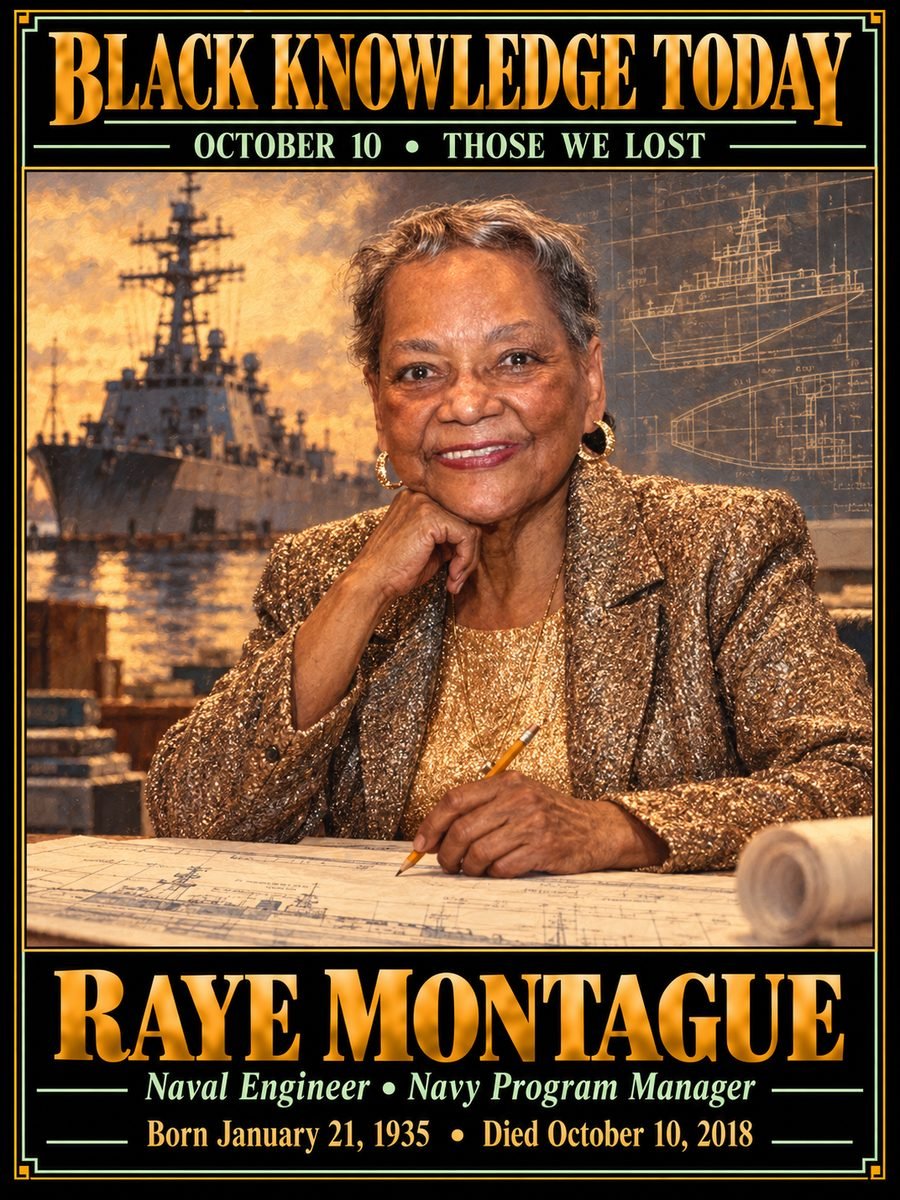
Born January 21, 1935 — died October 10, 2018
Naval engineer and Navy program manager
Denied the chance to study engineering, Montague earned a business degree at Arkansas AM&N in 1956 and went to work for the Navy that year at the David Taylor Model Basin in Maryland. In 1971 she revised the Navy’s automated system for ship specifications and produced the first draft design of the FFG-7 frigate in about eighteen hours, a task that had taken two years, making it the first ship designed by computer. She received the Navy’s Meritorious Civilian Service Award in 1972, became the Navy’s first female program manager of ships, and retired in 1990 after 33 years. Inducted into the Arkansas Black Hall of Fame in 2013 and the Arkansas Women’s Hall of Fame in 2018, she was celebrated after the film Hidden Figures as the Navy’s own hidden figure.
Louise Meriwether
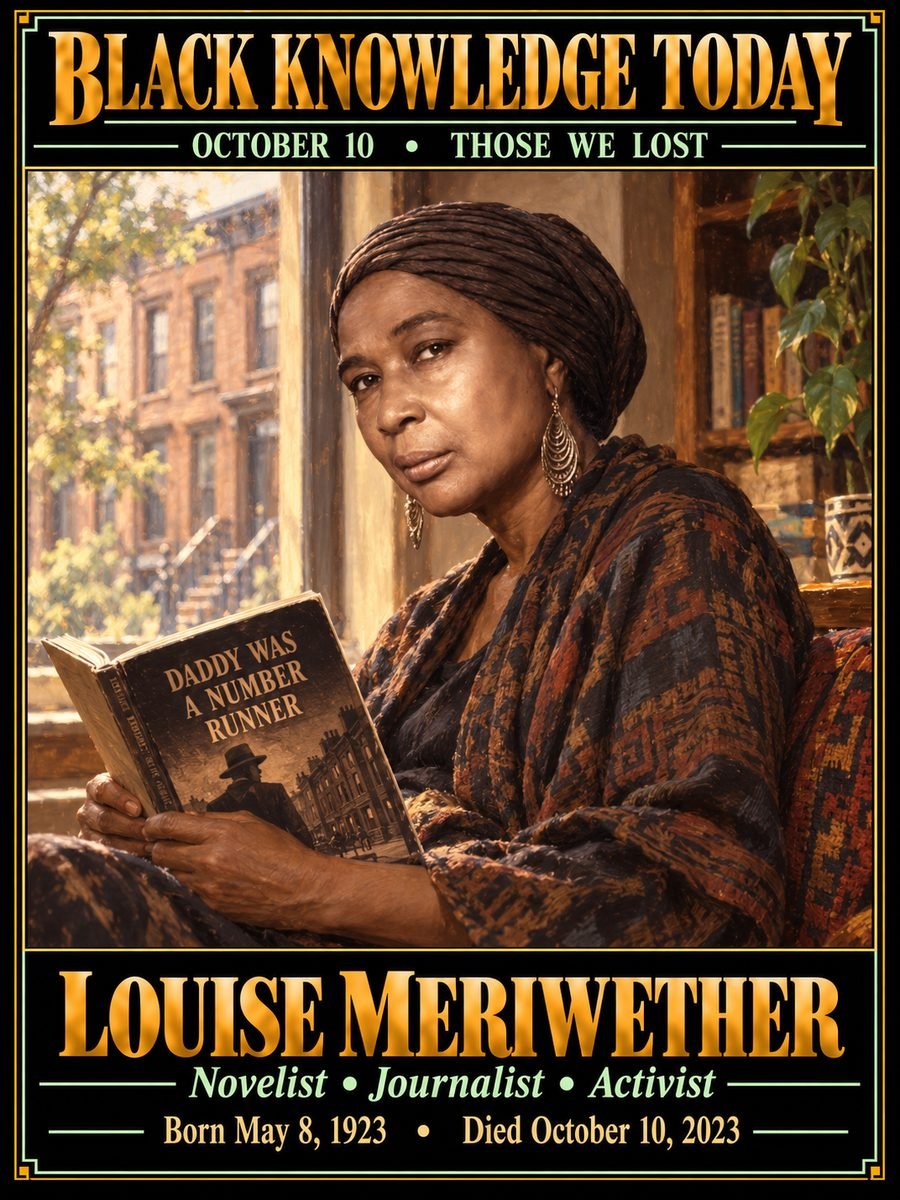
Born May 8, 1923 — died October 10, 2023
Novelist, essayist, journalist, biographer, and activist
Meriwether’s Daddy Was a Number Runner offered a landmark Black girl’s view of Depression-era Harlem. She also wrote biographies for young readers and participated in peace and justice movements. Her work widened the literary record of Black women, working-class Harlem, childhood, and community survival while mentoring later writers.
Wear the history: Elijah McCoy — from the Black Knowledge Wear collection.
