
Those We Lost
Those We Lost — October 15
Oct
Honoring those we lost on October 15 — remembered for what they gave, and for what they left behind.
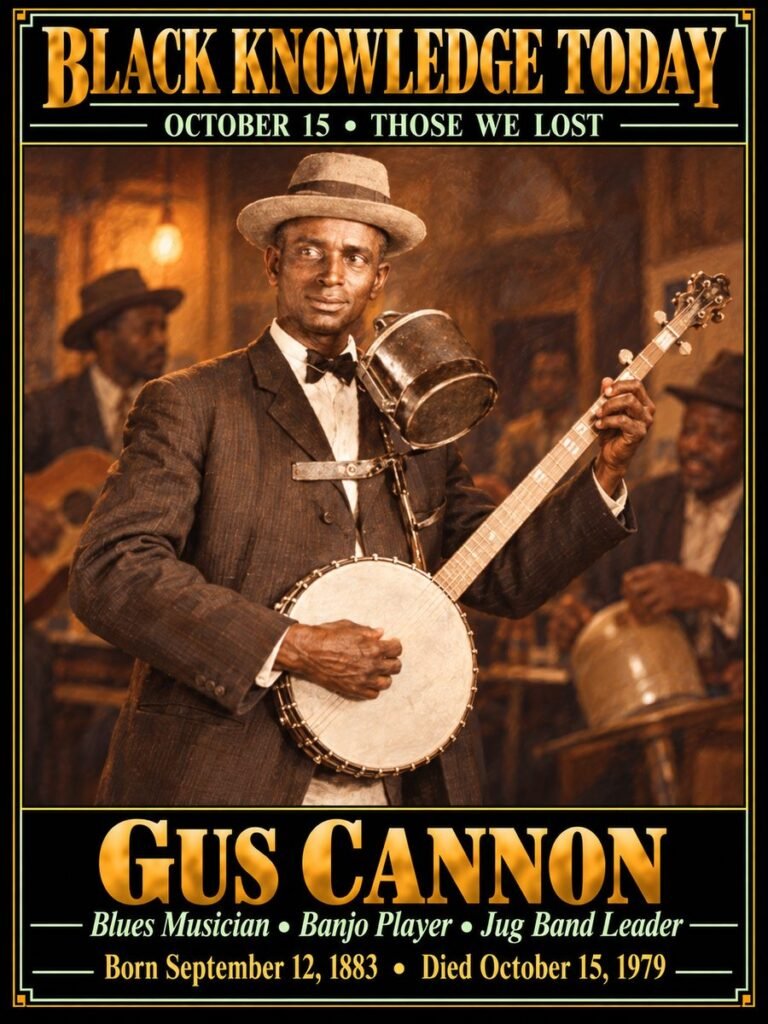
Gus Cannon
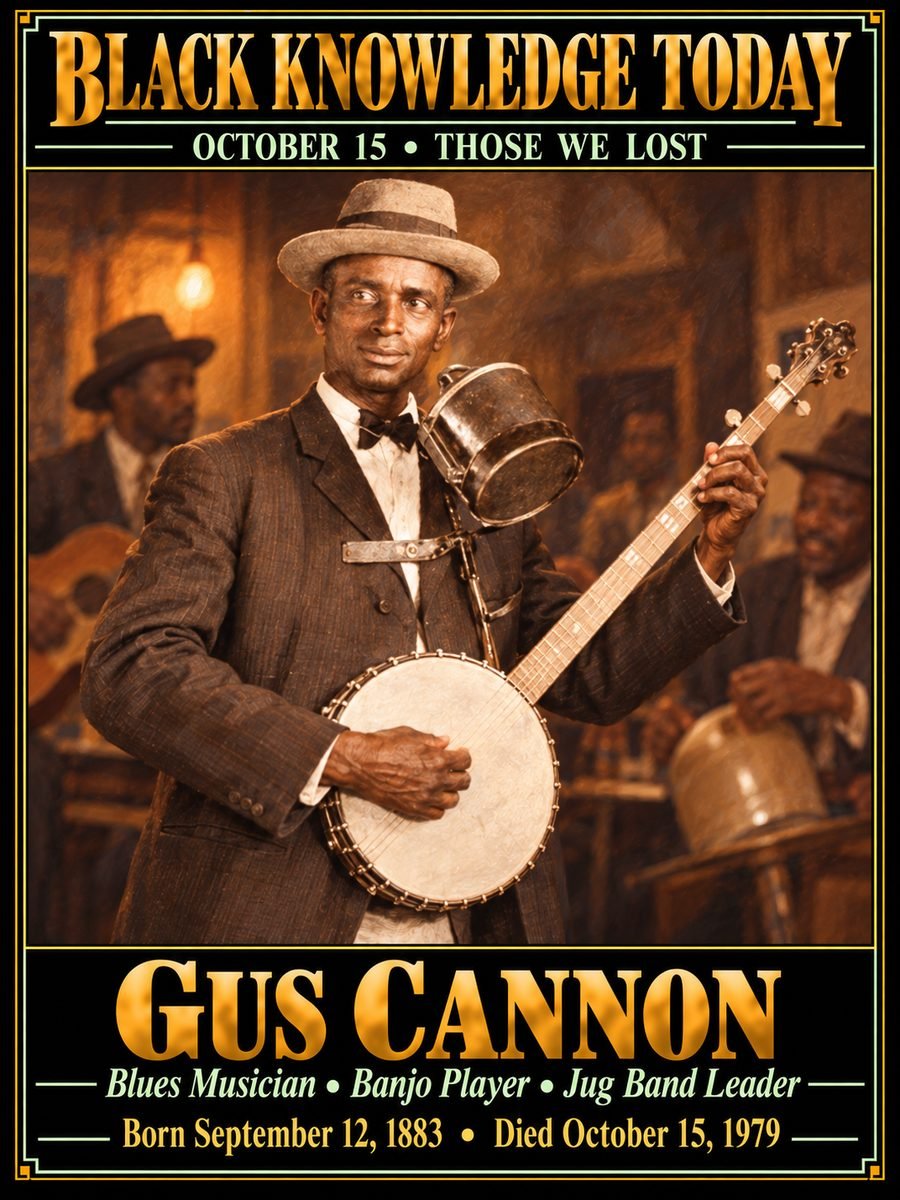
Born September 12, 1883 — died October 15, 1979
Blues musician; banjo player; jug band leader
Cannon, born on a plantation near Red Banks, Mississippi, taught himself banjo on a homemade instrument and worked medicine shows from 1914 into the 1940s. His recording career began with Paramount in 1927, and Cannon’s Jug Stompers first recorded for the Victor label at the Memphis Auditorium in January 1928; he also appeared in the 1929 film Hallelujah! His song Walk Right In became a major hit for the Rooftop Singers in the 1960s, and the blues revival of that decade brought him college and coffeehouse appearances late in life.
Robert F. Williams
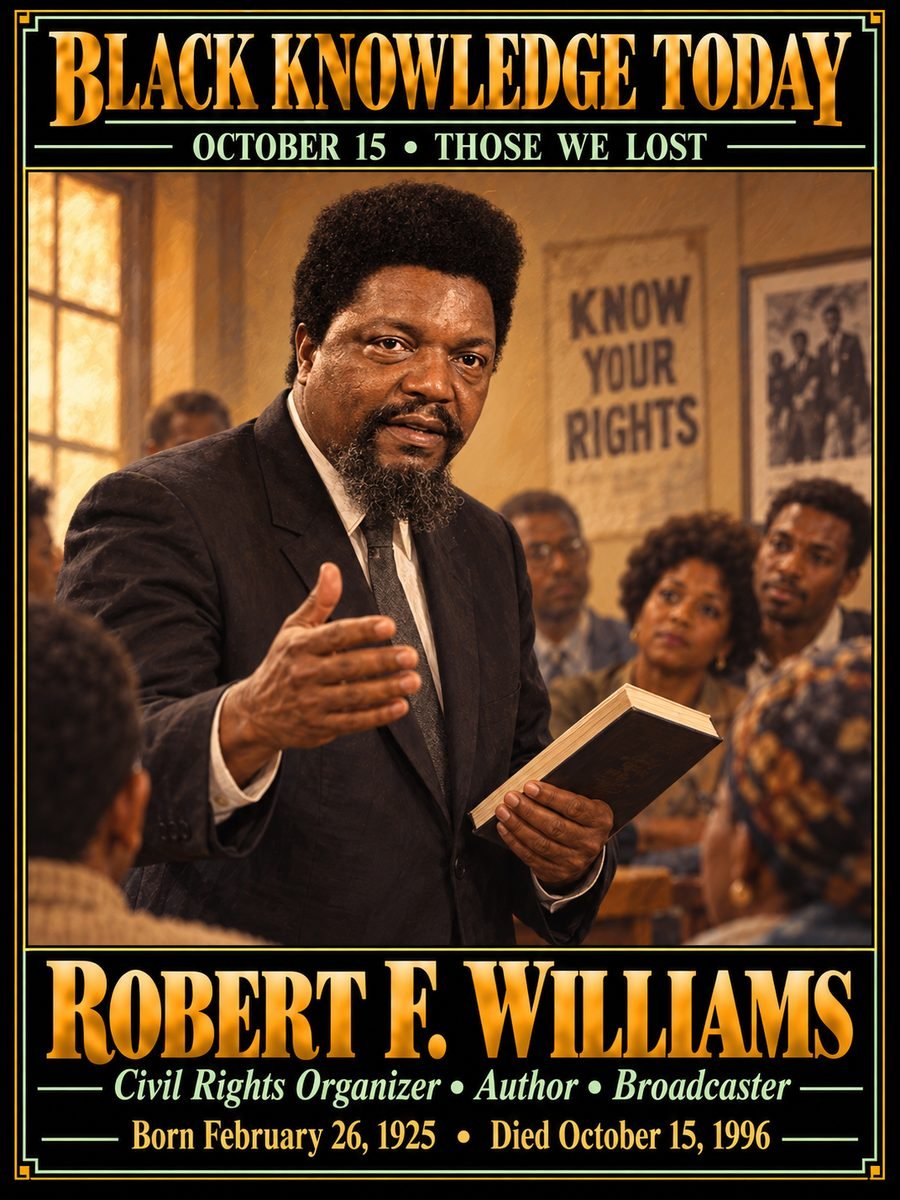
Born February 26, 1925 — died October 15, 1996
Civil-rights organizer, author, broadcaster, and advocate of armed self-defense
As leader of the Monroe, North Carolina, NAACP, Williams fought segregation and racist violence, argued for Black communities’ right to defend themselves, and later broadcast Radio Free Dixie from exile. Negroes with Guns and his international organizing influenced Black Power, anti-colonial thought, and debates over nonviolence and self-defense.
Theodore M. Berry
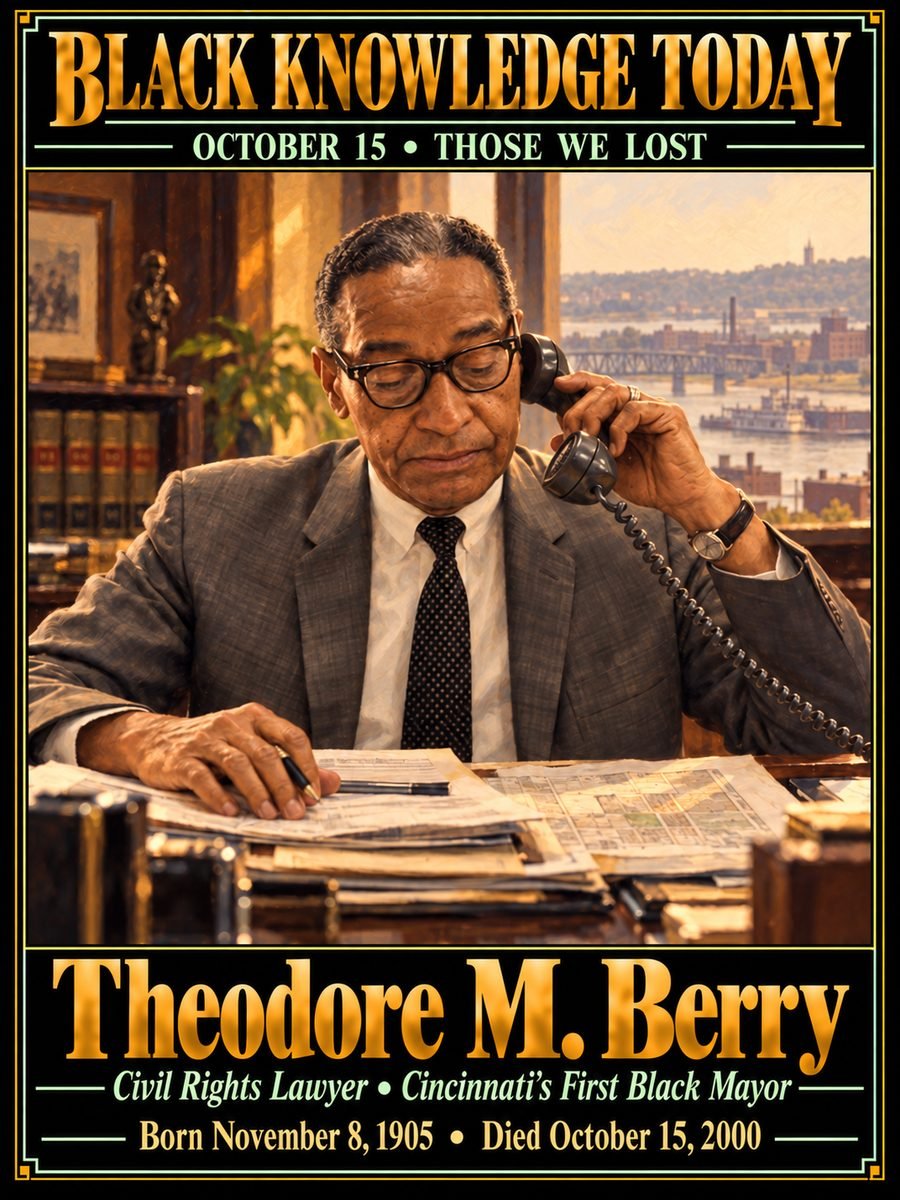
Born November 8, 1905 — died October 15, 2000
Civil rights lawyer; NAACP leader; Cincinnati’s first Black mayor
Berry, born in Maysville, Kentucky, served as president of the Cincinnati branch of the NAACP from 1932 to 1946, was the first Black assistant Hamilton County prosecutor, and won a seat on the City Council in 1949. In 1945, at Thurgood Marshall’s request, he defended three Tuskegee Airmen officers court-martialed for protesting a segregated officers’ club at Freeman Field, Indiana, and won acquittal for two of them; in 1965 President Johnson appointed him to direct the Office of Economic Opportunity’s Community Action Programs. He served as Cincinnati’s first Black mayor from 1972 to 1975 and was a strong and effective advocate of proportional representation for five decades.
Ernest Withers
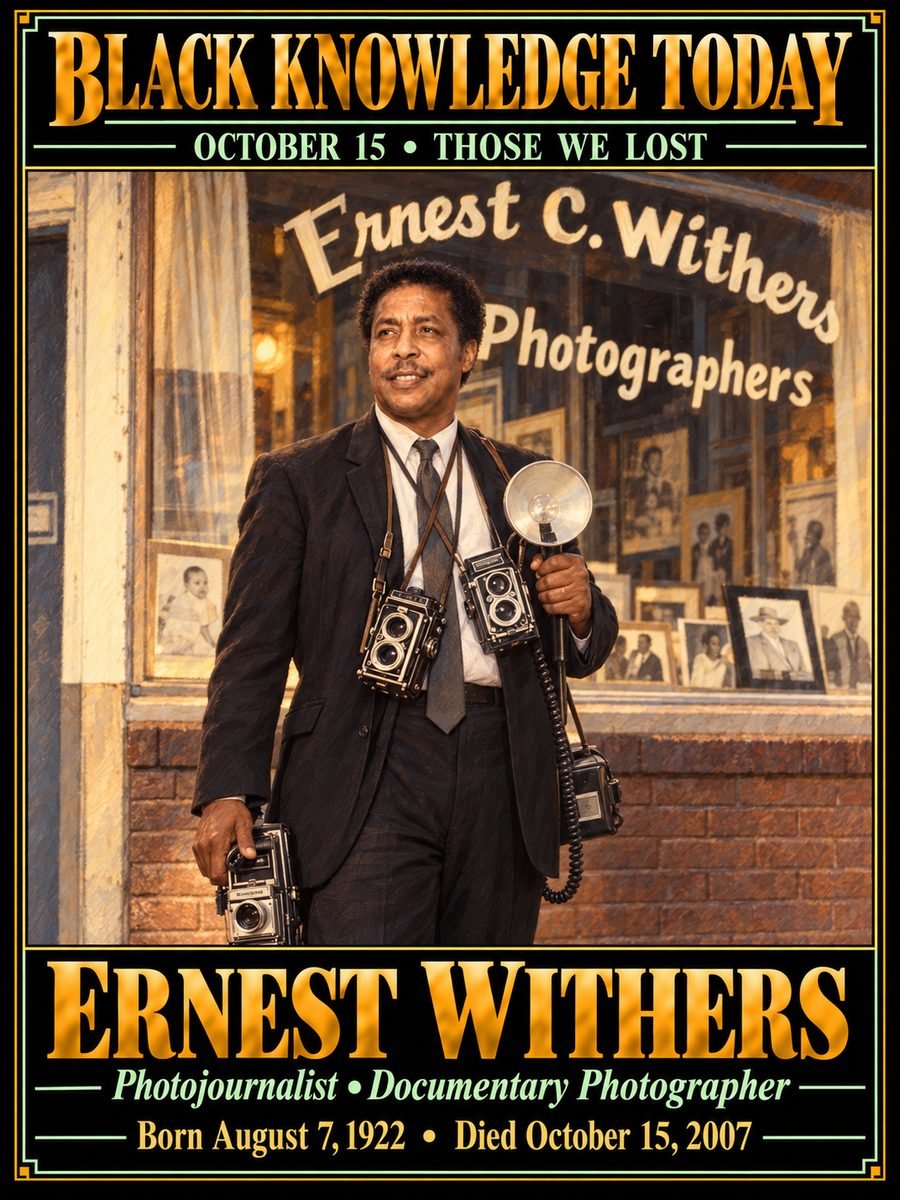
Born August 7, 1922 — died October 15, 2007
Photojournalist and documentary photographer
Withers photographed the Emmett Till murder trial, the Montgomery bus boycott, Memphis sanitation workers, Negro League baseball, and the blues and soul musicians of Beale Street. His vast archive preserves intimate and public views of Black Southern life across civil rights, music, labor, sports, family, and community history. In 2010 it was revealed that Withers had also worked as a confidential informant for the FBI during the 1950s and 1960s.
Mildred Fay Jefferson
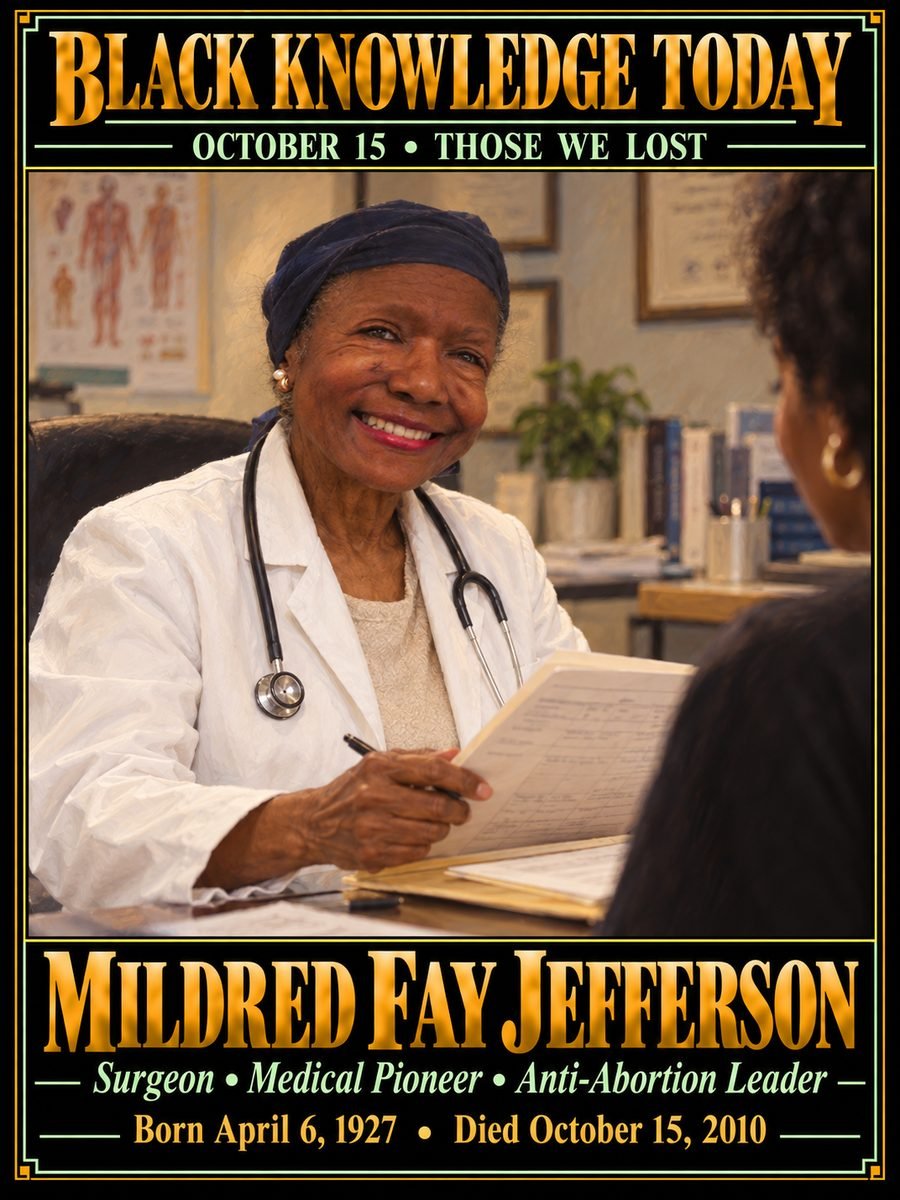
Born April 6, 1927 — died October 15, 2010
Surgeon; first Black woman graduate of Harvard Medical School; anti-abortion movement leader
Jefferson, a native of Pittsburg, Texas, became the first African American woman to graduate from Harvard Medical School in 1951 and the first woman employed as a general surgeon at Boston University Medical Center. She was the first woman member of the Boston Surgical Society. She became active in the right-to-life movement in 1970, helped establish Massachusetts Citizens for Life in 1972, and served three terms as president of the National Right to Life Committee from 1975 to 1978. Her papers, spanning 1947 to 2010, are held by Harvard’s Schlesinger Library, and Harvard Medical School profiles her as a Class of 1951 pioneer.
Dorothy Steel
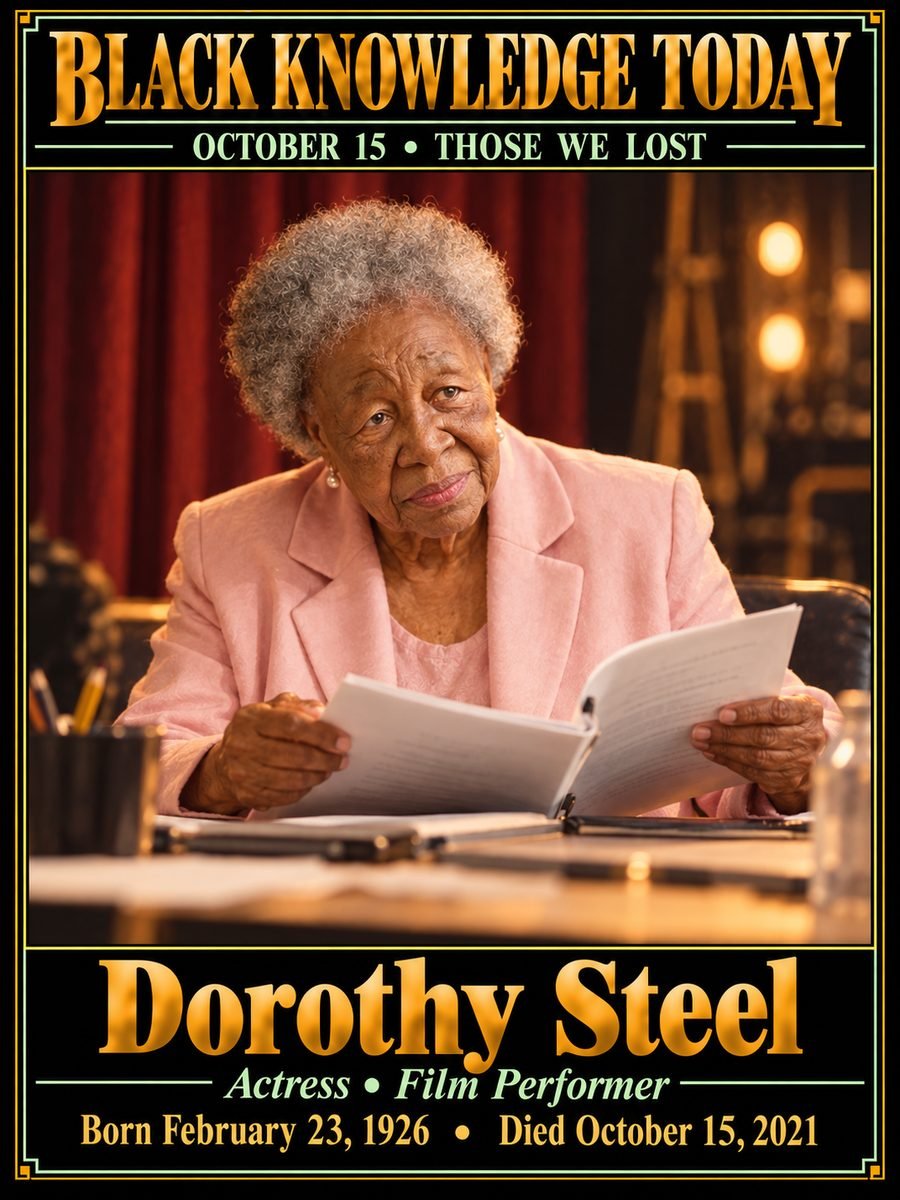
Born February 23, 1926 — died October 15, 2021
Actress
Steel, a Detroit native, started acting at age 88 in 2014. Her role as the elder of the Merchant Tribe in Black Panther (2018) was her feature film debut, and she went on to appear in Poms and Jumanji: The Next Level. She was in the middle of filming Black Panther: Wakanda Forever when she died, and the 2022 film became her final, posthumously released role.
