Those We Lost
Those We Lost — October 7
Oct
Honoring those we lost on October 7 — remembered for what they gave, and for what they left behind.
Benjamin W. Arnett
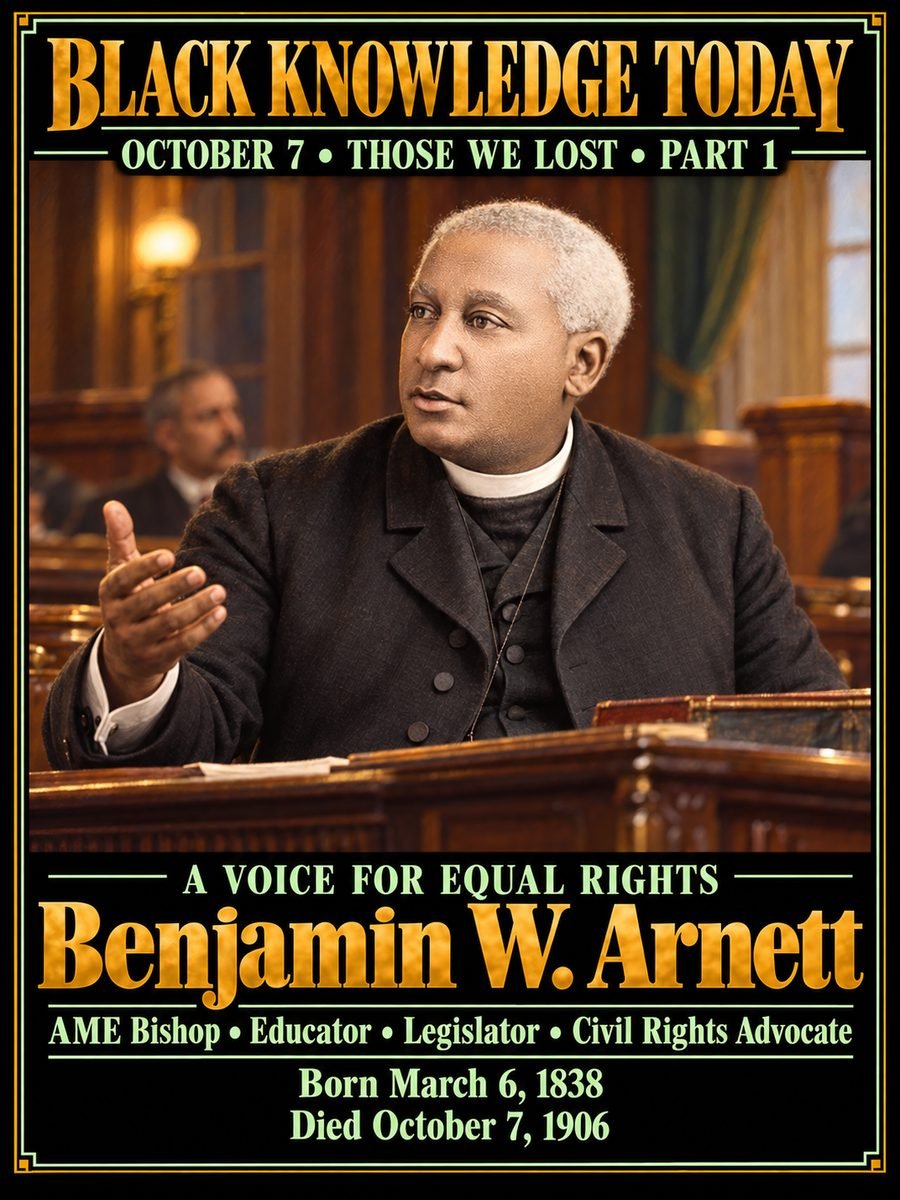
Born March 6, 1838 — died October 7, 1906
AME bishop, educator, legislator, and civil-rights advocate
Arnett served in the Ohio House of Representatives, supported Black education, and helped secure repeal of Ohio’s remaining Black Laws. He later became a bishop of the African Methodist Episcopal Church. His public career joined church leadership, his work as a historian of the AME Church, education, and legislative action during the post-Reconstruction struggle for citizenship.
Ed Blackwell
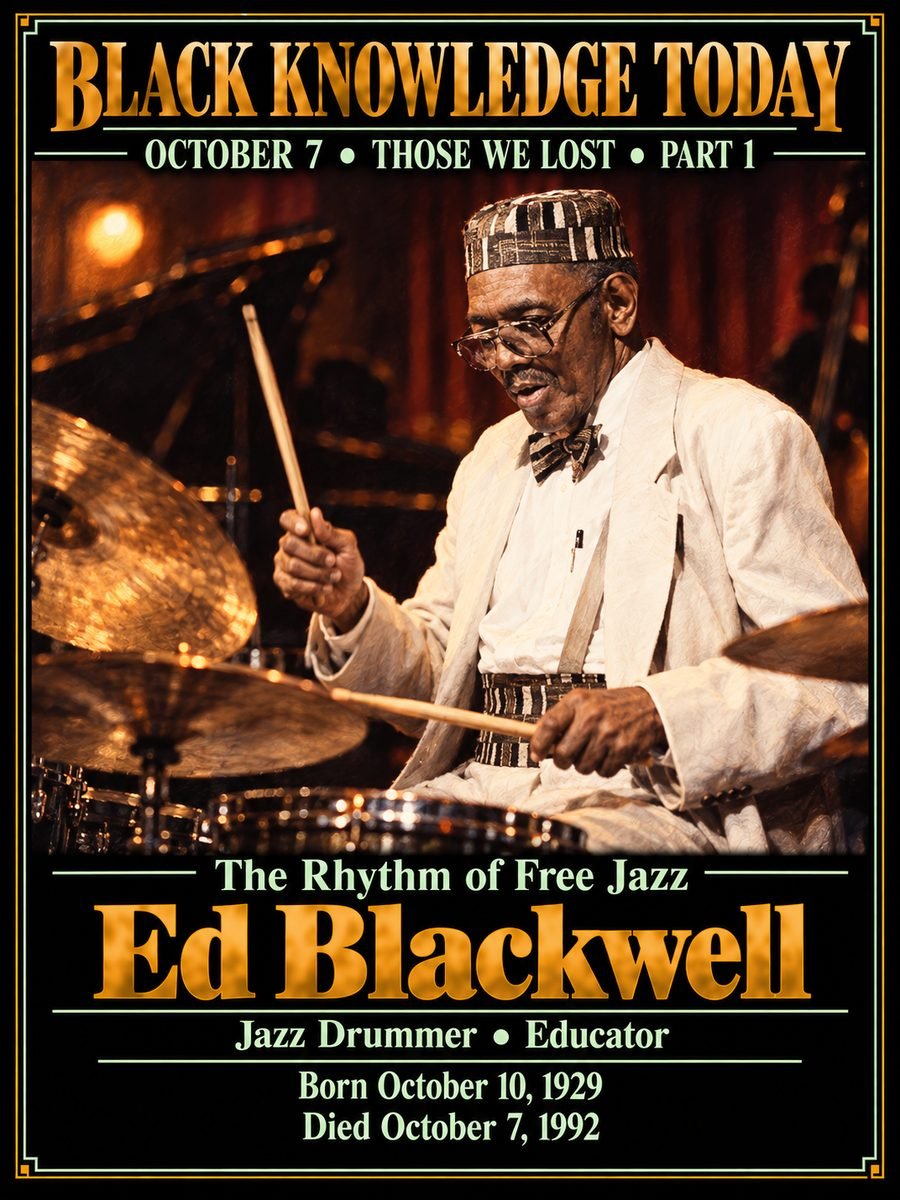
Born October 10, 1929 — died October 7, 1992
Jazz drummer and educator
A New Orleans native steeped in the city’s second-line beat, Blackwell took over the drum chair in Ornette Coleman’s quartet in 1960 and appeared on landmark recordings of the free jazz movement. He toured Africa with Randy Weston’s band on a State Department tour in 1967, lived for a time in Morocco, became an artist in residence at Wesleyan University in Connecticut around 1970, and played through the 1970s and 1980s with the Coleman alumni group Old and New Dreams alongside Don Cherry, Dewey Redman and Charlie Haden. The New York Times obituary called him one of the most important drummers in jazz, and he remained a beloved figure at Wesleyan until his death despite years of kidney disease.
Andrew Brimmer
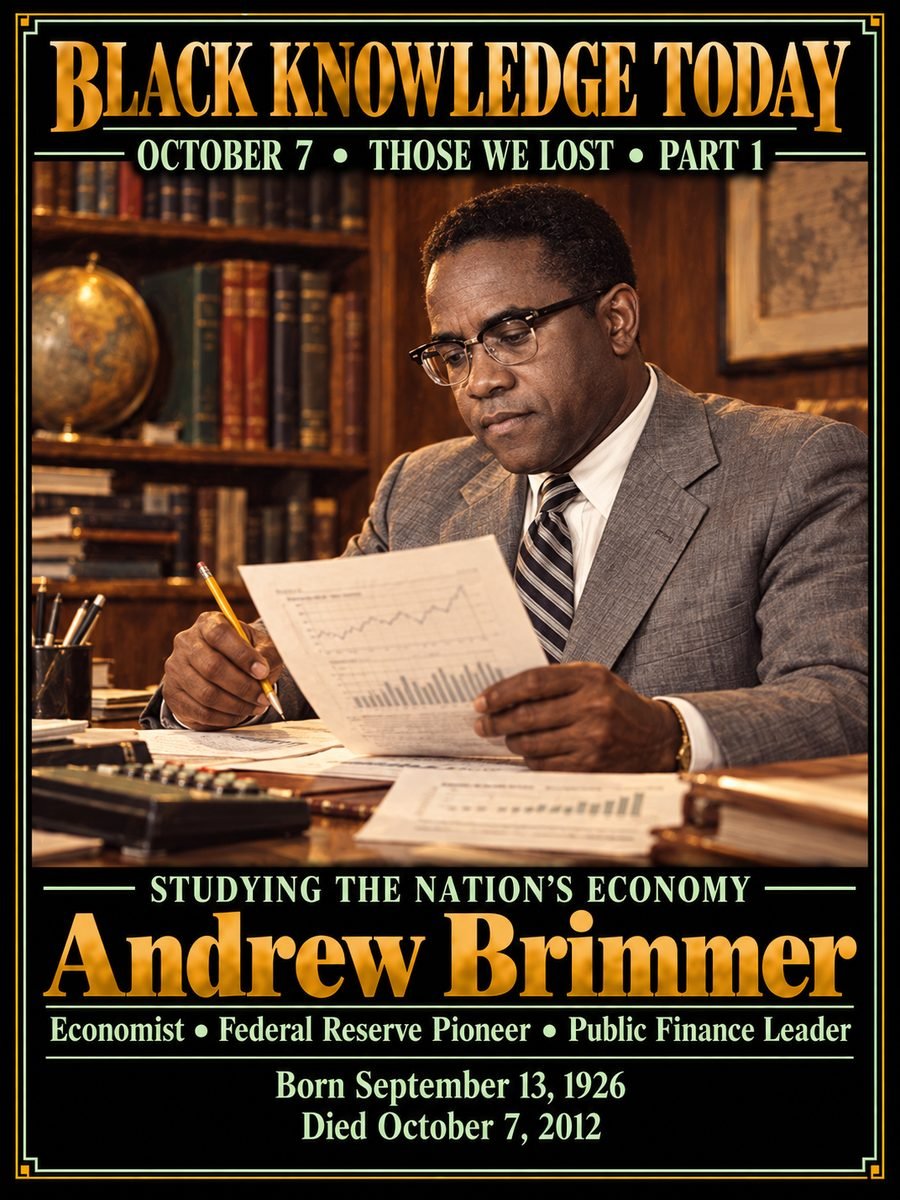
Born September 13, 1926 — died October 7, 2012
Economist, Federal Reserve governor and public finance leader
The son of Louisiana sharecroppers, Brimmer earned a doctorate from Harvard and was nominated to the Federal Reserve Board by President Lyndon Johnson on February 28, 1966; he joined the Board on March 9, 1966, as its first Black member and served until August 31, 1974. He later founded a consulting firm, taught at Harvard, chaired the control board that oversaw the District of Columbia’s finances during the fiscal crisis of the 1990s, and chaired Tuskegee University’s board for twenty-eight years. He was the first African American to sit on the Federal Reserve Board and became recognized as an authority on international monetary policy and on the economic condition of Black Americans.
Mervyn Dymally
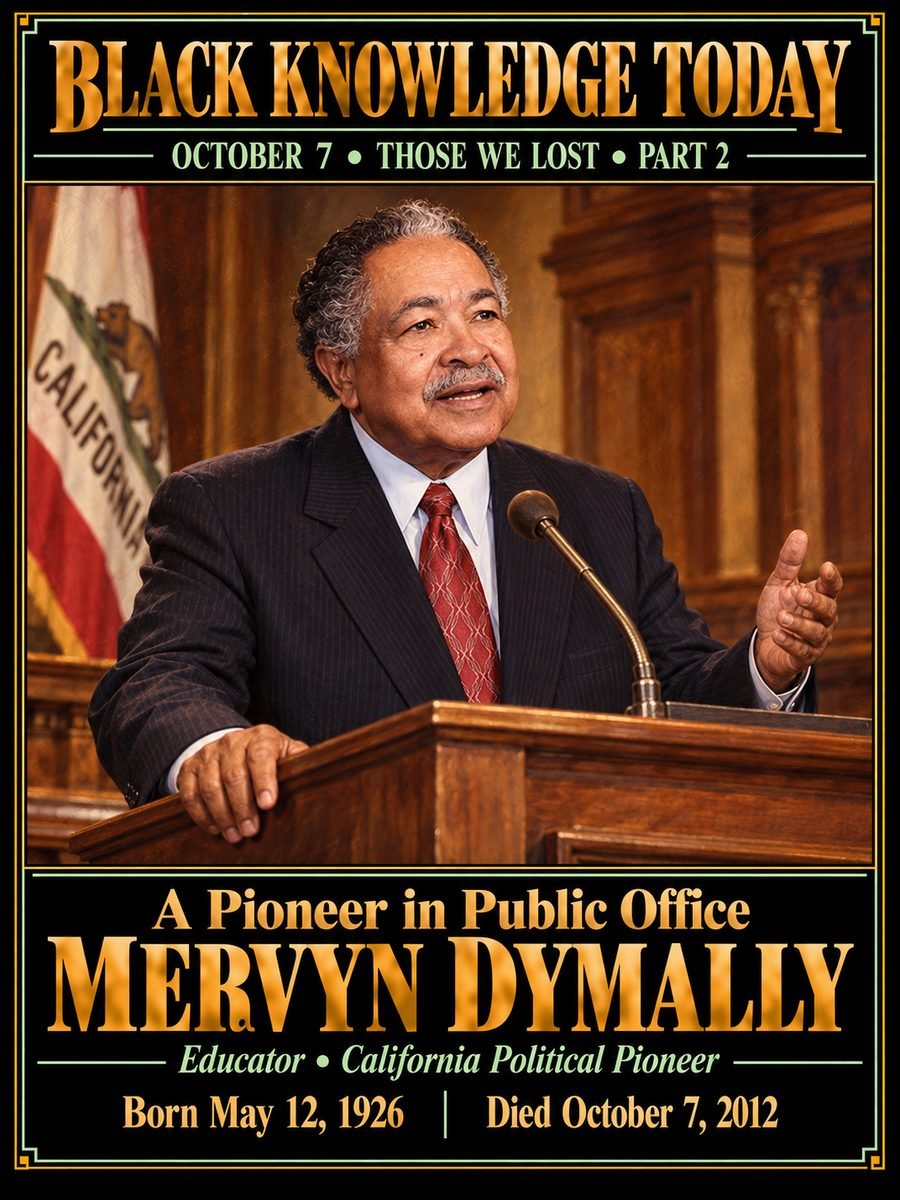
Born May 12, 1926 — died October 7, 2012
Educator, California legislator, lieutenant governor and U.S. representative
A native of Trinidad, Dymally won a California Assembly seat in 1962 and in 1966 became the state’s first Black state senator. Elected lieutenant governor in 1974, he served as California’s only Black lieutenant governor, won a seat in Congress in 1980 and held it until retiring in 1992, and then staged a comeback in 2002 by winning the Compton-area Assembly seat. His four-decade career broke racial barriers in California politics from the state Senate to the lieutenant governorship, and he chaired the Congressional Black Caucus from 1987 to 1989.
Cissy Houston
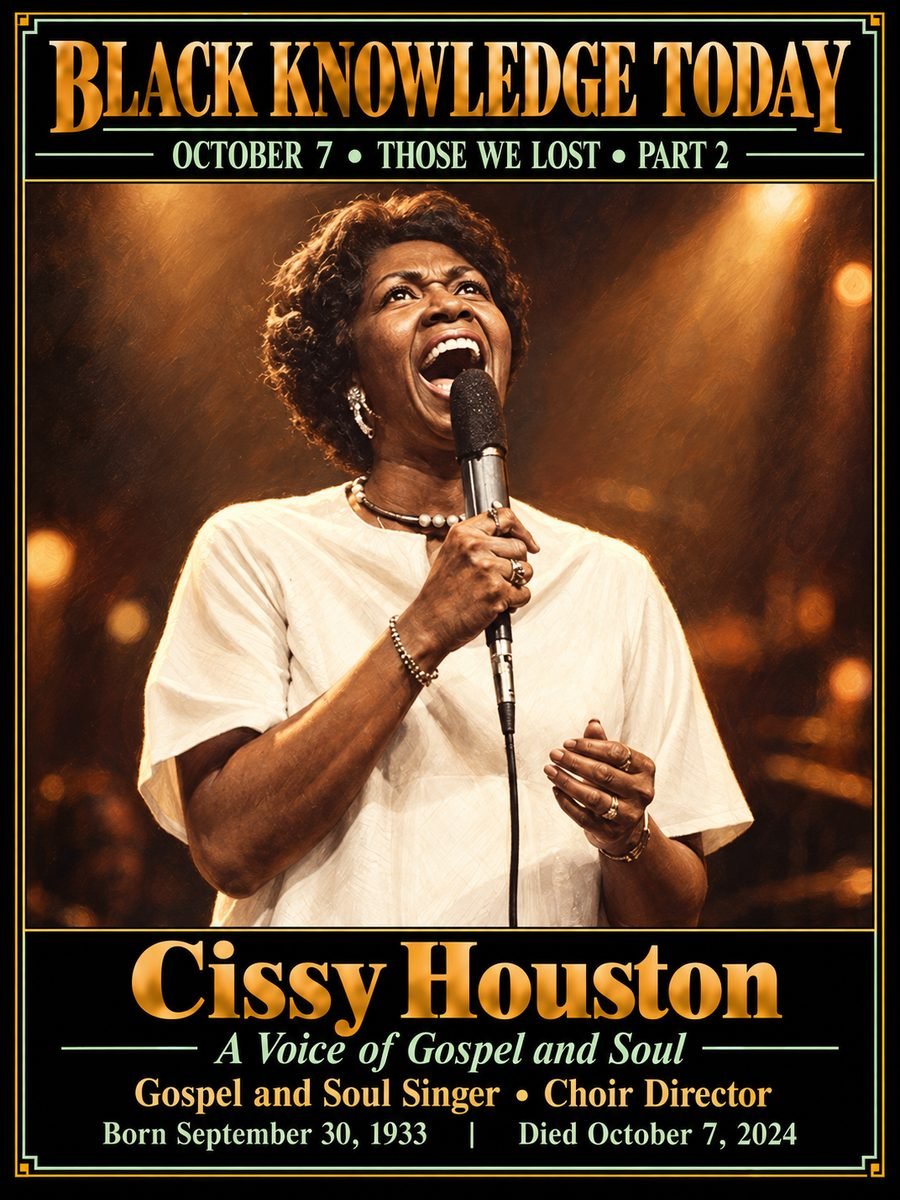
Born September 30, 1933 — died October 7, 2024
Gospel and soul singer, session vocalist, choir director, and recording artist
Houston sang with the Drinkard Singers and the Sweet Inspirations, backed artists including Aretha Franklin and Elvis Presley, and later won two Grammy Awards for gospel recordings. Her seven-decade career linked church music, studio craft, soul, and pop, while her vocal influence extended through a celebrated musical family.
Carolyn Cheeks Kilpatrick
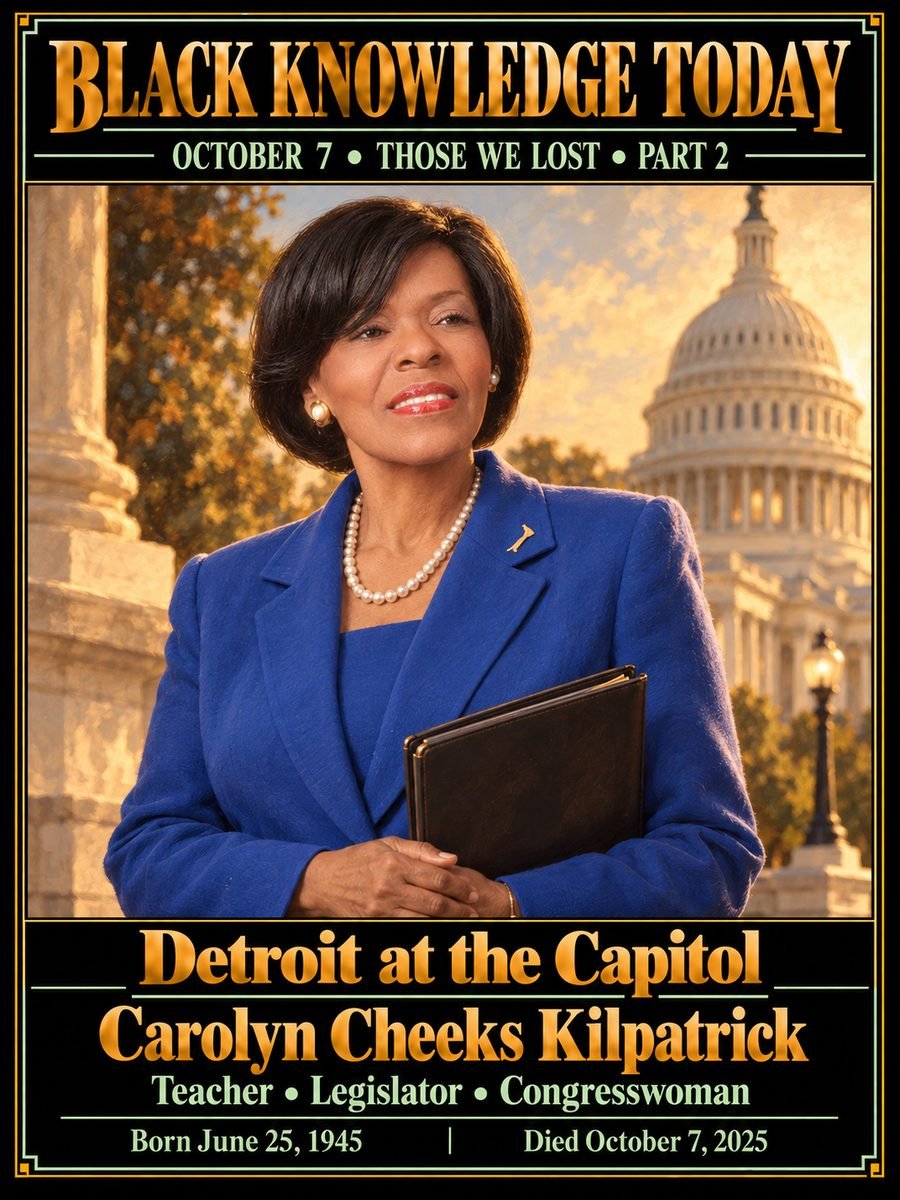
Born June 25, 1945 — died October 7, 2025
Teacher, Michigan state legislator and U.S. representative
Born Carolyn Jean Cheeks in Detroit, she worked as a teacher, earned degrees from Western Michigan University and the University of Michigan, and served in the Michigan House of Representatives from 1979 to 1996. Elected to Congress in 1996, she represented Detroit-area districts from January 3, 1997, to January 3, 2011, was assigned to the Appropriations Committee in only her second term, and was unanimously elected chair of the Congressional Black Caucus for the 110th Congress. She was the second Black woman to represent Michigan in the House, and after her death she lay in state at the Charles H. Wright Museum of African American History in Detroit on October 20, 2025.
