
Black History Knowledge
Black History Knowledge — October 8
Oct
What happened on this day. These are the October 8 moments in Black history worth knowing, remembering, and passing on.
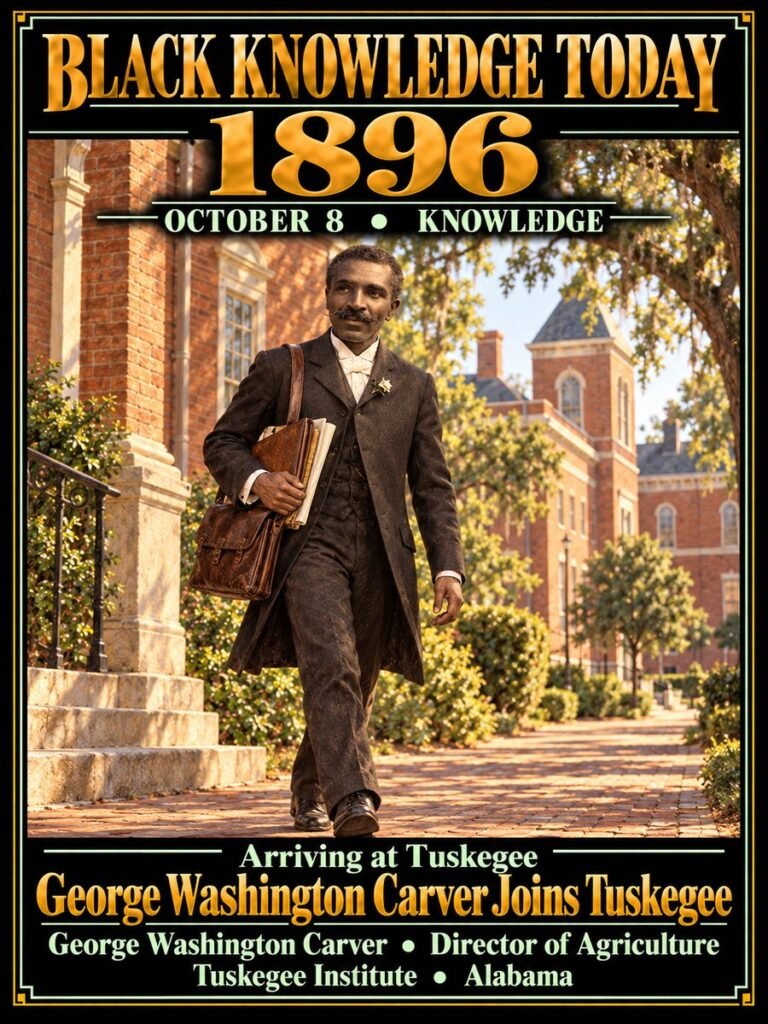
1896 — George Washington Carver joined Tuskegee’s faculty
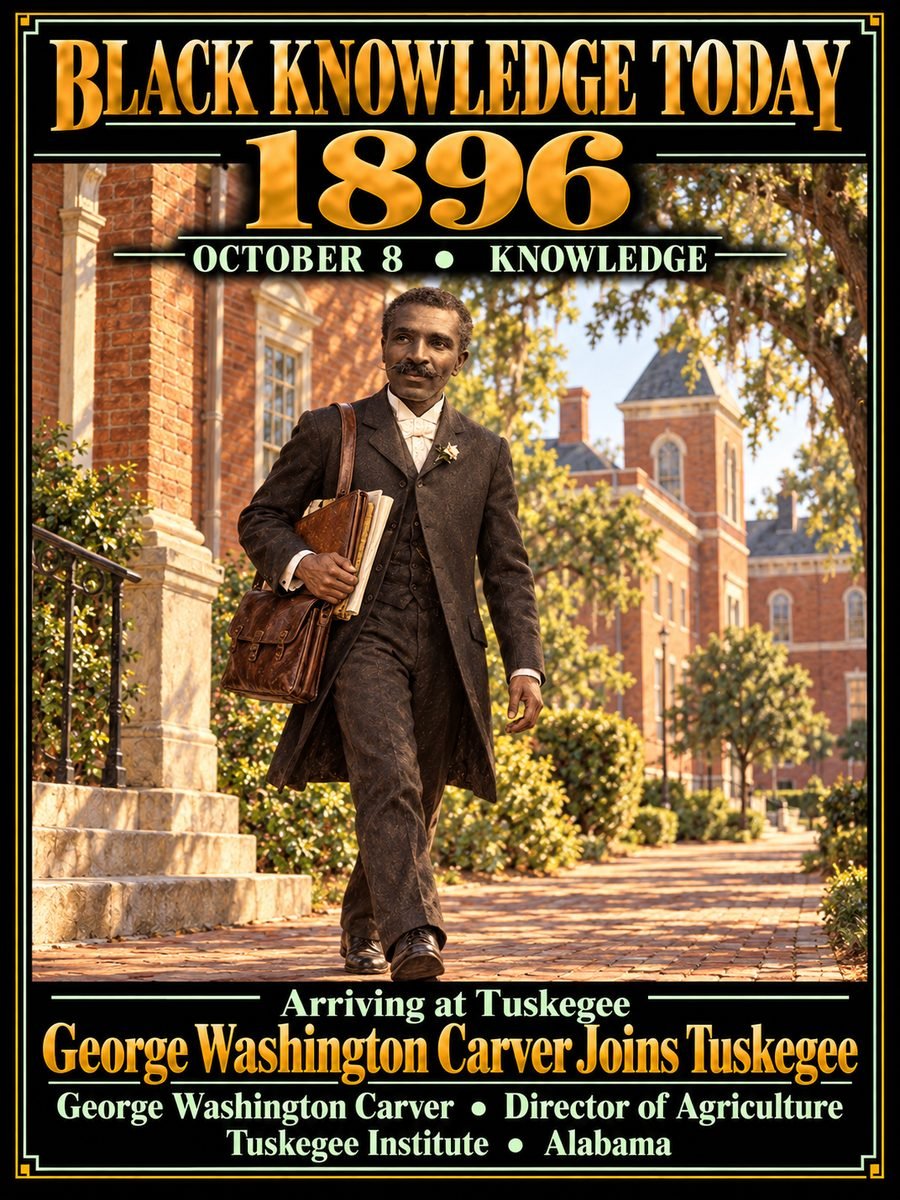
George Washington Carver arrived at Tuskegee on October 8, 1896, to lead agricultural instruction and research. Carver’s work linked scientific research, farmer education, soil conservation, and service to rural Black communities in the South.
1944 — Vernon Baker led an attack on a German-held house at Seravezza, Italy
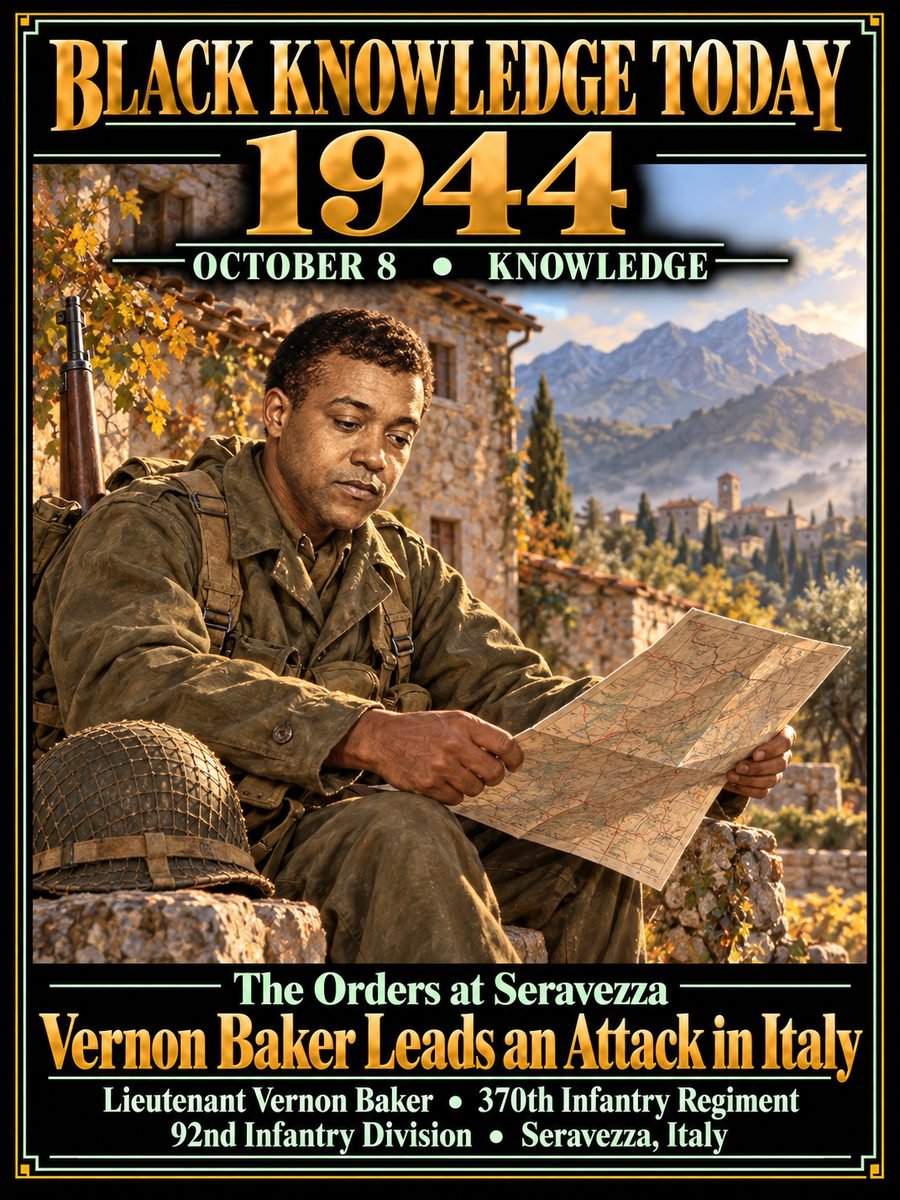
On October 8, 1944, Lieutenant Vernon Baker and his company of the 370th Infantry Regiment, 92nd Infantry Division, were ordered to attack a German-held house at Seravezza, Italy. Baker and another soldier killed five Germans inside the house while his men drew fire from a nearby machine-gun position; two of his men were killed, and Baker was wounded in the arm and spent two months in a military hospital at Pisa. His actions on April 5-6, 1945, near Viareggio earned him the Medal of Honor, presented by President Clinton on January 13, 1997. The date opens the combat story of a Black officer whose heroism was overlooked for decades because of racial discrimination in military awards.
1953 — Birmingham authorities blocked an interracial baseball exhibition
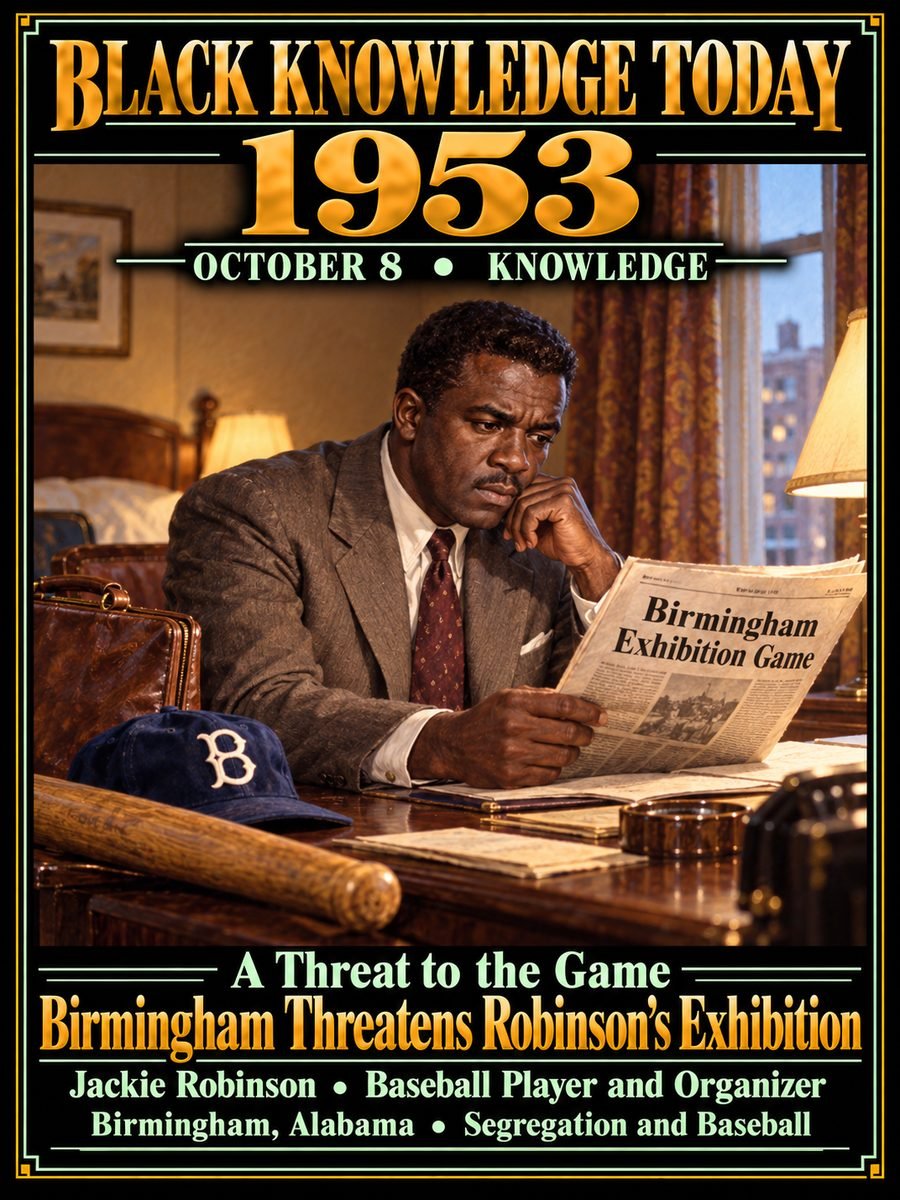
On October 8, 1953, Birmingham police commissioner Eugene ‘Bull’ Connor announced that an all-star exhibition organized by Jackie Robinson would be banned if the white players he had signed – Al Rosen, Ralph Branca and Gil Hodges – took the field, citing a city ordinance that ‘forbids mixed athletic events.’ After consulting Birmingham’s Black community, Robinson benched the white players rather than cancel, and the game was played with only Black players. The confrontation shows that celebrated Black major leaguers still faced municipal segregation and police power when they traveled in the Jim Crow South.
