
Those We Lost
Those We Lost — October 8
Oct
Honoring those we lost on October 8 — remembered for what they gave, and for what they left behind.
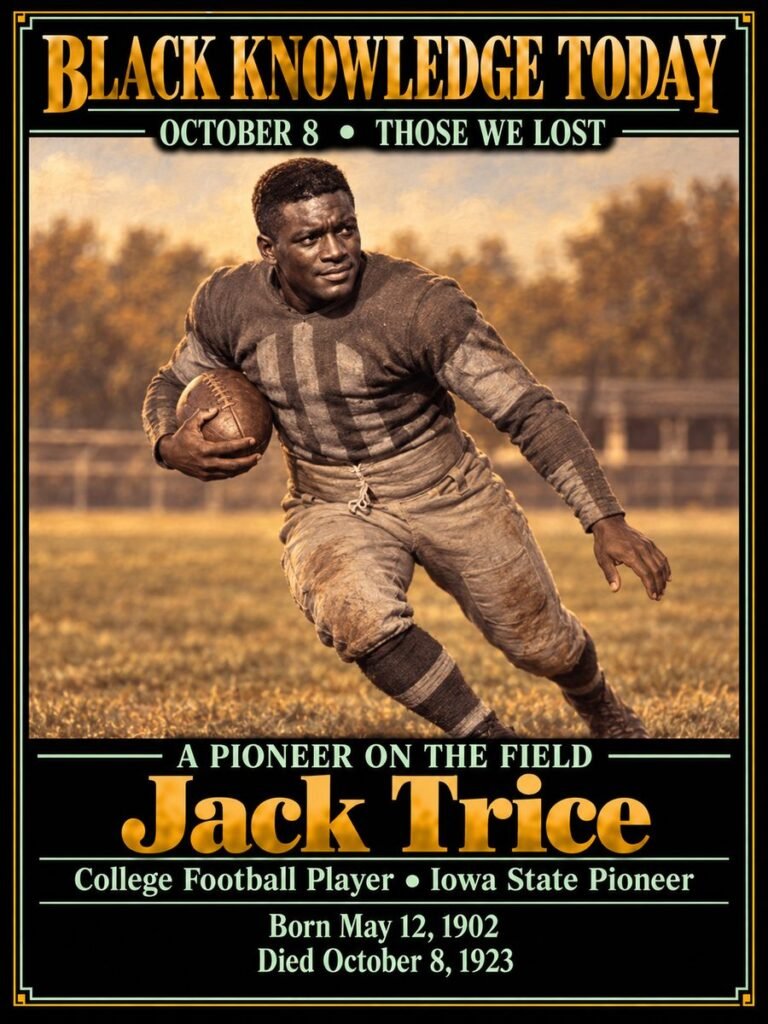
Jack Trice
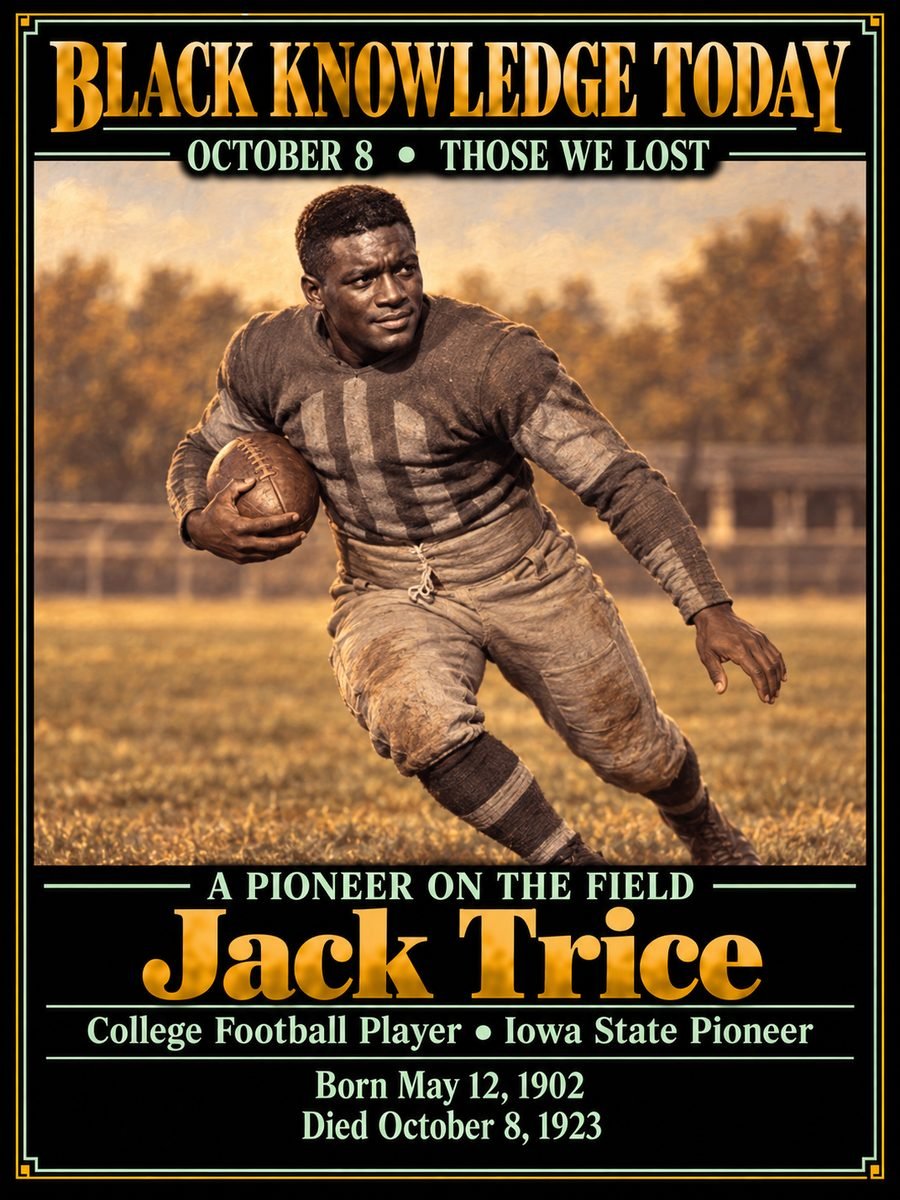
Born May 12, 1902 — died October 8, 1923
College football player, Iowa State’s first Black athlete
Born in Hiram, Ohio, Trice enrolled at Iowa State to study animal husbandry, hoping to go South and use his knowledge to help Black farmers, and in 1922 became the college’s first African American student athlete in track and football. On October 6, 1923, in his first college game, at Minnesota, he broke his collarbone on the second play and in the third quarter was forced to the ground and crushed by Minnesota players; the night before, he had written a letter declaring that the honor of his race, family and self was at stake. After decades of persistence by students, alumni, faculty and staff, Iowa State named its football stadium Jack Trice Stadium in 1997, America’s only major college football stadium named for an African American athlete.
Louis T. Wright
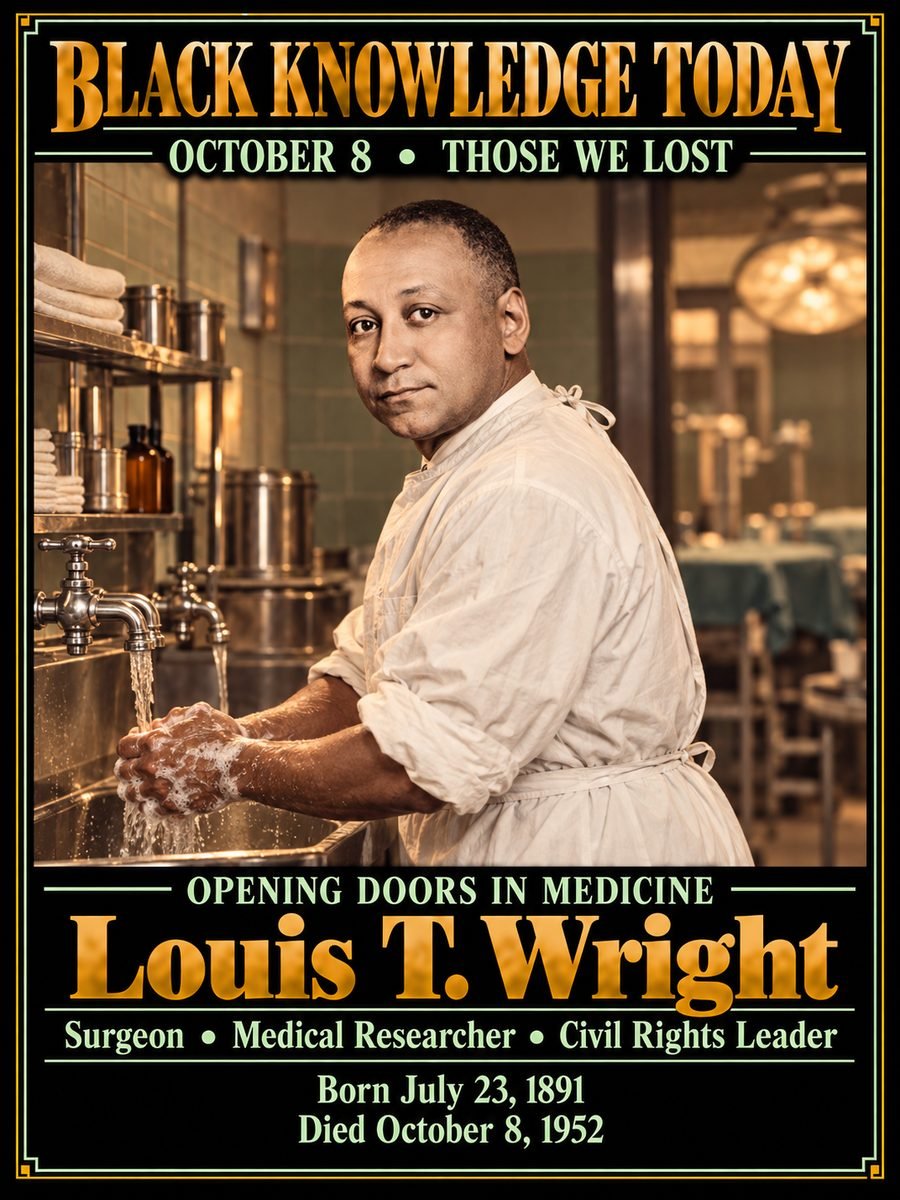
Born July 23, 1891 — died October 8, 1952
Surgeon, medical researcher, hospital leader, and civil-rights activist
Wright became the first Black physician on the surgical staff of a nonsegregated New York City hospital, led surgery at Harlem Hospital, advanced antibiotic research, and chaired the NAACP board. He challenged racial exclusion in medicine while improving clinical care, scientific research, professional training, and institutional access for Black physicians and patients.
Edith S. Sampson
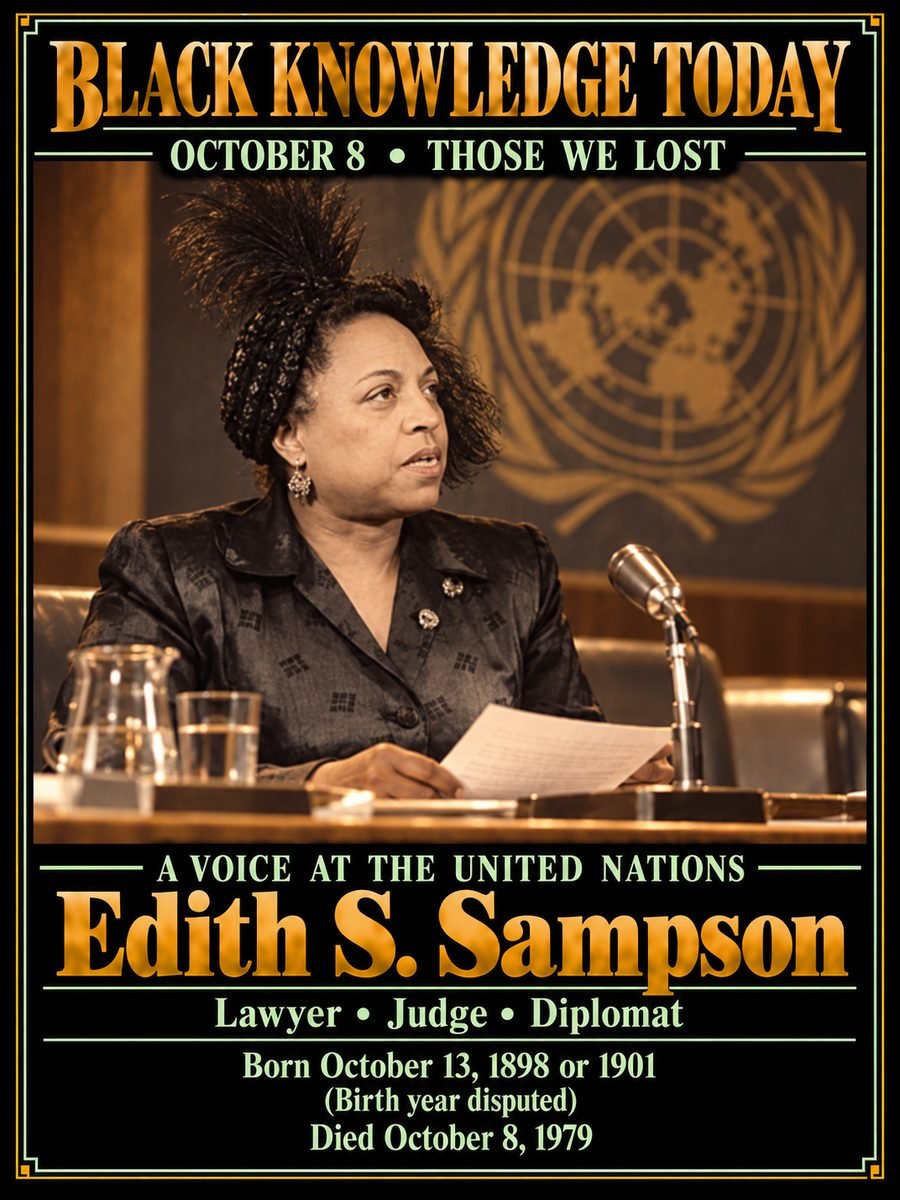
Born c. 1901 — died October 8, 1979
Lawyer, judge, diplomat, and civil-rights advocate
Sampson became the first Black American named to the official U.S. delegation to the United Nations, as an alternate delegate in 1950, and later the first Black woman elected as a judge in Illinois. Her career opened paths in international diplomacy and the judiciary while she advocated for civil rights and public service.
John McLendon
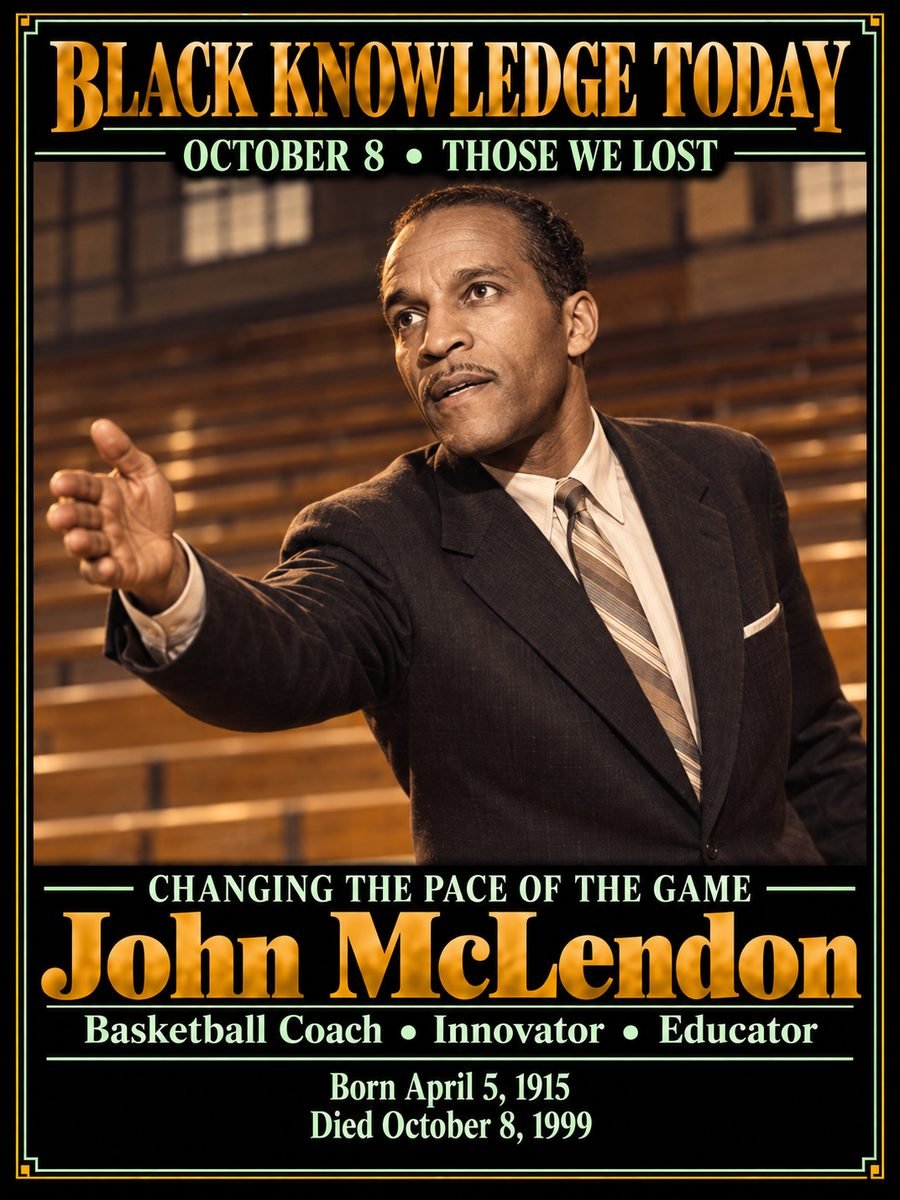
Born April 5, 1915 — died October 8, 1999
Basketball coach, innovator and author
McLendon learned the game from its inventor, James Naismith, at the University of Kansas, then compiled a college record of 523 wins and 165 losses, winning NAIA national championships at Tennessee State in 1957, 1958 and 1959 to become the first coach to win three consecutive national titles. In 1962 he became the first Black head coach in a professional league with the Cleveland Pipers, and in 1966 he left a lifetime contract at Kentucky State to become the first Black coach at a predominantly white institution, Cleveland State University; his teams’ patented fast break offense became the subject of his book Fast Break Basketball. He was the first Black coach enshrined in the Naismith Memorial Basketball Hall of Fame, in 1979, and is also a member of the NAIA Hall of Fame; the Naismith Hall enshrined him a second time, as a coach, in 2016.
Albertina Walker
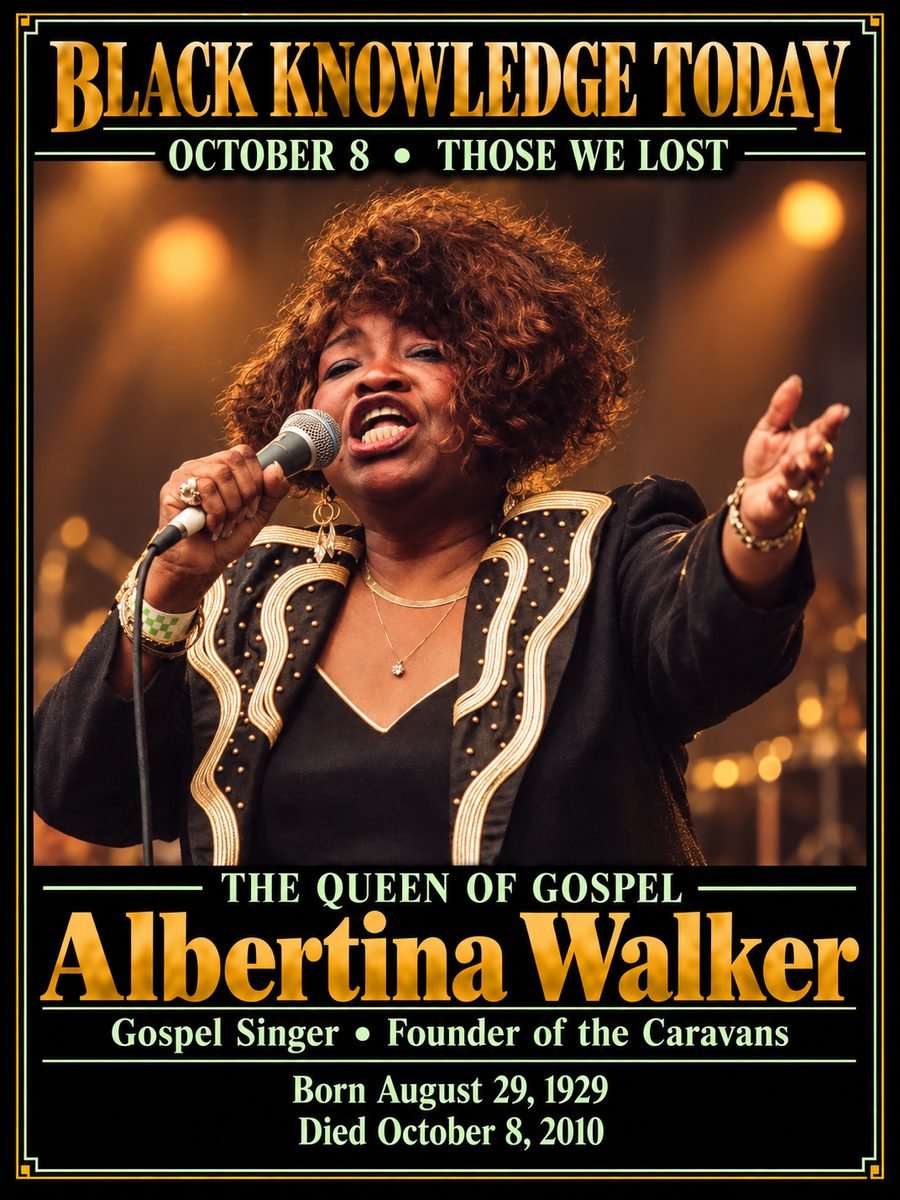
Born August 29, 1929 — died October 8, 2010
Gospel singer and founder of the Caravans
Raised in Chicago’s West Point Baptist Church and mentored by Mahalia Jackson, Walker organized her own gospel group, the Caravans, at age 22; the group launched the careers of Shirley Caesar, Inez Andrews, Dorothy Norwood and James Cleveland. Over a career of more than six decades she recorded more than 60 albums, earned five gold records and ten Grammy nominations, and won the 1995 Grammy for Best Traditional Gospel Album. Known as the Queen of Gospel, she received the National Endowment for the Arts’ National Heritage Fellowship, the nation’s highest honor in the folk and traditional arts, in 2005.
George Taliaferro
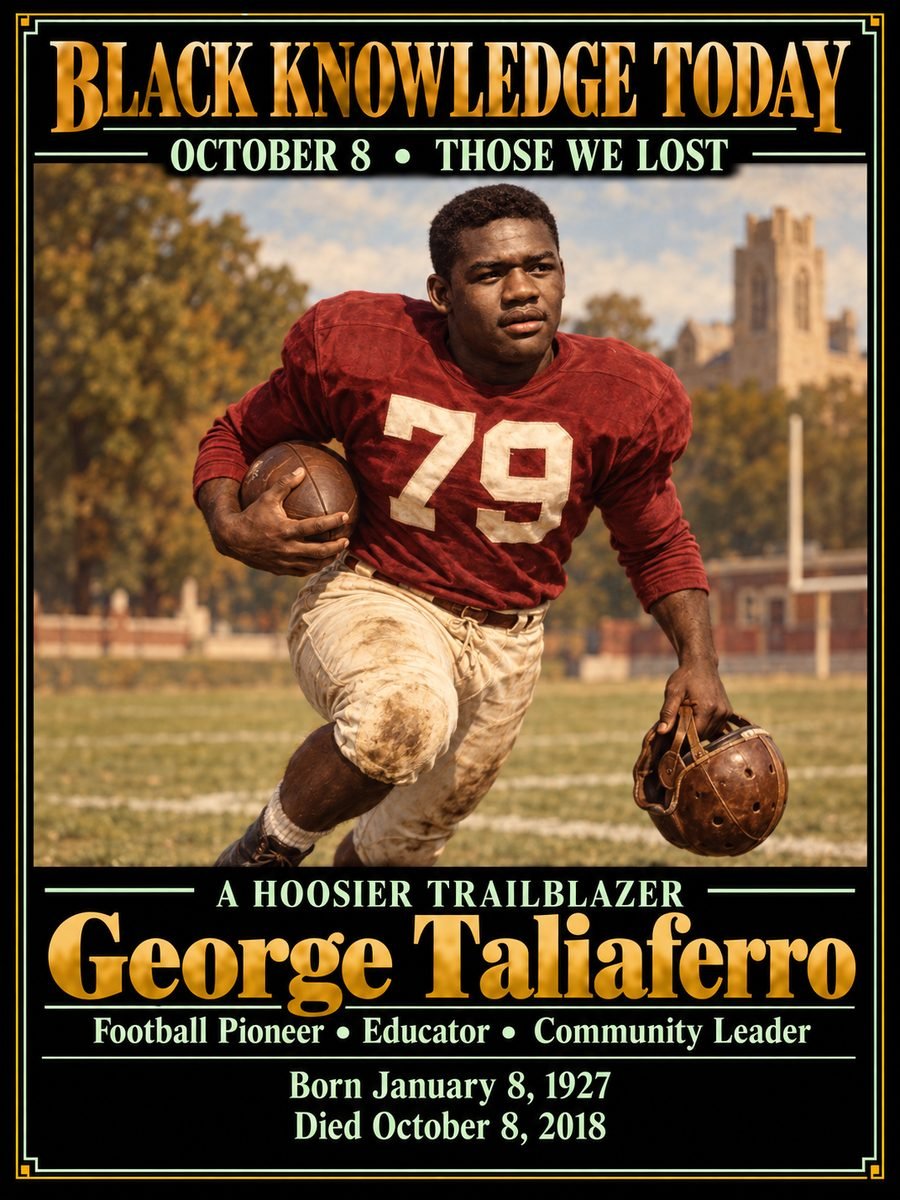
Born January 8, 1927 — died October 8, 2018
Football halfback and quarterback, university administrator and community activist
Taliaferro helped lead Indiana University’s 1945 team to the only undefeated Big Ten championship in Hoosier football history. In 1949 the Chicago Bears made him the first African American drafted by an NFL team; he chose the rival All-America Football Conference instead, then played in the NFL at seven positions, earning Pro Bowl honors in three of his six seasons before finishing with the Philadelphia Eagles in 1955. He later served as special assistant to IU President John Ryan and worked as a community activist to keep the doors of education open to minority students. His selection in the 1949 draft opened the NFL’s selection process to Black players, and Indiana University remembered him as a champion for fairness, compassion and equality.
